



How to Make Interactive Videos (+6 Video Templates)

Create interactive videos in 140+ languages.
Adding interactivity to your videos can help you to reduce drop-off rates, increase your average watch times, and keep your viewers engaged.
As a video creator, I also love the deeper and more actionable analytics you can get with interactive videos — you can find out a lot about your viewers as they express their preferences via the choices they make watching your video.
Interactivity in video typically takes the form of clickable hotspots and CTAs, and quizzes and knowledge checks, and branching scenarios.
I'm going to give you a crash-course in adding interactivity to your videos, and then show you how you can make engaging interactive videos using Synthesia.
What are interactive videos?
Interactive videos are videos that accept a viewer input, which can take the form of clicks, choices, quizzes, or forms. This input then influences what the viewer will see.
A good analogy is that standard video is like watching a lecture, whereas interactive video is like participating in a workshop.
It's common to see interactive videos used in product demos, training, and education. Interactivity makes a lot of sense in training and education contexts because interactive video supports active learning, which is when learners participate in their own learning rather than passively receiving information.
Which interactive video elements should you use?
There's quite a wide variety of interactive elements that you could add to your video, but which should you choose? I've seen how the right combination can transform a video's completion rate from mediocre to exceptional, but you also need to be cautious of over-doing it.
Here's a quick overview of the different types of interactivity you can add to a video and which use cases suit each best:
- Buttons and hotspots: Clickable areas that can open links, jump to a specific scene, or reveal hidden content. I often use these for product tour videos or if I want to provide viewers with additional context without overwhelming their screen with text.
- Branching scenarios: Let your viewers choose their own path through your video, and are great for segmenting content for different viewer types (e.g. a job role), which makes them ideal for training and simulations.
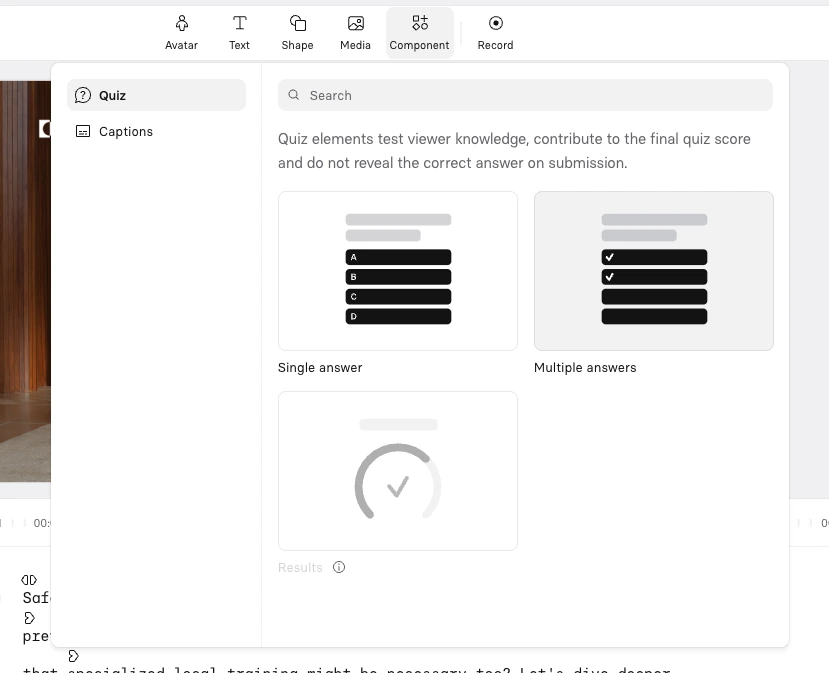
- Quizzes and knowledge checks: Multiple-choice questions with an option to retry that you can use to test your viewer's understanding. They are great for training videos, and are essential in more sensitive training contexts such as compliance or health and safety training.
- Polls, surveys, and forms: Collect feedback, opinions, or lead information directly within the video without needing your viewers to click a CTA.
- Chapters and navigation menus: Help your viewers to navigate your video. I use these whenever my video is on the longer side, provided that I don't specifically want my viewers to watch the video sequentially (which might be the case in some training videos).
- CTAs (Call-to-Actions): Any interactive element (typically a button) that is used to drive a specific action, such as booking a demo, downloading a resource, or starting a trial.
- 360° explorations: Advanced drag-to-look virtual environments that are often used for virtual tours or immersive experiences. I only recommend using these in very specific use cases.
Are interactive videos effective?
I think the answer is that it depends on the type of video you are creating.
There's a lot of evidence that adding interactivity to training and educational videos leads to improved learning outcomes like higher completion rates, better knowledge check scores, and improved on-the-job performance.
Take this study as an example. They found that interactive video beats normal video in a controlled study with learners enjoying a +6.49-point lift on the study’s test metric and also significantly higher learner satisfaction scores.
This also matches my own personal experience — I've seen L&D teams report higher completion rates, better knowledge retention, and better on-the-job performance after shifting their mandatory training modules from passive video to interactive.
In one specific example I saw an organization boost their training completion rates from 85% to 97% within 3 months of them adding some simple knowledge checks and branching scenarios to their compliance training videos.
We also shouldn't forget the much richer analytics you get from interactive videos. You can use the click data, the correct and incorrect answers, the drop-off points, and much more to identify the knowledge gaps your learners have far more accurately than if you were just faced with the standard video metrics (average watch time, completion rate, etc).
When to use interactive video
There's always a risk of too much of a good thing, and interactivity in your videos is no different.
If one of my videos is struggling with low completion rates, poor viewer knowledge retention, and dropping engagement, then that's where adding some interactive features can be really transformative.
If you made your video to drive conversions, convey complex information, generate deep viewer insights, or if your video is for training or educational purposes, I think adding interactivity is nearly always going to be beneficial.
However, I highly advise against adding interactivity to any video where you want to tell a story. If you're trying to create a narrative with your video, then adding interactive elements will only distract from that.
My advice is to start small and pick one of your videos that is underperforming and try adding a simple interactive element (maybe a knowledge check or a branching scenario). Try testing it with a small group of your viewers, measure your results and iterate from there.
Common interactive video pitfalls (and how to avoid them)
I've seen interactive videos miss the mark for a variety of reasons. Here are the most common pitfalls I've spotted in the wild, and how you can avoid them:
- Too many choices per scene: It's best to limit your viewers to 2-4 options to prevent decision paralysis.
- Overlong modules: Try to break your video modules into chapters no longer than 5 minutes for better completion rates.
- Dead-end branches: Branching scenarios should always provide a path back or a clear conclusion.
- Non-responsive design: If your viewers are going to watch your video on their phones, it's best to test on mobile early and enlarge those tap targets.
- No measurement plan: I recommend defining your success metrics before publishing.
- Ignoring accessibility: Don't neglect accessibility - be sure to add captions, use sufficient contrast, and keep button text simple and concise for translations (English text when translated typically grows by around 20-30%).
How to create interactive videos with Synthesia
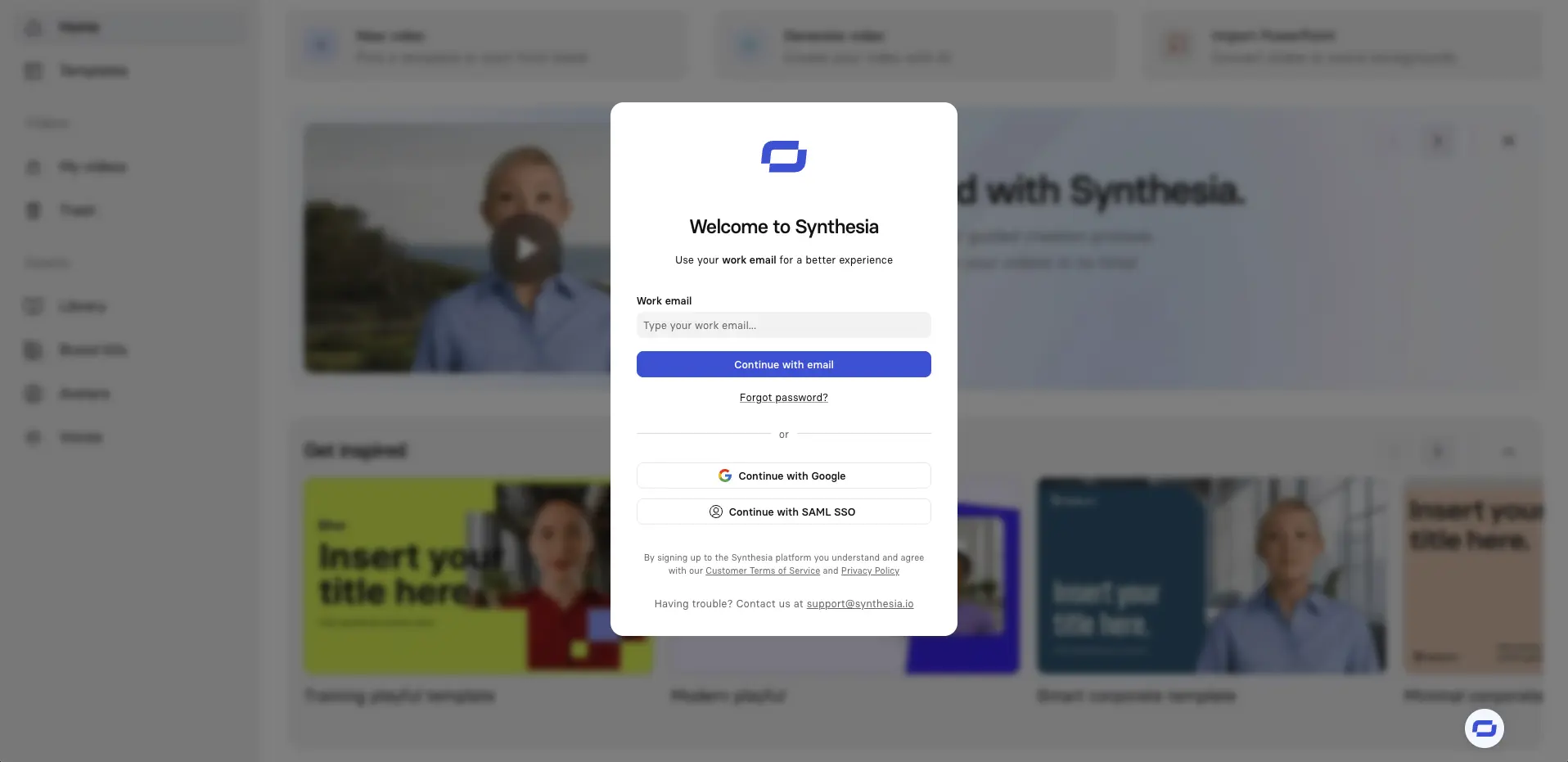
Step 1: Login to Synthesia
Click here to log in or to sign up for a free account.
Step 2: Select 'Create with AI' from the homepage
You can start creating a video from scratch, but the easiest way to create an interactive video is via the Create with AI option.

Step 3: Create your video
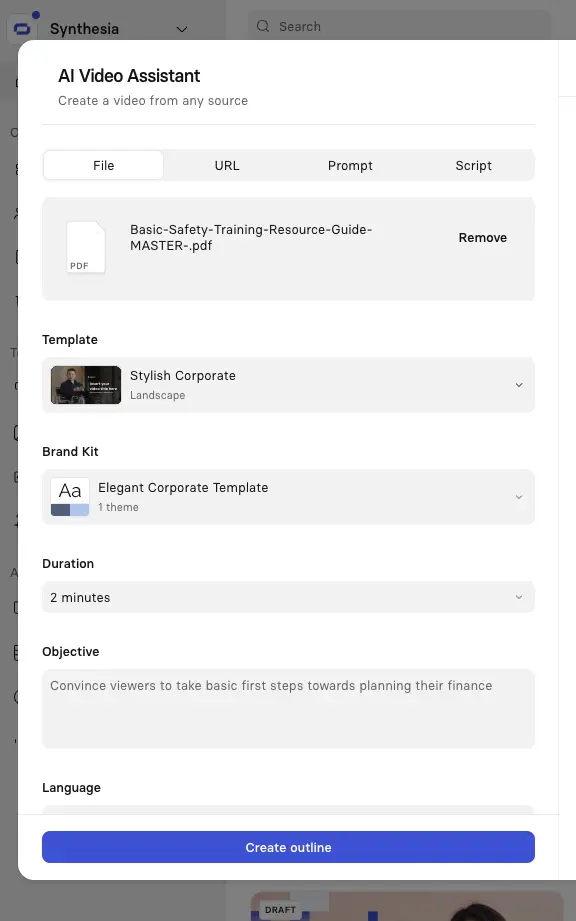
The Create with AI option lets you generate an interactive video from a simple text prompt.
You can convert existing documents (like PDFs, Word docs, URLs, or PowerPoints) into interactive videos. You can also paste a video script.
Next, select a template that matches your video style and adjust settings such as video duration, objective, and language.
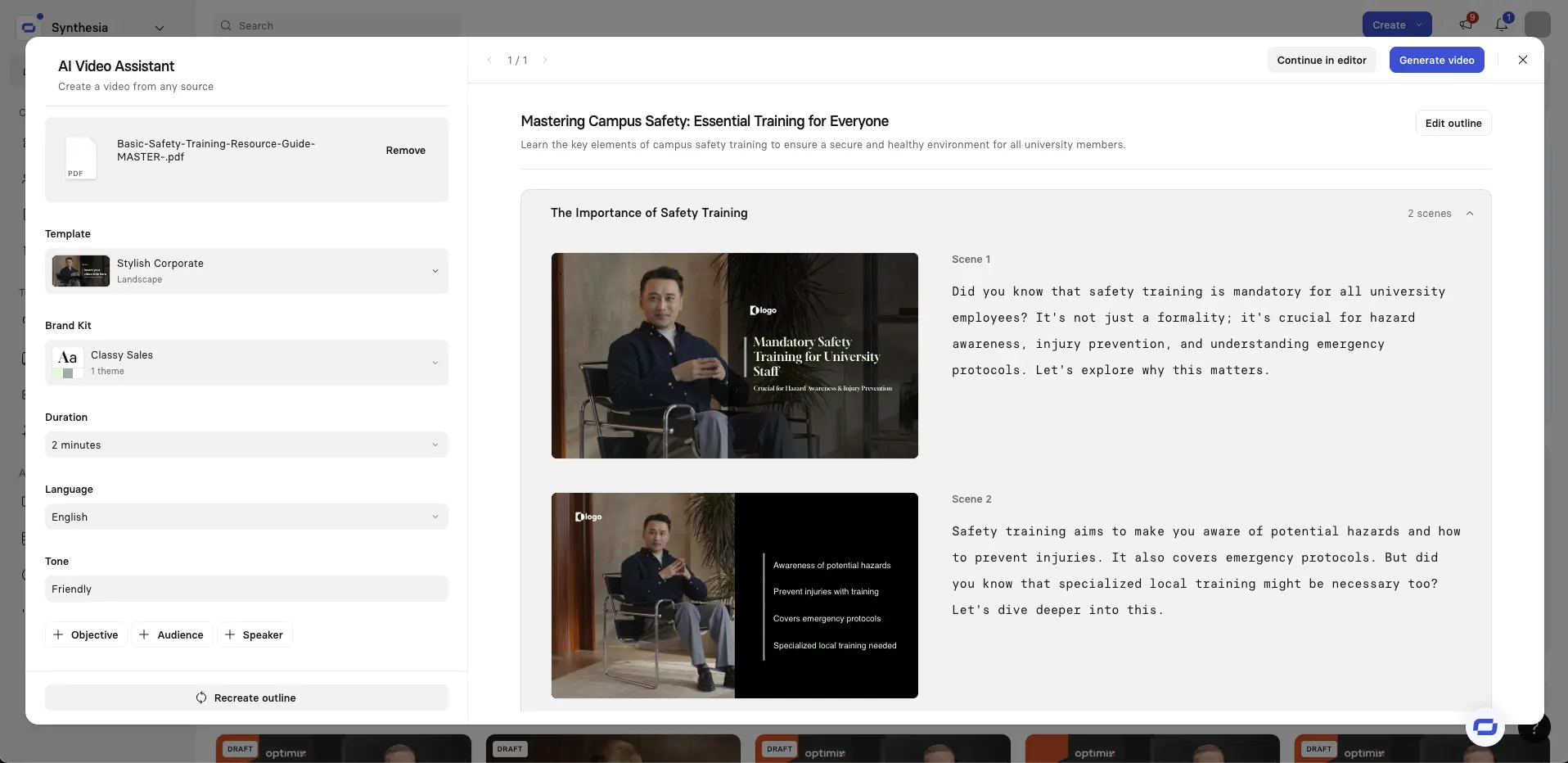
Step 4: Outline your video
You’ll now see an overview of your video’s scenes along with a draft script for each one.
From here, you can add, remove, or edit scenes, or recreate the outline entirely. When you’re ready, click Continue in editor.
Step 5: Edit your video
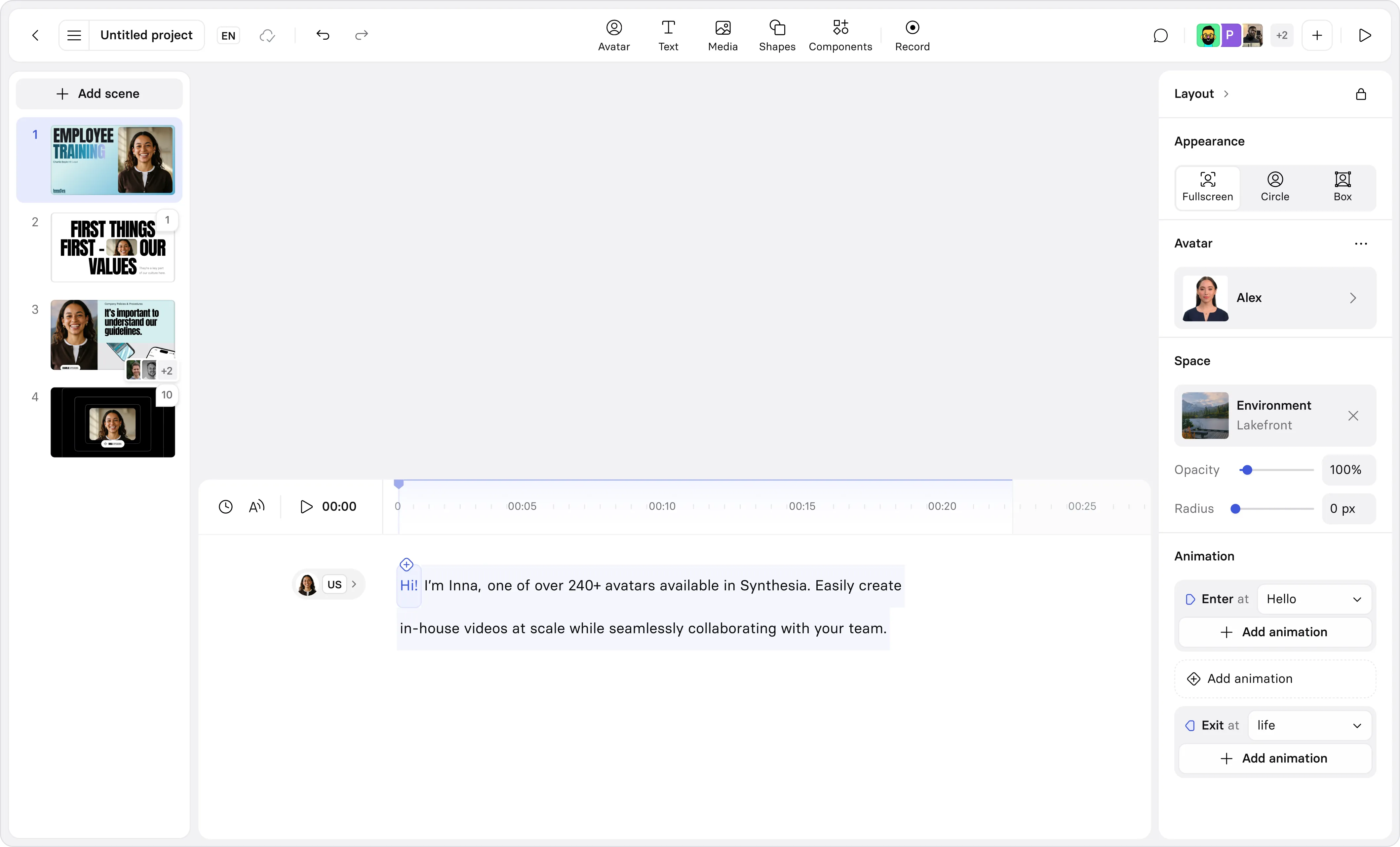
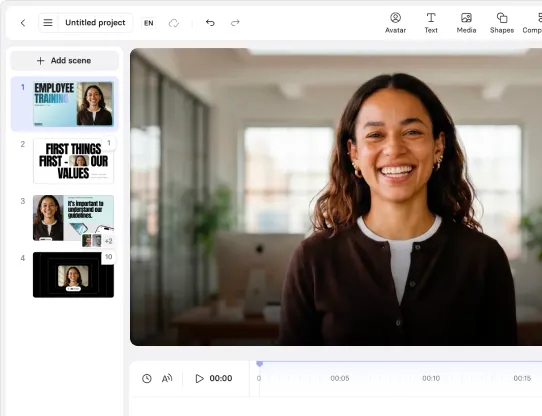
Now it's time to edit your video! In the Synthesia editor you can review your scenes, refine the script, and assemble a variety of elements together into a complete video.
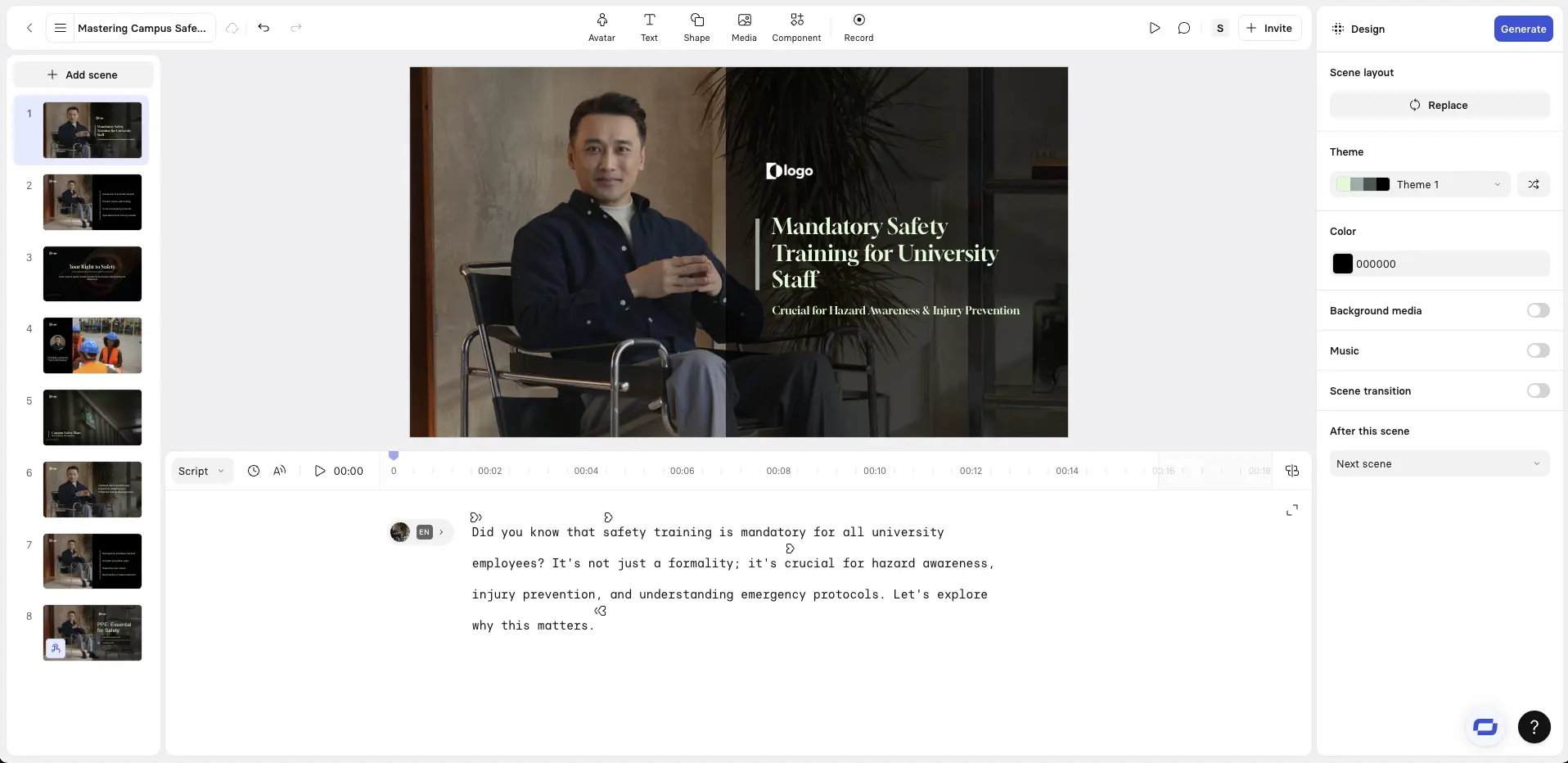
Choose an AI avatar and voice
You can select from a wide range of AI avatars, AI voices, languages, and accents. Try to pick one that matches your audience and the context of your video.
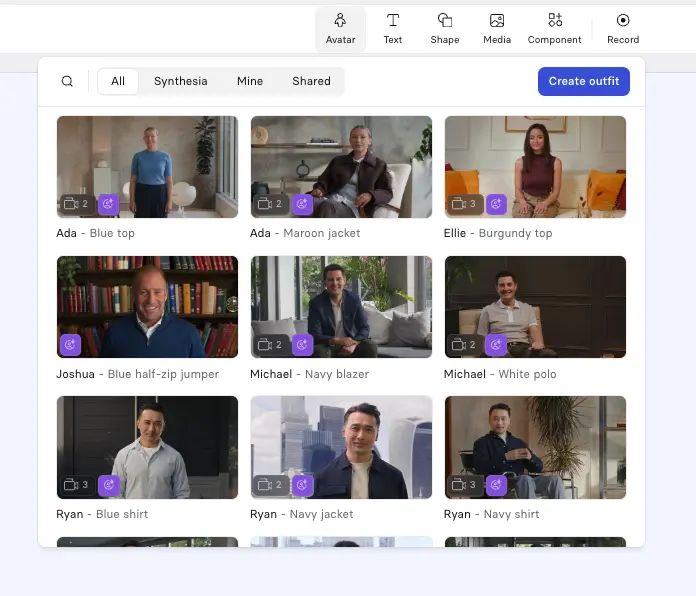
Add screen recordings
If your video needs screen recording footage (like if you are making a software tutorial for example), then you can use Synthesia’s AI screen recorder.
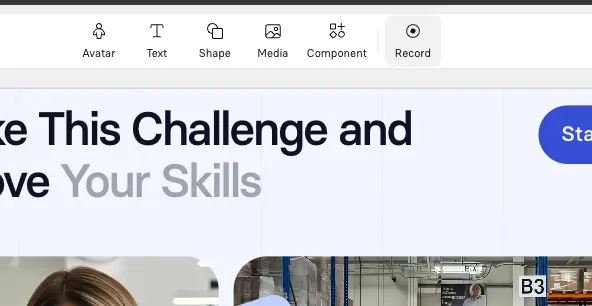
Add B-roll
B-roll helps break up long sections of your video and keeps things visually engaging.
I'll typically place my B-roll clips between sections or layer them behind your avatar or voiceover to reinforce your key points, and I've found that B-roll works best when it's used to show real-world examples, people performing tasks, or visuals that otherwise support the narration.
You can generate clips with an AI video model (e.g. Veo) directly within Synthesia, upload your own footage, or use Synthesia’s built-in stock video library.
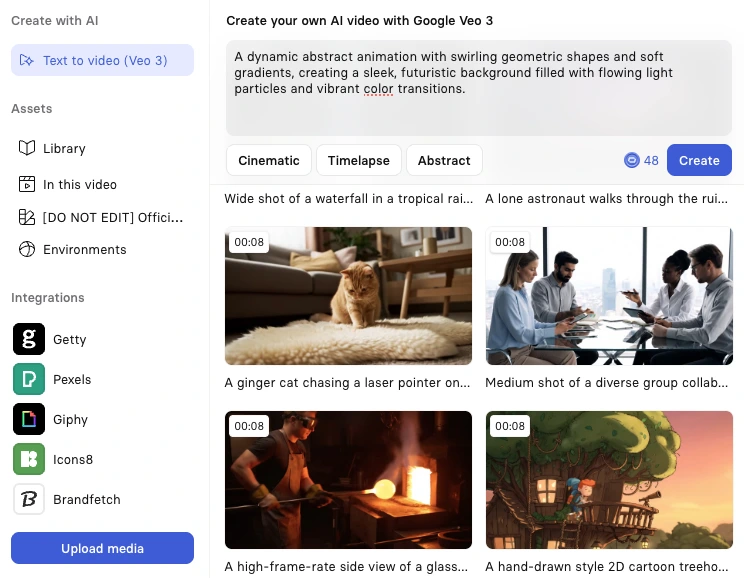
Step 6: Adding interactivity
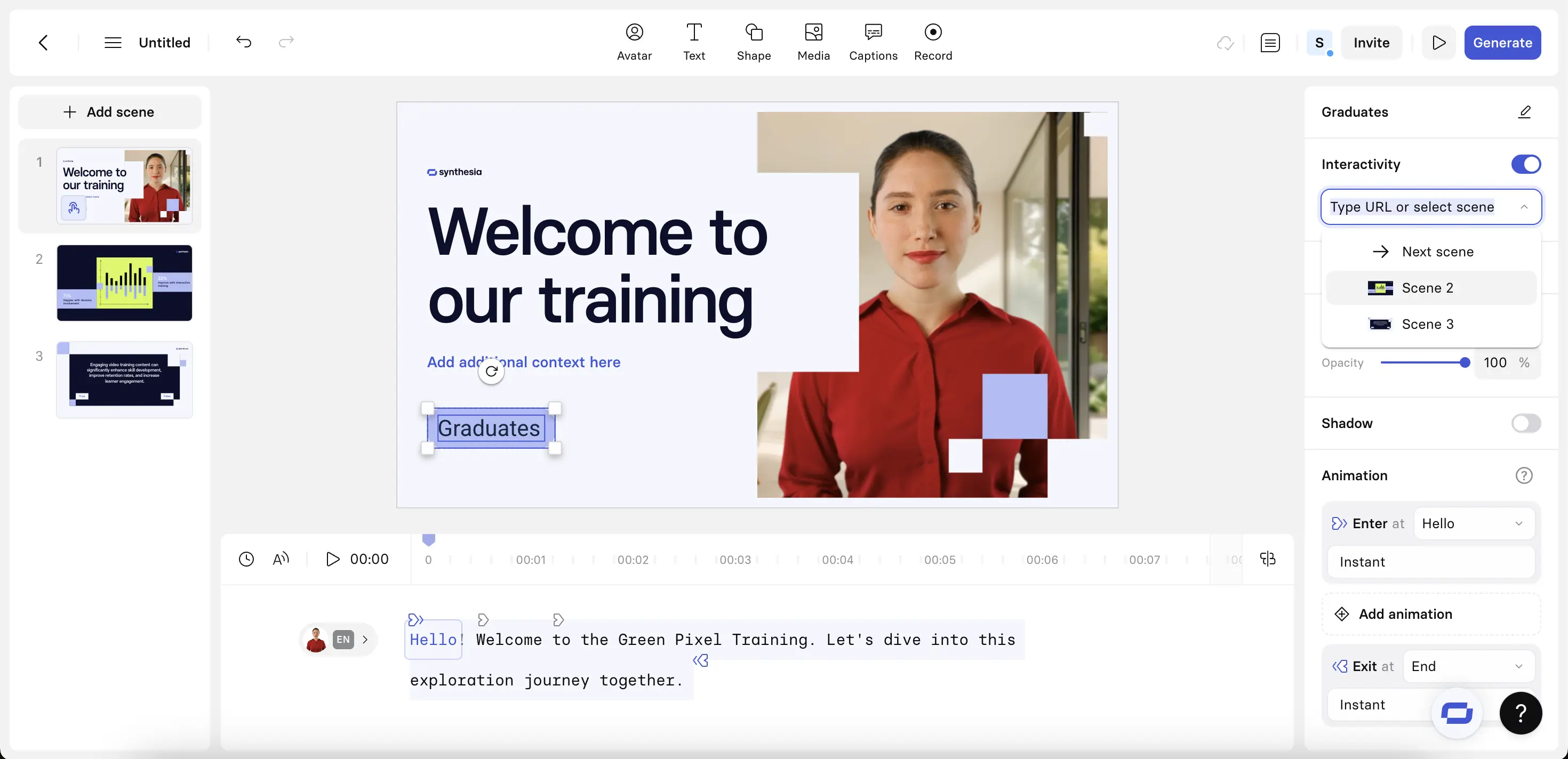
Now it's time to turn your video from a passive watch-and-learn experience into something more engaging. Synthesia gives you a few ways to add these interactive moments.

Start simple
Don't try to use every interactive feature in your first video! Instead, try picking one or two elements that directly address your biggest engagement challenge and see how it goes. That might look like adding a quiz to check viewer understanding or adding some branching scenarios for role-play practice.
Buttons and CTAs
Click on a button and then look for the inspector panel on the right to find the interactivity options. You can send the viewer to a URL:
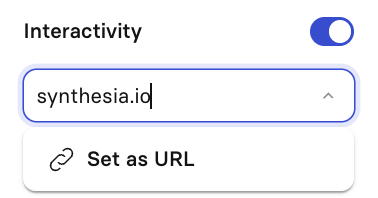
Or jump to a scene:
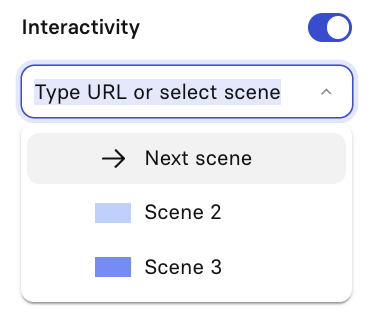
I recommend keeping the button text short, clear, and action-led.
Branching paths
I like to use these to make my videos feel like a guided journey.
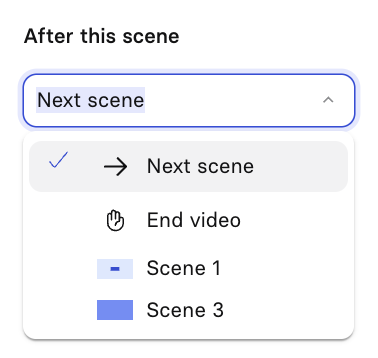
At the end of each branch, I include a button that returns viewers to the core flow or leads them to a closing CTA.
Questions and knowledge checks
Adding interactive questions to your video is a nice way to test knowledge or collect feedback. To add an interactive question, select Component at the top of the page. Questions can be single or multiple answer format.
Step 7: Generate your video
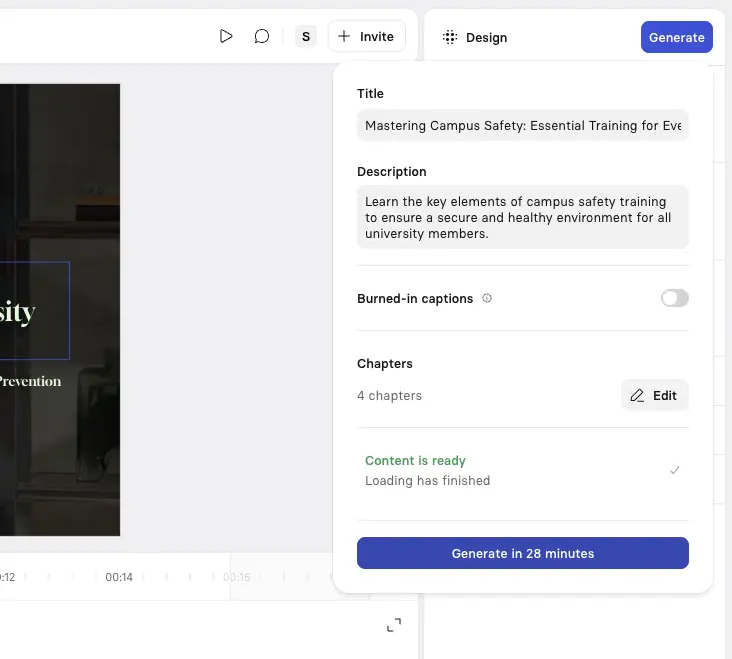
Click Generate in the top-right corner to create your interactive video. You can then get a shareable link or embed your video on a webpage, or download a SCORM version of your video and upload it to your LMS.
Step 8: Publish and share your video
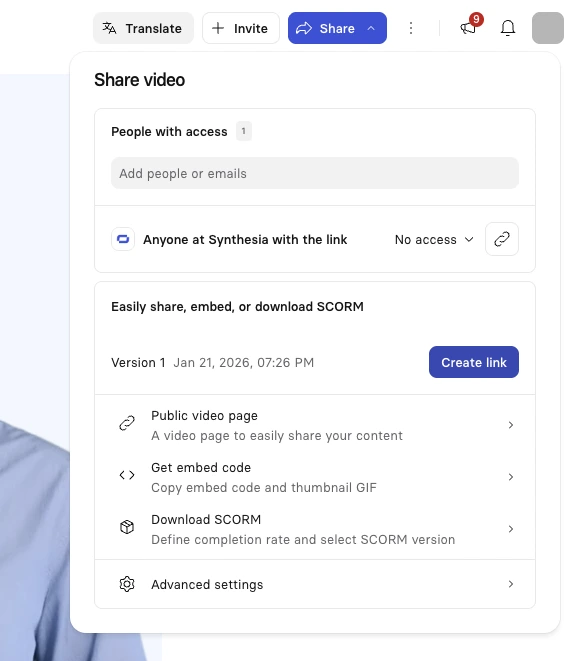
The final step is to publish and share your video. Most teams distribute interactive videos through an LMS, company intranet, or internal communications channels.
Step 9: Publishing and analytics
Once finished, generate and publish the video. You can then view your analytics like views, watch time, completion rates, question attempts, pass rates, and click-through rates.
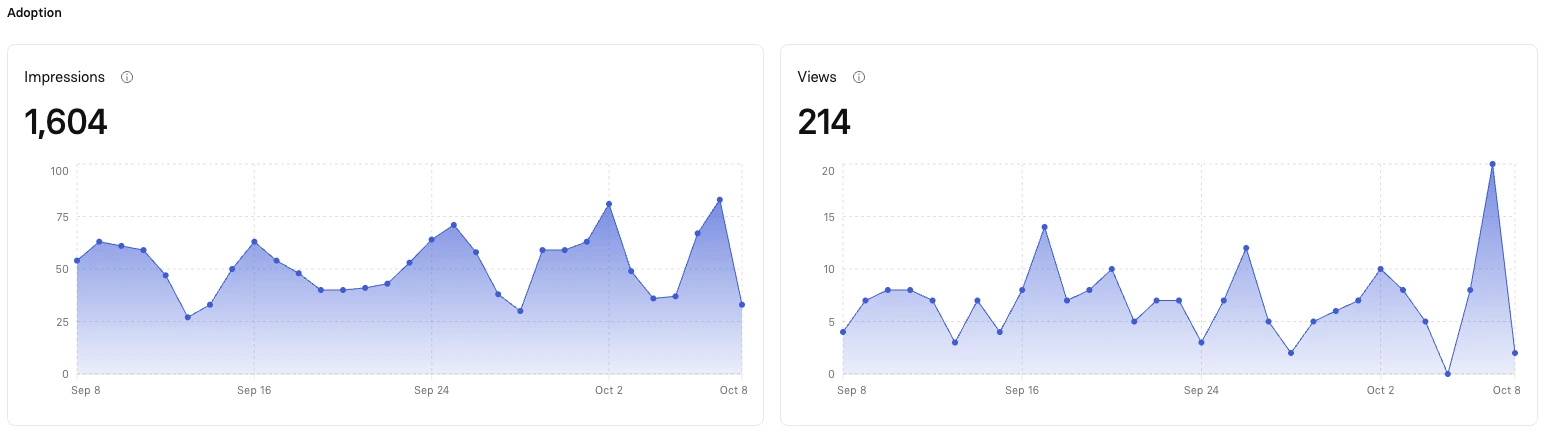
Video analytics allow you to measure how views interact with your videos and identify ways to improve engagement and retention of information.
Step 10: Measure and iterate
Now that you've published your video, you can start tracking how your viewers are engaging with your video via interaction rates, completion rates, and knowledge check scores.
You can then use this data to identify issues like drop-off points and knowledge gaps and then iterate on your video in future versions.
I recommend that you focus on the following video metrics, all of which are available in Synthesia's video analytics:
- Completion rate and time-to-completion
- Interaction rate (percentage engaging with interactive elements)
- Correct answer rate on your knowledge checks
- Branch selections (which can help you to understand learner preferences)
- CTA clicks and conversions
- Drop-off points to identify problem areas
Remember that Synthesia also supports SCORM exports, which means that you can also track some of these metrics (like completion rates and quiz scores) in your LMS if you prefer.
High-quality interactive video templates you can use right away
1. Interactive Corporate Training
This is a choice-driven corporate training video template that lets your learners interact with clickable paths and decisions. It's ideal for training videos focused on onboarding, compliance, and upskilling.
2. Interactive Minimalistic Training
This template has a calm beige layout, and is designed for distraction-free soft skills and focused learning. It combines clean visuals, avatar guidance, and subtle interactivity.
3. Stylish Corporate
This template uses a sleek, dark, and modern corporate design which is perfect for onboarding, company profiles, and executive presentations. I think it could also work well for sales and marketing teams that need to showcase their brand.
4. Interactive Tech Product Tour
This is a guided and clickable product walkthrough that lets your viewer explore your product features at their own pace. It will work great for product demos, onboarding, and customer education.
5. Interactive Corporate Quiz
This template gives you a dynamic quiz-style video that is ideal for training, company announcements, and engaging knowledge checks.
6. Interactive Tech Course
This template has a vibrant and modern layout that uses bold colors, avatars, and interactive elements. It'll work particularly well for tech-focused training and onboarding videos.
Kevin Alster is a Strategic Advisor at Synthesia, helping enterprises apply generative AI to learning, communication, and performance. With over a decade in education and media, he’s built programs for General Assembly, NYT School, and Sotheby’s.
Frequently asked questions
What are interactive videos?
Interactive videos are videos that accept a viewer input, which can take the form of clicks, choices, quizzes, or forms. This input then influences what the viewer will see.
A good analogy is that standard video is like watching a lecture, whereas interactive video is like participating in a workshop.
Is interactivity beneficial in training and educational videos?
There's a lot of evidence that adding interactivity to training and educational videos lead to improved learning outcomes like higher completion rates, better knowledge check scores, and improved on-the-job performance.
Take this study as an example. They found that interactive video beats normal video in a controlled study with learners enjoying a +6.49-point lift on the study’s test metric and also significantly higher learner satisfaction scores.
What videos benefit from adding interactivity?
If one of my videos is struggling with low completion rates, poor viewer knowledge retention, and dropping engagement, then that's where adding some interactive features can be really transformative.
If you made your video to drive conversions, convey complex information, generate deep viewer insights, or if your video is for training or educational purposes, I think adding interactivity is nearly always going to be beneficial.
However, I highly advise against adding interactivity to any video where you want to tell a story. If you're trying to create a narrative with your video, then adding interactive elements will only distract from that.

.webp)

.webp)