I used to facilitate an in-person manager development program where we saved the last day entirely for roleplay. We brought in trained actors, people with experience facilitating scenarios who could also improvise, simulating as real a conversation as possible.
Here's how it worked. We'd introduce a framework, split managers into small groups, and give each group a scenario to roleplay with their actor-facilitator. Their task was to try out the framework and reach a stated goal. We set ground rules: anyone could "tap in" to take over, or "time out" to ask for feedback. And everyone had to participate.
We'd bury the lede on that last bit, anticipating the groans. Inevitably, this day got the most positive feedback.
That's because managers learned that roleplay, when done intentionally, is one of the few opportunities for structured skill practice at work with zero stakes. If you mess up, you try again. Knowing what to do and being able to do it in a real conversation are two different things.
So here's how to integrate roleplay into your L&D strategy, without necessarily needing to bring everyone in-person for several days in a row.
How to design an effective roleplay scenario
The biggest mistake I see people make when they're designing roleplays is that they make the scenario too simple. They avoid the complexities of real conversations, shying away from the likelihood that someone may react with emotion in a given circumstance.
But like managers, sales reps, customer service agents, and many others know too well, you can't predict how someone will respond. That's what makes it especially hard to practice for.
That's why your roleplay needs to be believable. I recommend building a roleplay by following these five steps:
- Identify your learning objective
The first step of designing a roleplay is knowing who your audience is and the skill gap you're trying to address with the roleplay (e.g., This roleplay is for managers who need to be able to deliver timely feedback to their direct reports). - Search for communication patterns
With your target audience in mind, start searching your data sources (e.g., employee surveys, performance reviews, sales call transcripts, Slack channels) for areas where communication is breaking down. You can also ask HR Business Partners or do a listening group with members of your target audience. Then, use an LLM to synthesize this data, noting areas causing conflict, confusion, or even avoidance. - Decide on the scenario
Identify one or two moments that seem to be repeating in the data. Pick something where the stakes are significant (e.g., a sales rep risks churning an account). Then, decide what "better" looks like in this scenario (e.g., a sales rep convinces a customer to consider a renewal based on several factors). - Pick a model or framework
The participants need a mechanism to reach their goal in the roleplay scenario. Give them a model or framework to try out so they understand what good looks like. If you're not using a framework, make sure there's something else anchoring what good looks like, whether that's a model conversation or a set of behaviors to listen for (e.g., asking more questions than answering them). - Write the scenario
The scenario should have just enough detail to feel real, but not so much that someone is overwhelmed by the specifics. This should be something they can read in a few minutes, and then practice. That requires clear context, two roles clearly defined (more than that is hard to follow), constraints (what makes it hard), and a goal (where the conversation should go).
Common coaching models and frameworks
- Describe, Express, Specify, Consequences (DESC), a framework for navigating difficult conversations.
- Drama Triangle, a model for disrupting the narrative of prescribed roles (i.e., victim, rescuer, persecutor) in a given scenario.
- Goal, Reality, Options, Way Forward (GROW), a framework for empowering individuals to find their own solutions.
- Identify, Describe, Encourage, Act (IDEA), a framework for delivering constructive feedback.
- Ladder of Inference, a model for disrupting how we often jump to conclusions.
- Situation-Behavior-Impact (SBI), a framework for closing the gap between intent and impact.
Once you've worked through those five steps, here's a prompt you can copy and paste into an LLM (be sure to update the brackets) to draft your scenario.
Roleplay scenario prompt
You are an experienced instructional designer well-versed in writing effective role-play scenarios.
I need you to write a role-play scenario for [audience] who need to practice [behavioral gap]. I have attached evidence I collected to inform this scenario.
Use this evidence to build one role-play scenario that a facilitator can run in 15–20 minutes. The scenario itself should be readable in under one minute.
Framework or model participants will use: [e.g., SBI]
Please create:
- Title (short and realistic)
- Background (3–5 sentences grounded in the evidence)
- Roles (two participants, define who they are and their relationship)
- Constraints (1–2 things that make it hard)
- Conversation goal (what does good look like by the end of this conversation)
- Debrief (3 questions focused on observable behaviors)
- Retry (one instruction for the second attempt)
- Variations (2): one easier, one harder
Guidelines:
- Keep it workplace-appropriate.
- Use concrete language. Avoid therapy language.
- Don't guess intent. Stick to what is stated in the evidence.
If you plan to run the roleplay in multiple regions or languages, I recommend designing one scenario first. Then, try localizing it with an LLM. You should always ask a native speaker to review the output, to catch anything that doesn't translate well. In some cases, you may need to design additional scenarios to accommodate cultural differences in the workplace.
How to run a roleplay session
Roleplays are only as effective as the facilitation. Your facilitator sets the tone. They're also there to manage logistics and enforce the rules.
If you're wrangling a large cohort, whether in-person or virtually, I highly recommend bringing on additional facilitation support. There are a lot of moving pieces. In the scenario I shared earlier, we typically had two main facilitators, and would rotate in an HR Business Partner or another L&D team member to support time management and rotations.
There's no magic ratio of facilitators to participants, but a good rule of thumb is if one person is managing the content, there should be at least one other focused on logistics.
Similarly, there's no right number of participants to have in a group. While I recommend having no more than two roles per scenario, how you configure the group depends on the context:
- Small groups with observers (no more than four or five per group) work well when you want more robust feedback.
- Pairs that continuously rotate work well when you want everyone to get maximum practice time.
If I know the group is comfortable with each other because they're a team with high psychological safety, I might have no problem putting them in one-on-ones. If some people are nervous, sometimes the group setting can be supportive as others can jump in.
With the right facilitation in place, here's how to run a successful roleplay session.
Set the ground rules
It may seem unnecessary, but trust me, you're going to want to set some ground rules for the group. Keep the rules lightweight so they're easy to remember and reference. Speaking of referencing, be sure to have them visible throughout the session (project them on a screen, print them out, pin them in a chat, or add them next to the scenarios).
These are rules I like to use:
- Anyone can pause, at any time. Say "time out" to stop the conversation, whether you just need to collect your thoughts, want specific feedback, or need someone else to take over. This goes for facilitators, too.
- Feedback should be focused on performance, not personality. All feedback should be based on observed behavior. Don't say "you were too nice." Instead, say "I wish you had focused more on naming the problematic behavior." (If you know me, I say this a lot.)
- Everyone rotates roles. This creates more depth to the feedback and gives participants an appreciation for how challenging it can be to play a specific role.
Find what works for your group. Over time, people will get comfortable with the rules and you’ll have to enforce them less (because participants will do that for you).
Run a practice round
Have you ever played a board game with people who just learned the rules? If so, you know the value of a practice round. Spend no more than five minutes encouraging everyone to try the scenario out and practice following the rules.
Then, immediately debrief. Ask if anyone has any questions. Or encourage them to pair and share one observation (e.g., what felt unclear, what worked, what they'd do differently). Once everyone is comfortable, proceed to running the roleplays as planned.
Debrief and rerun
At the end of each round, run a structured debrief. You could use something like: what's one thing you did well, one thing you would have done differently, and one thing you'll try next? (or one of the examples I share below). Whichever structure you choose, make it repeatable so participants know what to expect.
If you have observers in the group, have them share one observation each before the person in the lead role reflects. If you're running pairs, use one or two anchor questions to guide the reflection: what did you do well, and what would you do differently.
Then, rerun the scenario. Give everyone the opportunity to correct their mistakes or try something new. Keep this short (no more than three minutes), before swapping roles.
10 coaching roleplay scenarios
Each of these coaching scenarios is quite common. Where they become valuable is in specificity. Take them as inspiration, and bring them to life through details of your company, culture, and even customers. The more specific, the better.
1) Missed deadlines
Context
A team member missed two deadlines in a row. Two cross-functional partners escalated the issue to their manager because the missed work is blocking them. The team member usually delivers on time and produces high-quality work.
Manager card
You're the manager. You found out about the missed deadlines because two cross-functional partners came to you directly. You need to address what happened without losing this person's trust. Using the SBI framework, describe what happened, name the behavior you need changed, and discuss the impact on the team. Your goal is to agree on one change so this doesn't happen again.
Employee card
You're the direct report. You missed two deadlines because you were blocked and didn't want to escalate. You believe the work is strong and the delay was justified. You're not sure why this is being treated as a bigger deal than it is.
Debrief
Did you stay specific? Did you name one behavior? Did you land one clear expectation for the next deadline?
Retry
Re-run the first 60 seconds. Replace any generalizations with one observable example.
2) When feedback backfires
Context
Two colleagues are working on a shared project. Last week, one of them gave the other feedback on how they're running it. Since then, the person who received the feedback has gone quiet and is avoiding messages.
Peer A card
You gave a colleague feedback last week on how they're running a project you're both working on. Since then, they've been avoiding your Slack messages and you can feel the tension. You need to re-open the conversation. Using the IDEA framework, lead with your intention for raising it, share what you observed, explain the effect it's having on the work, and make one clear ask about what needs to change. Your goal is to move the relationship and the project forward.
Peer B card
You received feedback last week that didn't land well. You don't think it was fair and you've been keeping your distance since. You're not ready to let it go, and you'll be testing whether the other person really means what they said or whether they'll back down if you push back.
Debrief
Did you acknowledge the relationship before getting into the issue? Did you restate your intent clearly? Did you end with one action and a check-in?
Retry
Re-run the intention and action lines. Keep them brief. Then ask one open question and pause.
3) Interruptions in meetings
Context
A colleague repeatedly interrupts people in meetings and dismisses their ideas. Others have stopped contributing because they don't want to be shut down. It's affecting both team morale and the quality of work coming out of those meetings.
Peer A card
You've noticed that a colleague keeps interrupting people in meetings and dismissing their ideas. You've seen the impact: people have stopped speaking up. You need to raise this directly. Using the DESC framework, describe the specific behavior you've observed, express the impact it's having on the team, specify what you need to change, and confirm a clear expectation for the next meeting. This person is more senior than you on paper, so the conversation carries some risk. Your goal is to name one clear behavior and leave with one concrete agreement.
Peer B card
A peer is about to give you feedback on how you show up in meetings. You don't see it as a problem. You're moving fast and being direct, which is how you get things done. You're likely to push back and justify your behavior. You're not trying to be difficult, you just don't think the criticism is fair.
Facilitator note
If Peer A uses labels like "disrespectful," pause and ask them to translate it into one behavior they could describe to someone who wasn't in the room.
Debrief
Did you stay behavioral? Did you specify what needs to change? Did you set a clear expectation for the next meeting?
Retry
Re-run the "Specify" line. Make it concrete: what this person will do differently in the next meeting.
4) Excuses without commitments
Context
A manager has been missing their targets for over a month. In every check-in, there's a new reason: not enough resources, too many dependencies, unclear priorities. The excuses are plausible, but nothing is changing.
Senior leader card
You oversee a manager who has been missing targets for over a month. Every check-in ends the same way: a new explanation, no commitment. Workload is genuinely heavy across the business, so you need to be realistic. Using the GROW framework, align on the goal, get honest about the current reality, explore what options actually exist, and secure one specific commitment with a date. Your goal is to leave with a clear next step you can both track.
Manager card
Your targets have been slipping and your leader has called a check-in. You have real reasons for the misses: resourcing is tight, there are dependencies you don't control, and your priorities keep shifting. You're not making excuses, you're giving context. You're willing to talk about the situation, but you're not ready to commit to something you're not sure you can deliver.
Debrief
Did you avoid debating the past? Did you land one commitment with a deadline? Did you set a follow-up checkpoint?
Retry
Re-run the "Way forward" moment. Ask for what, by when, and how you will review progress.
5) High performance, bad behavior
Context
A top rep keeps exceeding their targets. They also throw colleagues under the bus in client meetings, disregard company policies, and make the working environment combative. The results are real. So is the damage.
Manager card
You manage a top performer who is exceeding targets but creating serious problems along the way. You need to have a direct conversation without losing them, especially heading into a critical quarter. Using the DESC framework, describe the specific behaviors you've observed, express the impact on the team and the business, specify what needs to change, and confirm a clear and non-negotiable standard. Lead with care, but do not soften the message. Your goal is to agree on one observable change and set a follow-up.
Employee card
You're a top performer and you know it. Your numbers speak for themselves. You're about to be told your behavior is a problem, and your instinct is going to be to point to your results. You're not trying to make anyone's life difficult, you're just focused on winning. You'll be looking for a trade: give me some flexibility and I'll keep delivering.
Facilitator note
Watch for bargaining. If the manager offers a trade, pause and bring them back to the standard. Results do not offset behavior.
Debrief
Did you keep the standard firm? Did you specify the replacement behavior? Did you set a follow-up?
Retry
Re-run the non-negotiable statement. Keep it calm, specific, and tied to team impact.
6) Conflict between teammates
Context
Two people on your team blame each other for an incident that had ripple effects on the wider team. Messages have been terse, in person and over Slack. One of them escalated the issue to you. The other hasn't. You need to coach the person who came to you to address their colleague directly, rather than managing it for them.
Manager card
One of your direct reports has escalated a conflict with a colleague and wants you to step in and handle it. Your job is not to take sides or solve it for them. Be aware of the Drama Triangle: your direct report may play the victim and try to pull you in as the rescuer. Don't take the bait. Your goal is to coach them toward a direct conversation with their colleague and agree on one concrete next step. You have 20 minutes and a deadline is close.
Employee card
You've had a serious falling out with a colleague and it's affecting the work. You've gone to your manager because you want them to sort it out. You believe you are in the right and you're going to try to get your manager to see it your way and act on your behalf.
Facilitator note
If the manager starts taking sides or solving the problem for the employee, pause and redirect. The Drama Triangle roles are victim, rescuer, and persecutor. The manager's job is to avoid all three.
Debrief
Did you avoid taking sides? Did you resist being pulled in as the rescuer? Did you land one agreement with a checkpoint?
Retry
Re-run the moment where the employee tries to recruit you. Use one redirect line, then ask what they plan to say to their colleague directly.
7) Burnout and wellbeing
Context
A member of the team seems to be showing signs of burnout. They're taking frequent sick days, say they're exhausted, and have gone quiet in meetings where they're usually the first to speak up. They haven't said anything to indicate an issue.
Manager card
You've noticed a change in one of your strongest team members over the past few weeks. The signs are consistent but you haven't heard anything from them directly. Before this conversation, be aware of the Ladder of Inference: you've observed behavior, but you don't yet know the story behind it. Don't arrive with a conclusion. In your one-on-one, share what you've noticed, ask open questions about how they're experiencing the work right now, and explore what support or change might help. Your goal is to help them identify what, if anything, needs to shift.
Employee card
You've been running on empty for weeks but you haven't said anything. You don't want to seem like you can't handle the workload. Your manager is about to check in and part of you is relieved, but you're also likely to say everything is fine. You're not sure how much to share or whether it's safe to be honest.
Facilitator note
Watch for managers who move too quickly to solutions. The instinct to fix is strong in this scenario. If the manager starts suggesting changes before the employee has fully spoken, pause and reset. The goal in the first half of this conversation is to listen, not solve.
Debrief
Did you create enough space for the employee to speak? Did you avoid jumping to conclusions before they had a chance to share? Did you land one concrete adjustment and a follow-up?
Retry
Re-run the opening. Ask one open question and then stay silent long enough for the employee to actually answer.
8) Resistance to change
Context
A key workflow is changing. One team member is openly complaining about it, saying it's a waste of time and grumbling about having to learn a new process. Others are starting to join in. The decision has been made. It is not up for debate.
Manager card
One of your direct reports is vocally resistant to a change that has already been decided. Their attitude is starting to spread to the rest of the team. You need to address it directly without getting pulled into a debate about whether the change is the right call. Using the Acknowledge, Explain, Align approach, acknowledge their concern, briefly explain the rationale, and align on what changes this week. Keep the decision closed. Your goal is to leave with a clear next step and a commitment from them for this week.
Employee card
You think this change is unnecessary and you've made no secret of it. Others agree with you and you feel validated. You're going to try to get your manager to see your side and push back on the decision. You're not trying to be difficult, you genuinely think this is the wrong call and you want someone to listen.
Debrief
Did you validate the emotion without validating the refusal? Did you keep the decision closed? Did you land a clear next step?
Retry
Re-run the acknowledge and align lines. One sentence each. Then ask for a commitment for this week.
9) Returning from leave
Context
A team member is back after an extended leave and slowly ramping up from part-time to full-time. The transition is going reasonably well, but there are areas where they need more support. Their manager wants to make sure they have everything they need to feel confident coming back.
Manager card
One of your direct reports is returning from an extended leave and ramping back up gradually. You want to check in and make sure the transition is working for them. You don't know the reason for the leave and it's not your place to ask. Keep the conversation focused on the work and what support looks like right now. Using the GROW framework, ask open questions about how the ramp-up is going, explore what's working and what isn't, and agree on one or two concrete adjustments that would help. Your goal is to leave them feeling supported, not scrutinized.
Employee card
You're back after an extended leave and still finding your footing. Things are going okay but there are areas where you could use more support. You're not sure how much to ask for. You don't want to seem like you're struggling, but you also know you're not fully back to full capacity yet. If your manager creates enough space, you're ready to be honest about what you need.
Facilitator note
Watch for managers who fill silences too quickly or jump straight to solutions. The goal in this conversation is to ask and wait. If the manager starts problem-solving before the employee has had a chance to speak, pause and reset.
Debrief
Did you ask before advising? Did you keep the focus on support rather than performance expectations? Did you leave them with one concrete next step that felt helpful rather than pressured?
Retry
Re-run the opening question. Make it open, focused on the work, and free of any implied judgment.
10) Career development
Context
A high performer is pushing for a promotion. There is no role to promote them into yet, but their manager is actively trying to make the business case to create one. The risk is that while the work happens in the background, this person loses motivation and starts looking elsewhere.
Manager card
One of your best people wants a promotion and they deserve one. The problem is the role doesn't exist yet and you can't promise when it will. You're working on it, but you can't say that in a way that sounds like a stall. Using the GROW framework, acknowledge their ambition, be honest about what's actually in the way, and agree on two or three concrete development moves that build toward the goal. Your job is to keep this person engaged and moving forward without making promises you can't keep.
Employee card
You've been performing at a high level and you're ready for the next step. You want a title, a timeline, or at minimum a guarantee that it's coming. You're going to push for a commitment. You respect your manager but you're starting to wonder if the promotion is actually going to happen or whether you're being strung along.
Facilitator note
Watch for vague encouragement. "You're doing great, keep going" is not a development plan. If the manager can't name a specific next step or a concrete development action, pause and ask them to try again.
Debrief
Did you stay honest about what's actually in the way? Did you avoid making promises you can't keep? Did you land a development action with a timeline, not just intent?
Retry
Re-run the forward plan section. One sentence on what's in the way, one sentence on what changes that, one concrete ask.
How to scale roleplay with AI
One of the limitations of roleplay has always been how hard it is to scale. Sure, I can run an effective session with a cohort of 20 managers as part of a broader training program, but how can I bring that to a global management pool?
Truthfully, the answer used to be: you need a lot more resources (for facilitators, for localization, and for logistics).
But not anymore.
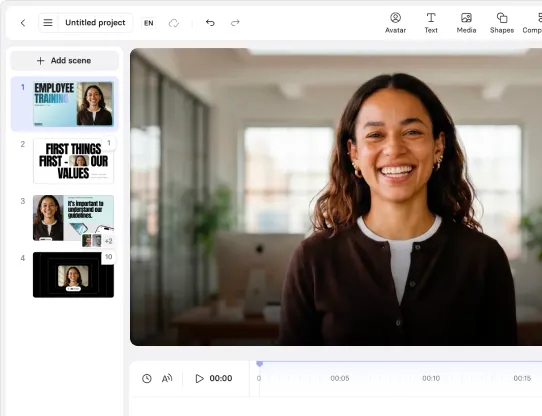
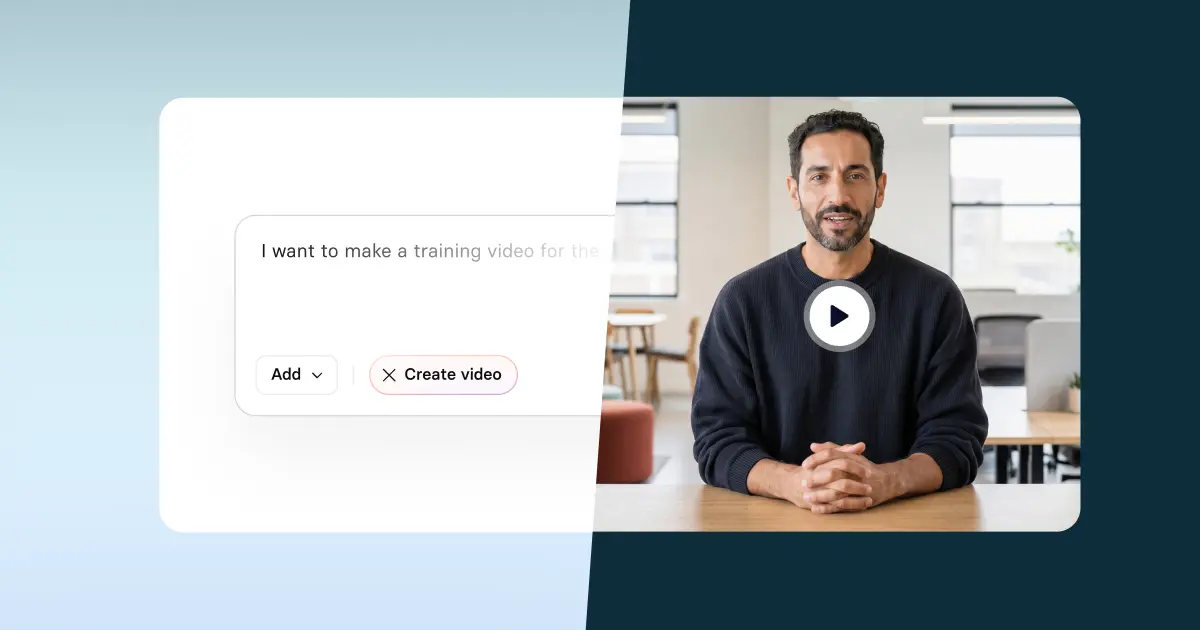
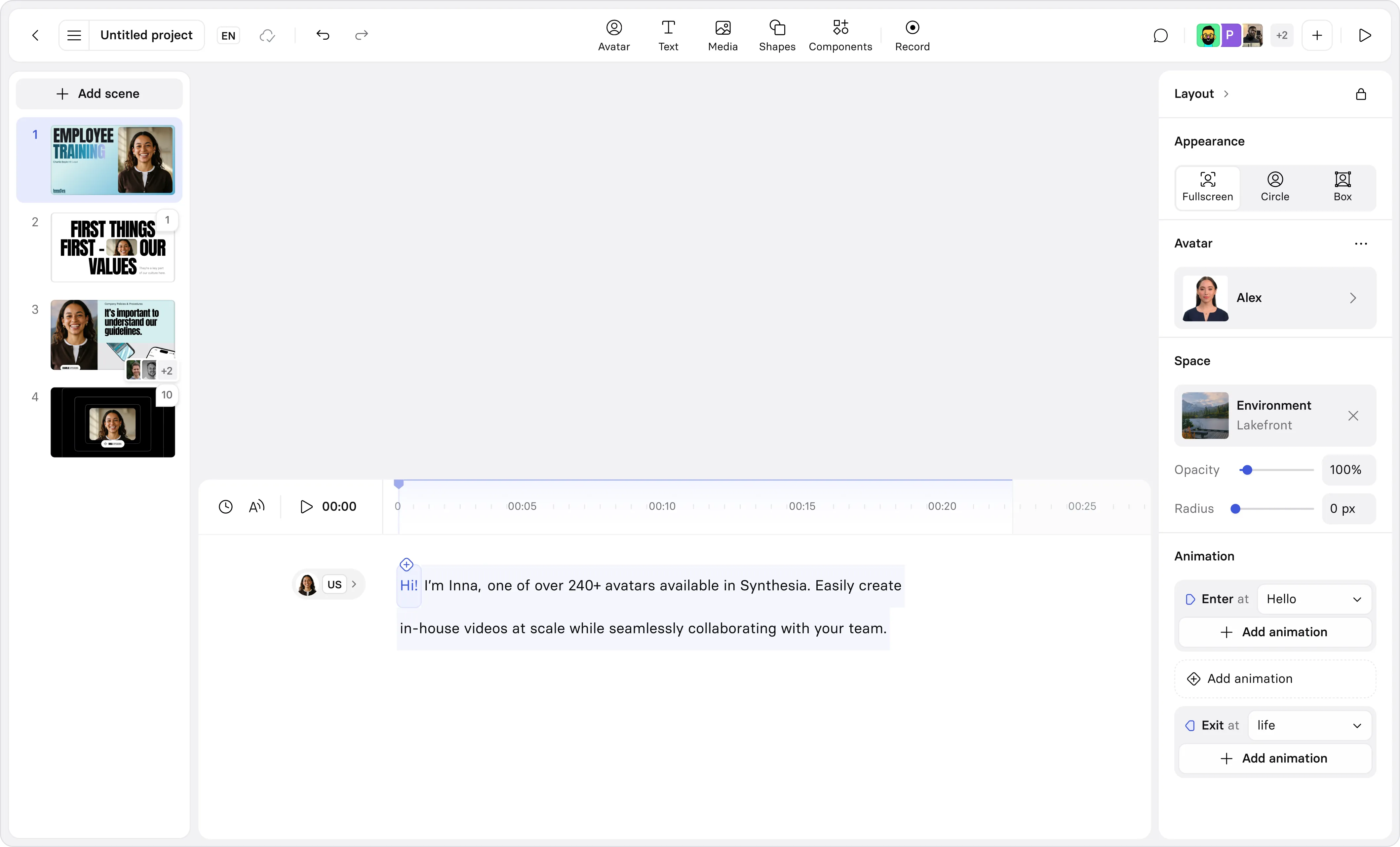
Synthesia launched Roleplay Sessions to allow teams to close the gap between knowing and doing, at scale. Roleplay Sessions gives employees on-demand practice with Interactive Avatars. Each session ends with self-reflection, real-time feedback, and the opportunity to try again.
Hear more from our CEO, Victor Riparbelli.
{lite-youtube videoid="DogutmNTyGw" style="background-image: url('https://img.youtube.com/vi/DogutmNTyGw/maxresdefault.jpg');" }
You could scale any of the scenarios discussed above with an AI sales roleplay tool. Here's how it would work with Roleplay Sessions:
- Your team partners with our experts to design your first scenario in the platform, just to make sure everything from the session context to scoring rubric is effective.
- Employees get on a call with one of our Interactive Avatars to practice. They push back, ask follow-up questions, and listen, just like a customer, direct report, or prospect.
- Once the call ends, a coach (also an Interactive Avatar) asks employees to assess how it went before delivering an overall score, plus a breakdown of how they performed across the skills being practiced.
- Employees try again, immediately, or whenever they want to practice building their skill.
Do employees really want AI coaching?
In Deloitte's 2026 Global Human Capital Trends report, they reported that 80% of workers agreed an AI coach that provides real-time guidance, feedback, and support would help them navigate and adapt to change.
We've seen this in our early results. Employees are opting into more coaching. In a pilot with a Fortune 10 company, 68% of sales reps returned for repeat practice.
If you're interested in learning more about how Synthesia can help you scale roleplay, book some time with our team.