AI in Learning & Development Report 2026
Discover how L&D teams are moving from AI experiments to AI-powered learning ecosystems — backed by 20,000+ data points from 421 professionals.

Executive Summary
AI has moved beyond experimentation and into everyday L&D work
87% of respondents are already using AI, and only 2% have no adoption plans. Most are past experimentation, with 36% using AI in defined workflows and 9% beginning to scale it across their organization.
AI’s strongest value today is speed
Today L&D teams use AI mainly for voice generation (63%), content and quiz drafting (60%), video creation (52%) and translation (38%) in the design and development stages. The top benefits are faster production (84%) and better learner experience (66%).
“AI has crossed a threshold in L&D. It has moved from experimental tool to everyday practice — and, for a growing minority, to something closer to operational infrastructure.”
- Dr Philippa Hardman
The next phase is about learner impact
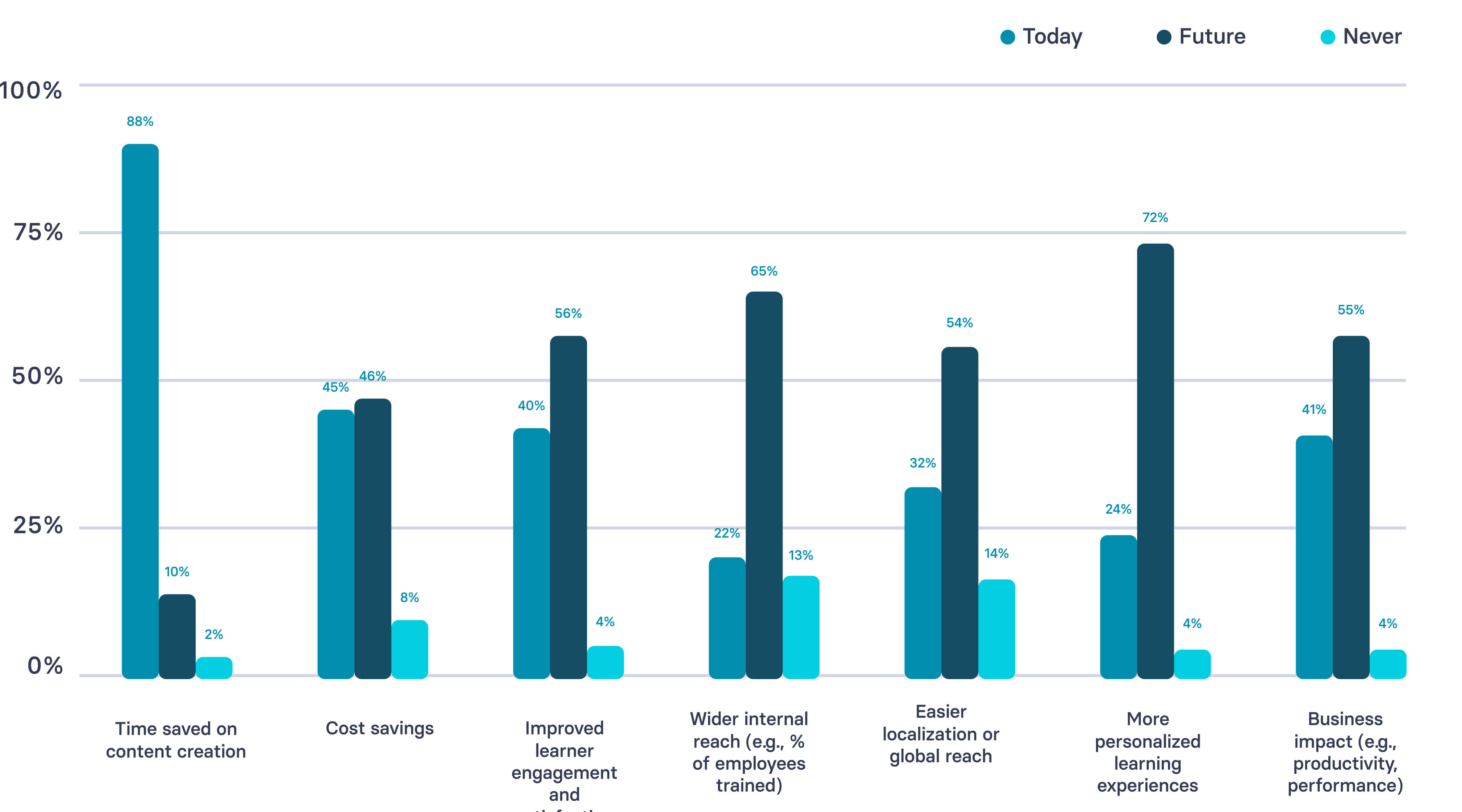
L&D teams expect the biggest future gains in more personalized learning (72%), wider internal reach (65%) and improved learner engagement (56%). Planned adoption is rising for assessments and simulations (36%), adaptive pathways (33%), skills mapping (32%) and AI tutors (29%). And value is shifting from time saved (88%) to clearer business impact (55%) and easier global localization (54%).
The learning ecosystem is becoming more distributed
Only 47% think the Learning Management System (LMS) will remain the backbone of their ecosystem. Expectations for where AI will live split across embedded features (19%), productivity tools (17%), standalone systems (17%) and cross-system agentic layers (19%). 27% remain unsure.
Agentic AI (AI that can autonomously take actions) interest is high, but teams are cautious
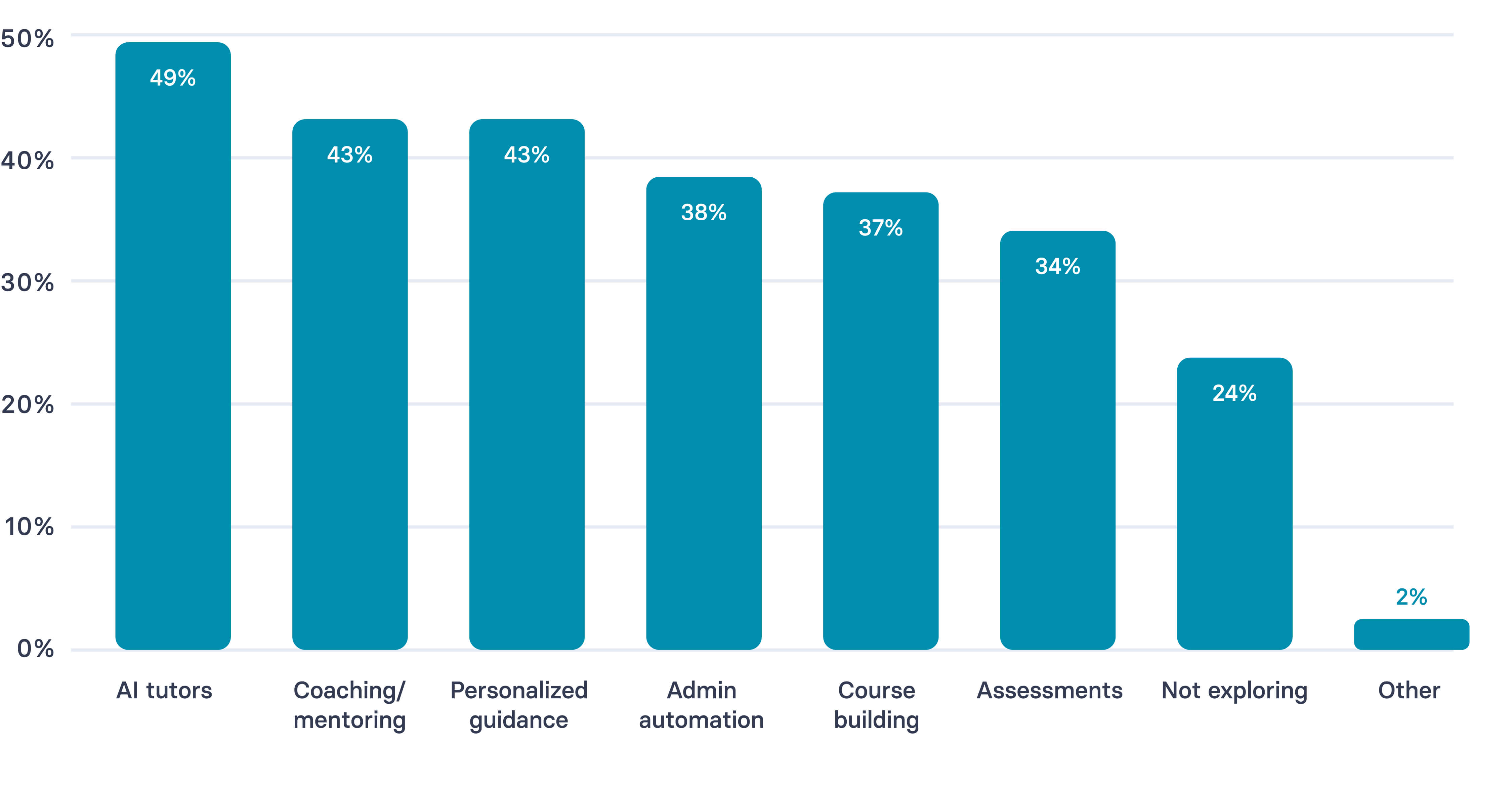
Most are excited (27%), cautious (39%) or say they need to learn more (29%). Exploration focuses on AI tutors (49%), coaching and mentoring (43%), personalized guidance (43%) and admin automation (38%).
Budgets remain low and fragmented
39% spend 5% or less of their L&D budget on AI, and 30% don’t know their spend. Dedicated funding is still developing.
Readiness challenges are slowing progress
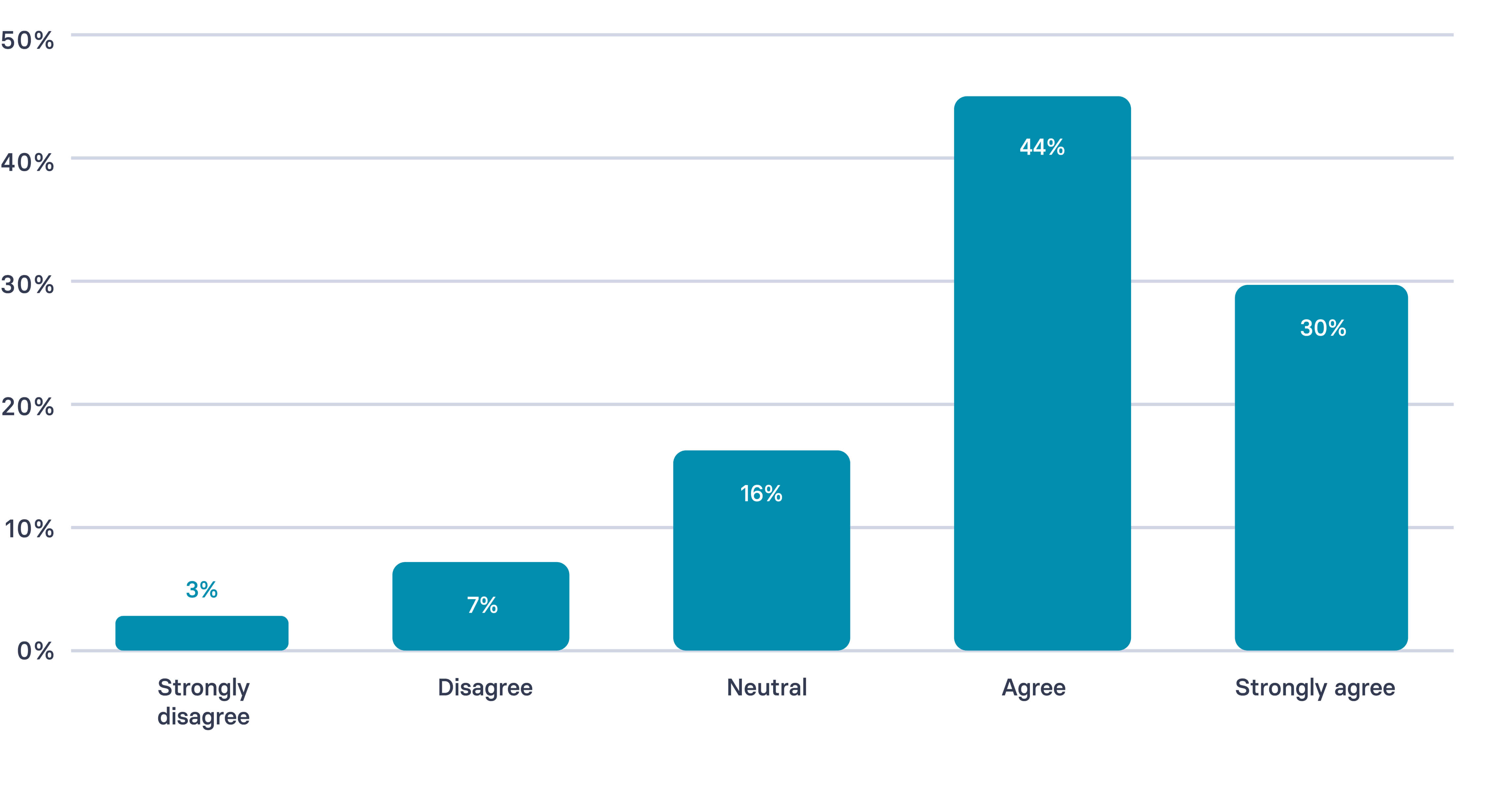
Security (58%), accuracy (52%), legal constraints (41%) and integration challenges (36%) remain major obstacles. Although 74% say their culture encourages experimentation, only 45% feel IT is enabling AI adoption.
“L&D is entering a new "AI-integrated" era where the real question isn’t which tools to use but how to build a learning ecosystem that drives performance.”
- Kevin Alster
Despite these frictions, optimism is strong
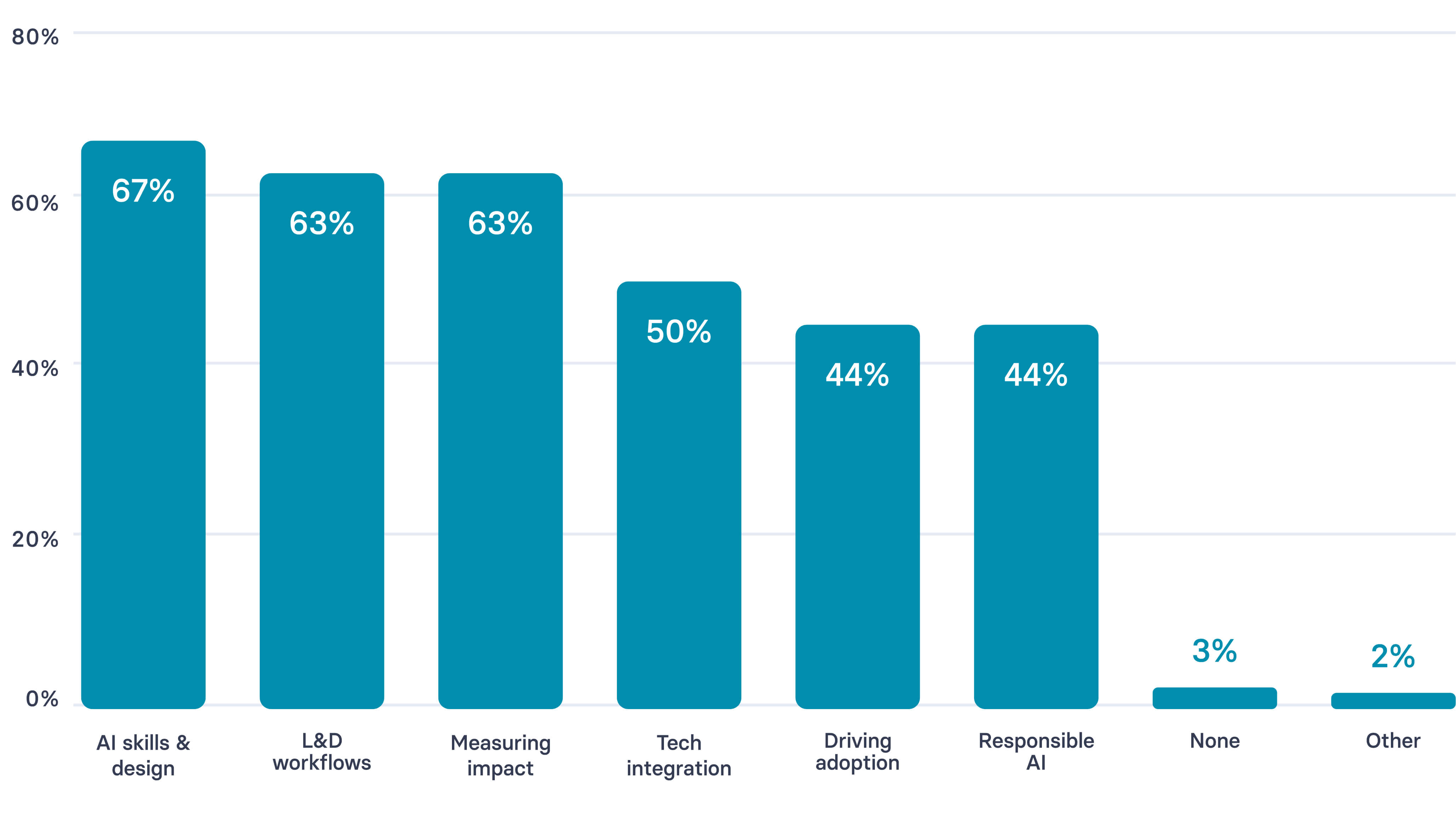
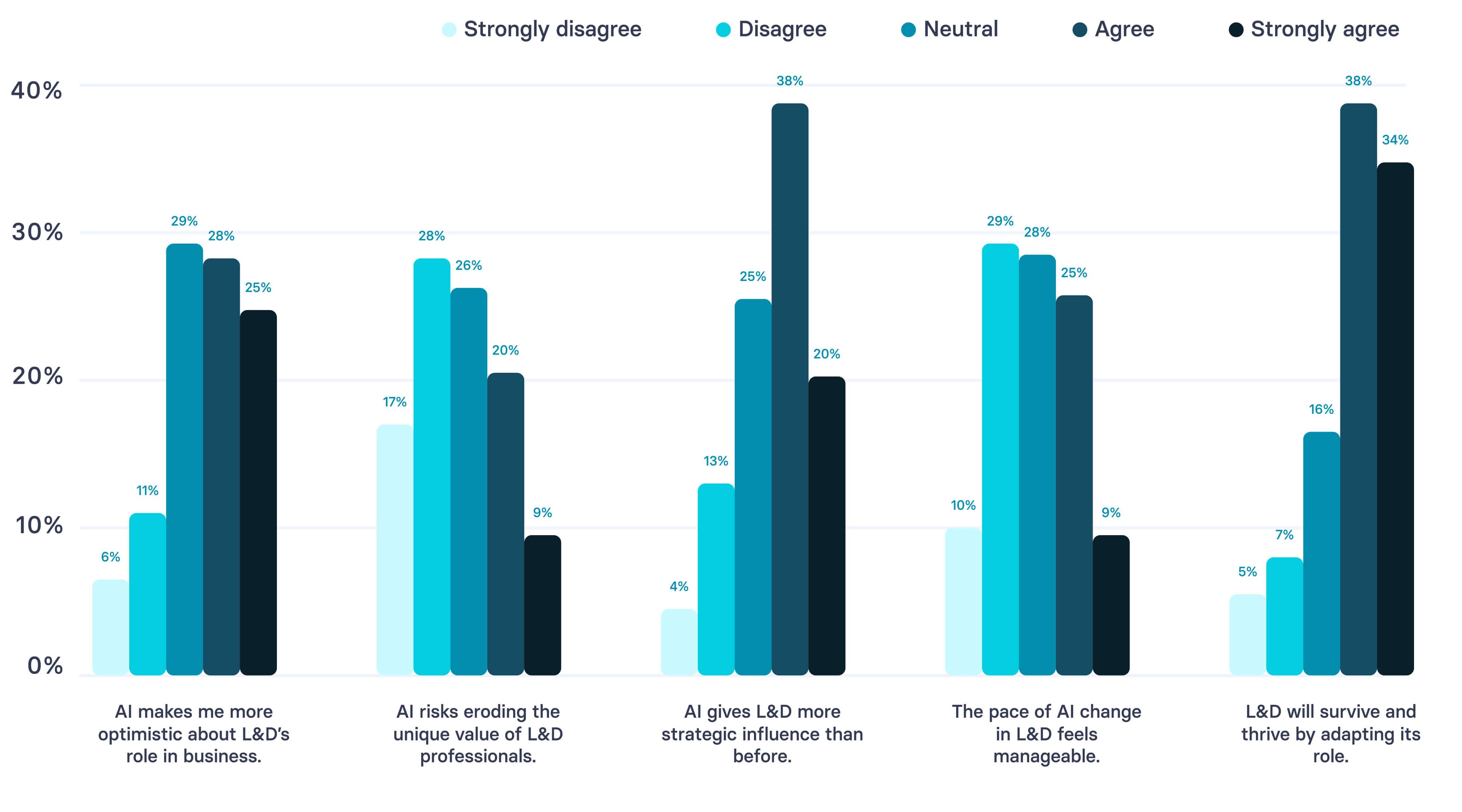
66% believe AI will strengthen L&D’s influence, and 72% think the function will thrive by adapting. L&D teams want practical support, including AI skills and design training (67%), workflow guidance (63%), impact measurement (63%) and integration help (50%).
“We finally have the tools to create dynamic learning content at a speed and scale we’ve never seen before. The opportunity is massive, but impact still depends on skill. As AI becomes an everyday part of L&D, our focus has to shift from experimenting to upskilling—so we can design learning that’s not just faster, but smarter.”
- Kristen Budd
Our L&D Experts
Dr Philippa Hardman is a leading expert in learning science and AI-powered instructional design, with over 20 years of experience connecting research on how humans learn with the way digital learning is built. She is the creator of the DOMS™ learning design process, used globally to produce evidence-based learning experiences.
Philippa is Co-Founder of Epiphany AI, an Affiliated Scholar at the University of Cambridge, and an advisor to organizations adopting AI to scale learning impact. She regularly consults with global companies and is a keynote speaker at major education and technology conferences.
Kevin Alster is a Strategic Advisor at Synthesia, where he helps global enterprises apply generative AI to improve learning, communication, and organizational performance. His work focuses on translating emerging technology into practical business solutions that scale.
He brings over a decade of experience in education, learning design, and media innovation, having developed enterprise programs for organizations such as General Assembly, The School of The New York Times, and Sotheby’s Institute of Art. Kevin combines creative thinking with structured problem-solving to help companies build the capabilities they need to adapt and grow.
Kristen Budd is a learning experience designer at Synthesia, focused on helping people create impactful instructional content in the age of AI. With a decade of experience across learning design, educational media, and cognitive science, she’s passionate about empowering the L&D community with the confidence, skills, and knowledge to design learning that truly has an impact.
She has designed and scaled learning programs in tech, education, and workforce development, and her research has been published in the Journal of Research on Educational Effectiveness. Kristen has presented at AERA and AEA, with an ongoing focus on evidence-based, multimodal learning.
Survey Methodology
The Survey
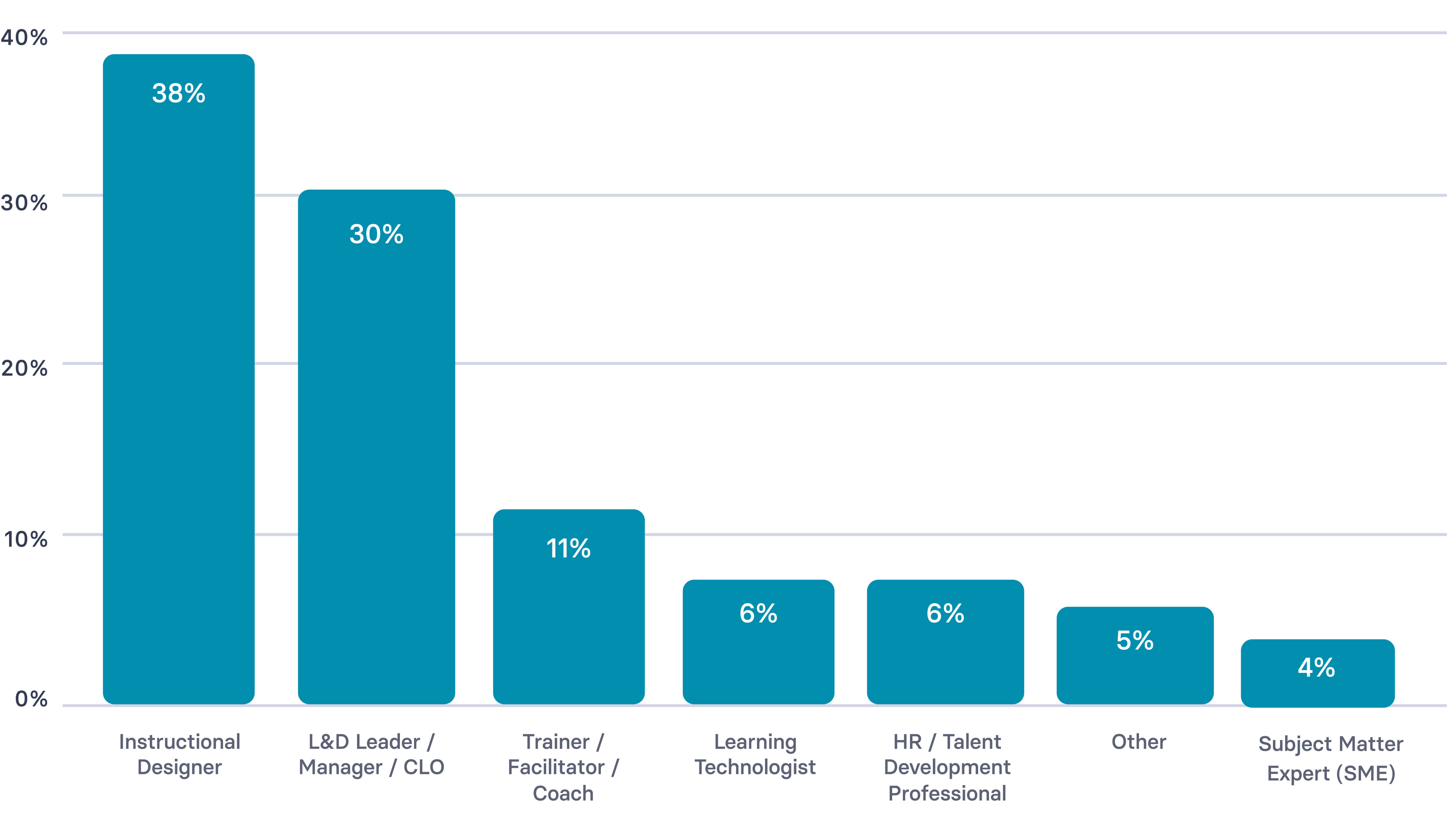
The survey was conducted in October–November 2025 with Learning & Development professionals.
It was distributed through Synthesia’s audience, Dr. Hardman’s network, and several L&D and instructional design communities to ensure a diverse and representative sample of practitioners.
Responses
421 responses were collected, generating more than 20,000 data points.
Statistical significance
Using a working estimate of ~600,000 L&D and instructional design professionals across the globe, this sample provides a ±5% margin of error at a 95% confidence level, making the results directionally reliable.
Enterprise Skew
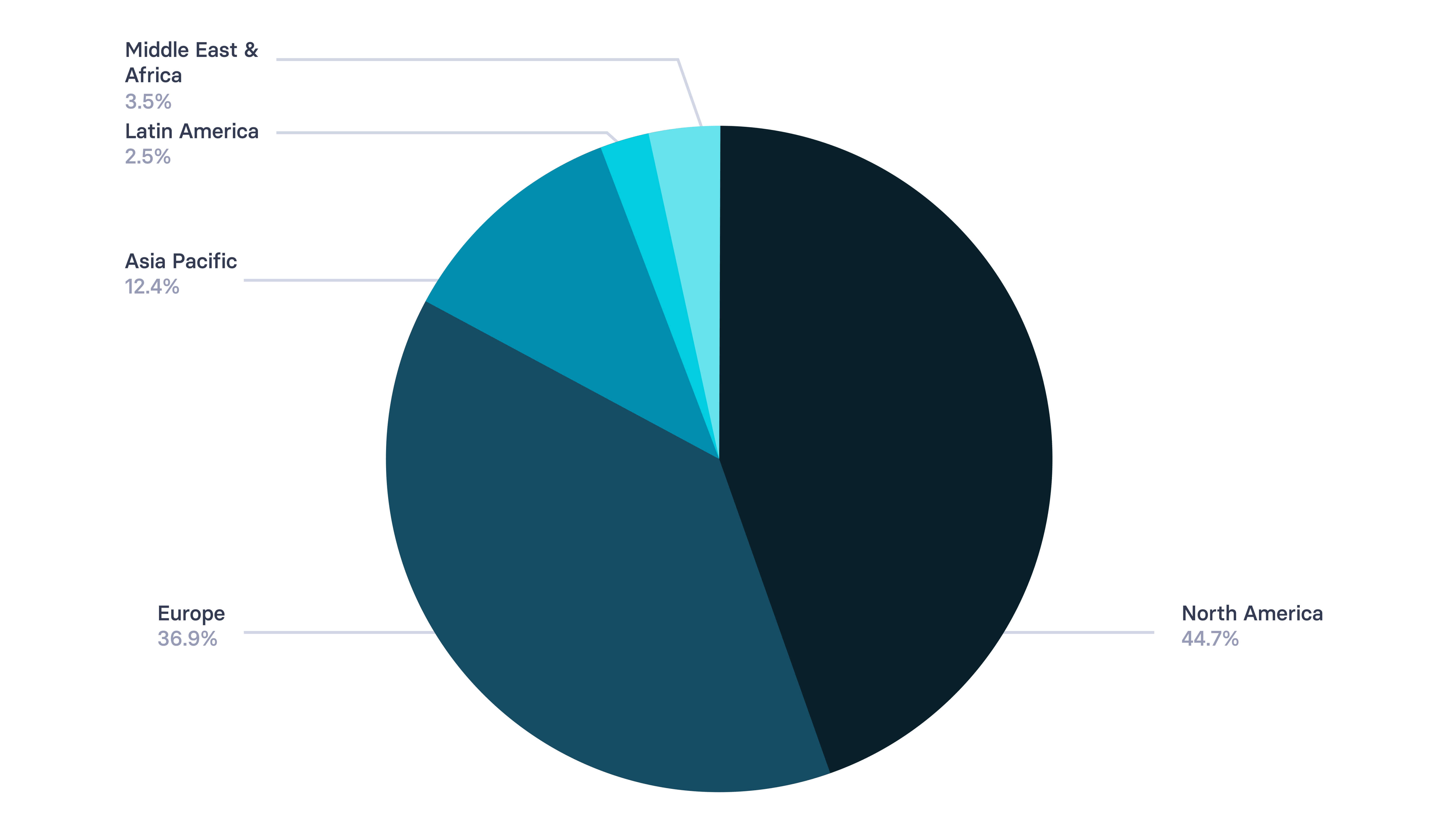
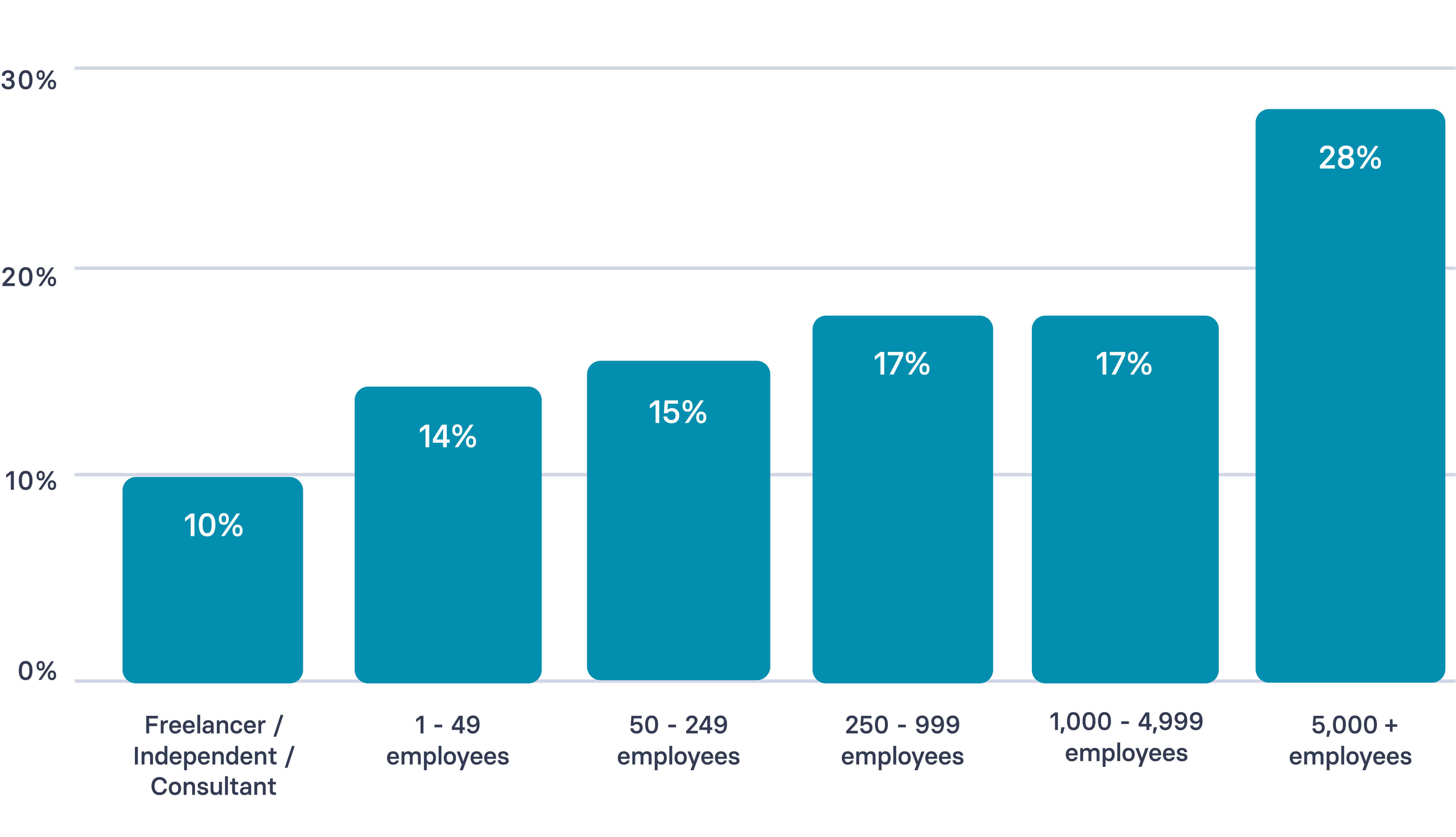
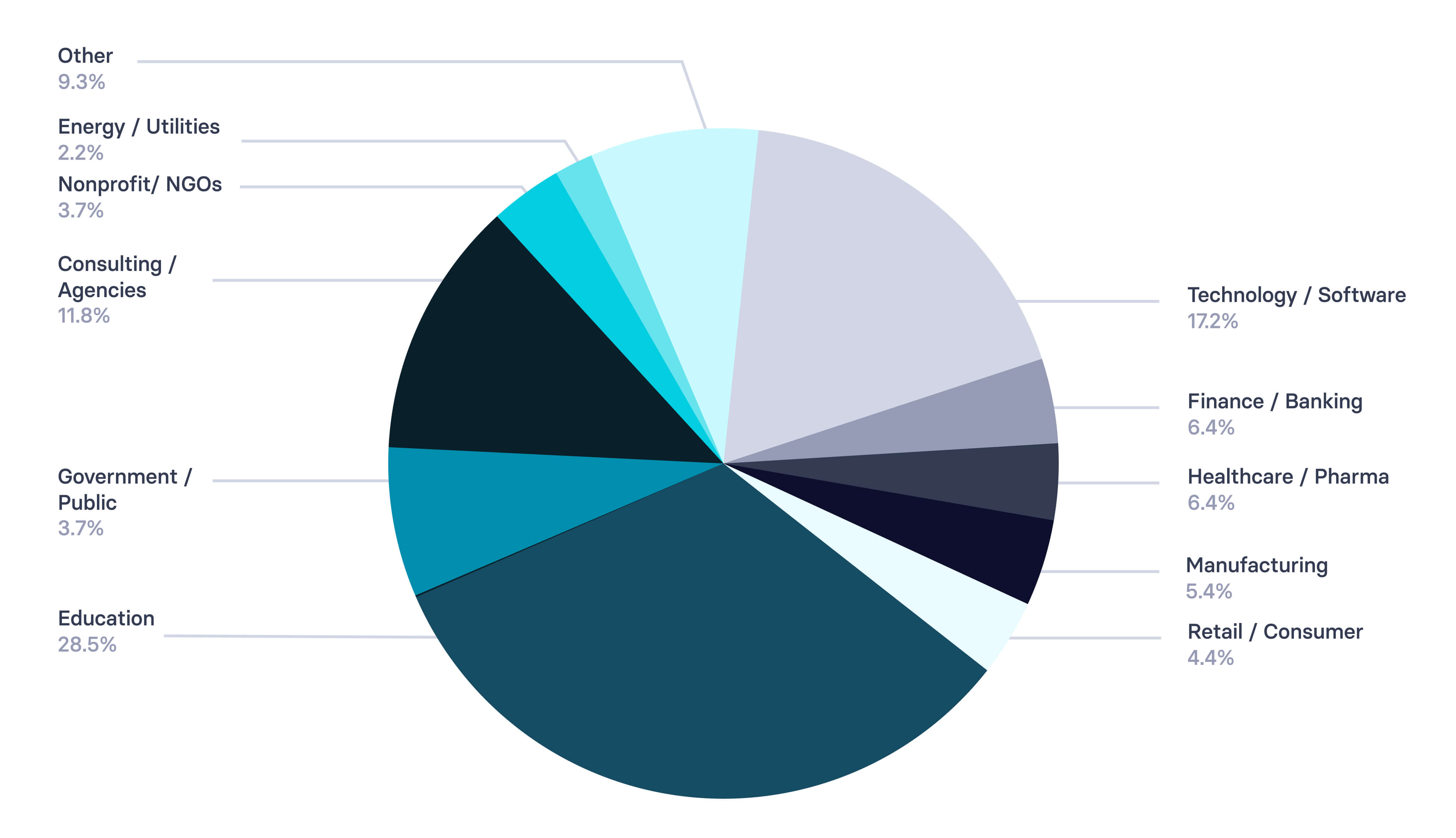
The survey reflects a diverse respondent base across roles, industries, and geographies, with a strong enterprise skew, with nearly half of participants working in organizations with 1,000+ employees.
Early adopter bias
Since the survey circulated mainly within AI-forward networks, the sample likely overrepresents early adopters relative to the broader population of L&D professionals.
Moving Past Experimentation
AI use in L&D is common, even if not yet organization-wide
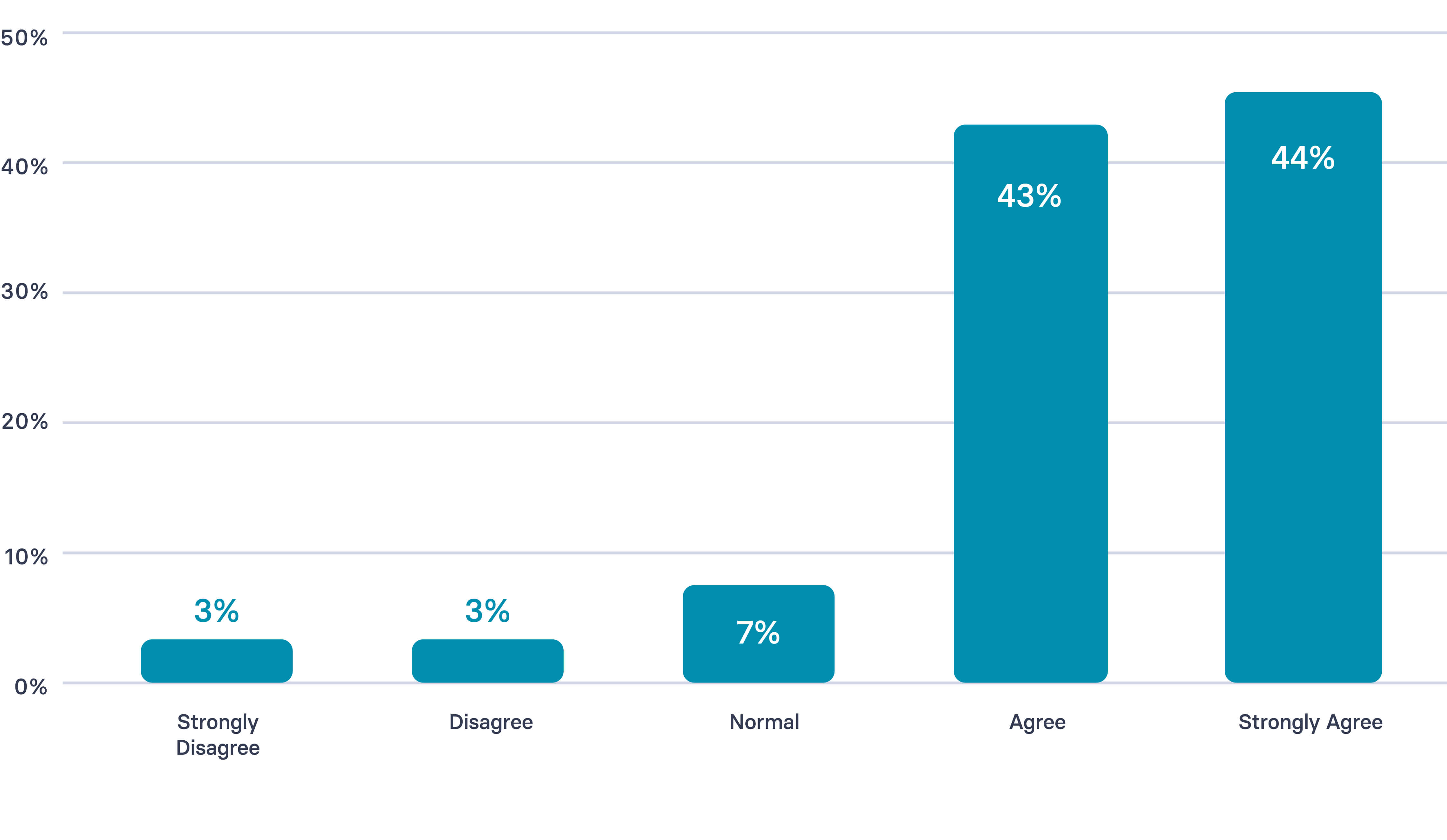
AI has become a normal part of L&D workflows, even if most teams are still early in their journey. A large majority (87%) of respondents say they feel comfortable using AI.
Only 6% express any discomfort. This confidence aligns with how widely AI is already being used inside L&D teams.
Most teams report active or emerging use of AI
The majority say their team is already using AI in learning programs. 57% are actively using it today and another 30% are running early pilots.That means almost nine in ten teams have moved beyond simple experimentation.
13% of respondents aren’t using AI right now, including 10% who are still exploring the possibility and 3% who cite no plans or face barriers. Last year, 20% weren’t using AI.
“Maturity is rising — but it’s far from uniform. Many teams are still early-stage; a small group is sprinting ahead.”
- Dr Philippa Hardman
Is your L&D team currently using AI tools in your learning and development programs?

Adoption is broad but uneven
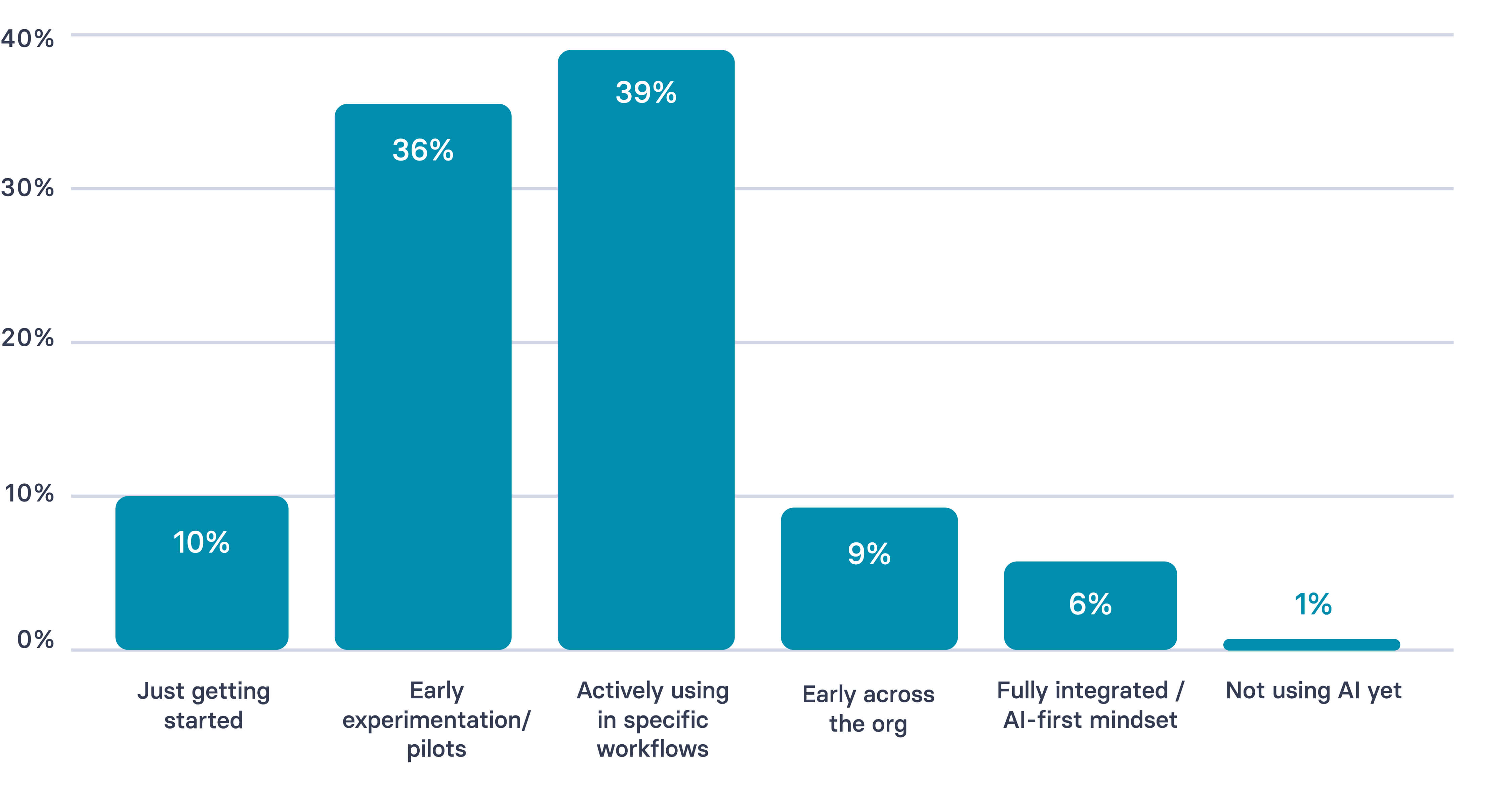
When asked about maturity, most teams place themselves in the middle of the curve. 36% describe themselves in early experimentation or pilots, and 39% say they’re actively using AI in specific workflows. Only 9% have reached the stage of scaling AI across the organization, and just 6% say AI is fully integrated or part of an “AI-first” mindset. Only 1% say they’re not using AI at all.
Usage is widespread, but depth of maturity still varies significantly.
AI is now a near-universal part of the L&D toolkit
AI is shifting from individual use to team-level workflows, and is now a near-universal part of the L&D toolkit. Only 2% of respondents say they use no general-purpose AI tools, while the vast majority are relying on tools like ChatGPT (74%), Copilot (54%), and Gemini (39%).
Many respondents describe using AI for specific tasks in design and development, supported by shared prompts, templates, or emerging team norms. This marks a clear shift from isolated experimentation and ad hoc “asset acceleration” toward more consistent, integrated workflows.

How L&D Is Using AI: Today & Tomorrow
AI is now firmly embedded in day-to-day L&D production
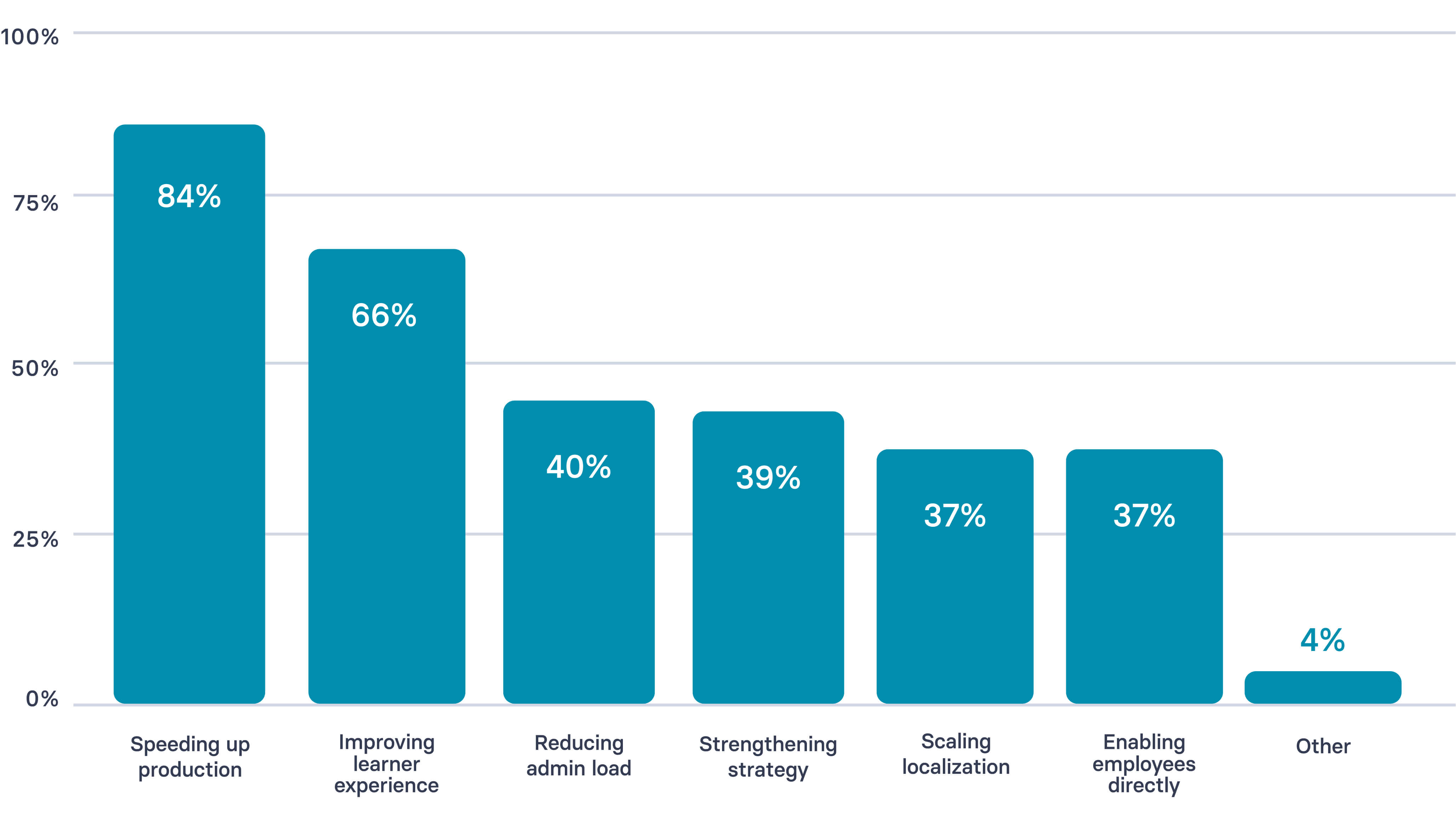
84% of respondents said speed is the biggest incentive for using AI as part of their workflows.
The heaviest use sits in core production tasks like text-to-speech (63%), quiz generation (60%), video creation (52%) and translation/localization (38%).
These activities cluster in the design and develop stages of ADDIE (Analyze, Design, Develop, Implement, and Evaluate), with more than 65% of respondents now using routinely using AI to create learning materials.
AI helps speed up content production
Teams describe using AI for ideation, scripting, storyboarding, translation and research summarization, supported by human review for quality.
Two-thirds (66%) say they are using AI to help them improve learner experience. AI is also reducing operational load through admin reduction (40%) and localization (37%).
40% of respondents are currently using AI search and knowledge assistants.
“We’re moving from ‘Maria uses ChatGPT to speed up her script writing’ to ‘Our whole team uses shared AI playbooks, with AI plugged into how we design, build and review.”
- Dr Philippa Hardman
Where AI is going next
The next wave is less about faster production and more about adaptive, intelligence-driven learning.
Growth is strongest in adaptive use cases: assessments/simulations (36% piloting), personalized pathways (31% piloting; 33% planning), skills mapping (30%; 32%) and AI tutors/chatbots (30%; 29%).
Teams also expect AI to move further into the later stages of ADDIE, especially implement and evaluate, where interest is rising for in-flow support and earlier insight into learning effectiveness.

Looking ahead
Respondents expect AI to deepen personalization, automate more low-value work and unlock richer experiences like simulations, coaching and role-play.
The future of AI in L&D is less about generating assets and more about powering intelligence across the learning ecosystem.
At which stages of the ADDIE (Analyze, Design, Develop, Implement, Evaluate) model is your team using (or exploring using) AI tools?

Current Value vs. Future Value
Early value is expanding beyond speed
Most respondents say AI is already helping them produce learning faster, with 88% reporting value via time saved on content creation.
Cost savings are also beginning to materialise, with 45% reporting financial benefits today, though many expect clearer and more measurable gains as AI becomes embedded across more of the workflow.
A similar share (41%) say AI is already contributing to business impact, often through faster delivery, higher output and smoother stakeholder alignment.
Engagement improvements remain early but meaningful, with 40% reporting better learner satisfaction and interaction in the programmes where AI is in use.
Localization is emerging as a meaningful area of value too, with 32% already seeing improvements in translation and regional adaptation.
These effects are still uneven, but they point to a widening value profile, even as most teams are still in the early stages of adoption.
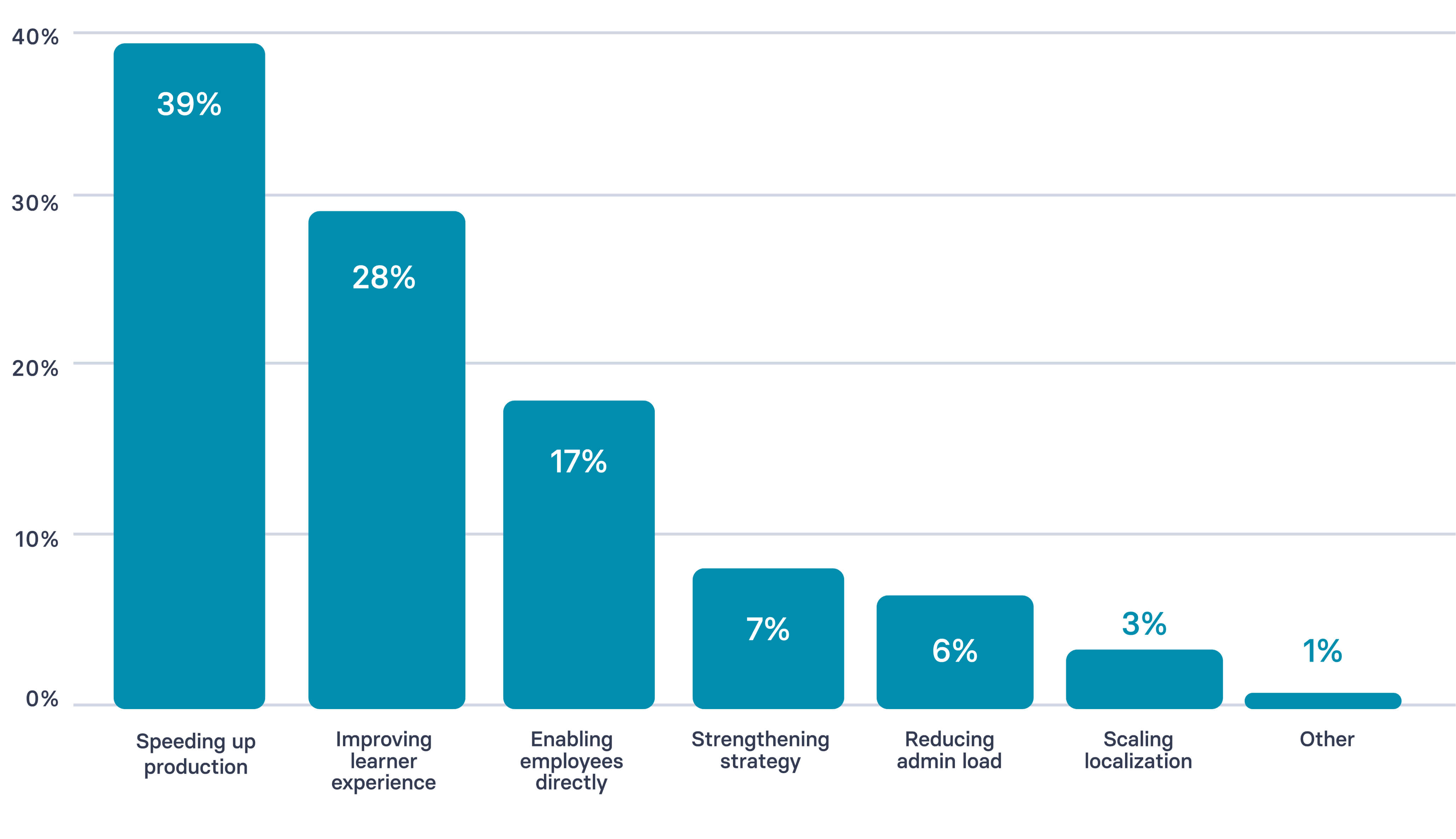
In the next 2 years, where do you expect AI to have the biggest impact in your L&D work?
“Right now, AI’s value in L&D is speed: faster production, higher-quality assets, and sharper learner experiences. A smaller group sees a future that will be defined by something else: personalized, in-the-moment learning that adapts to context and need rather than following a single standard.”
- Kevin Alster
Moving towards meaningful business outcomes
Expectations for the next two years shift firmly toward impact.
Teams anticipate a major step-change improvement in learner experience, with 72% expecting AI to deliver more personalized learning compared with just 24% who see that value today.
Expectations also rise for wider internal reach (65%), improved learner engagement and satisfaction (56%), clearer business impact (55%) and easier localization (54%), signalling a move toward scalable, tailored learning at lower operational cost.
Localization, in particular, is becoming a strong point of optimism. Although it is not the biggest source of impact today, the future-value data shows teams increasingly expect AI to remove long-standing barriers to regional adaptation and translation, enabling faster, more consistent global rollout.
A smaller but important group expects AI to move directly into performance support, with 17% predicting the biggest impact in the next 2 years will come from enabling employees in the flow of work through coaching, answers and contextual guidance.
The centre of gravity is moving from content production to learner experience, scale and meaningful business outcomes.
Budgets, Readiness & Blockers
Budgets are growing, but most organizations are still in the early stages
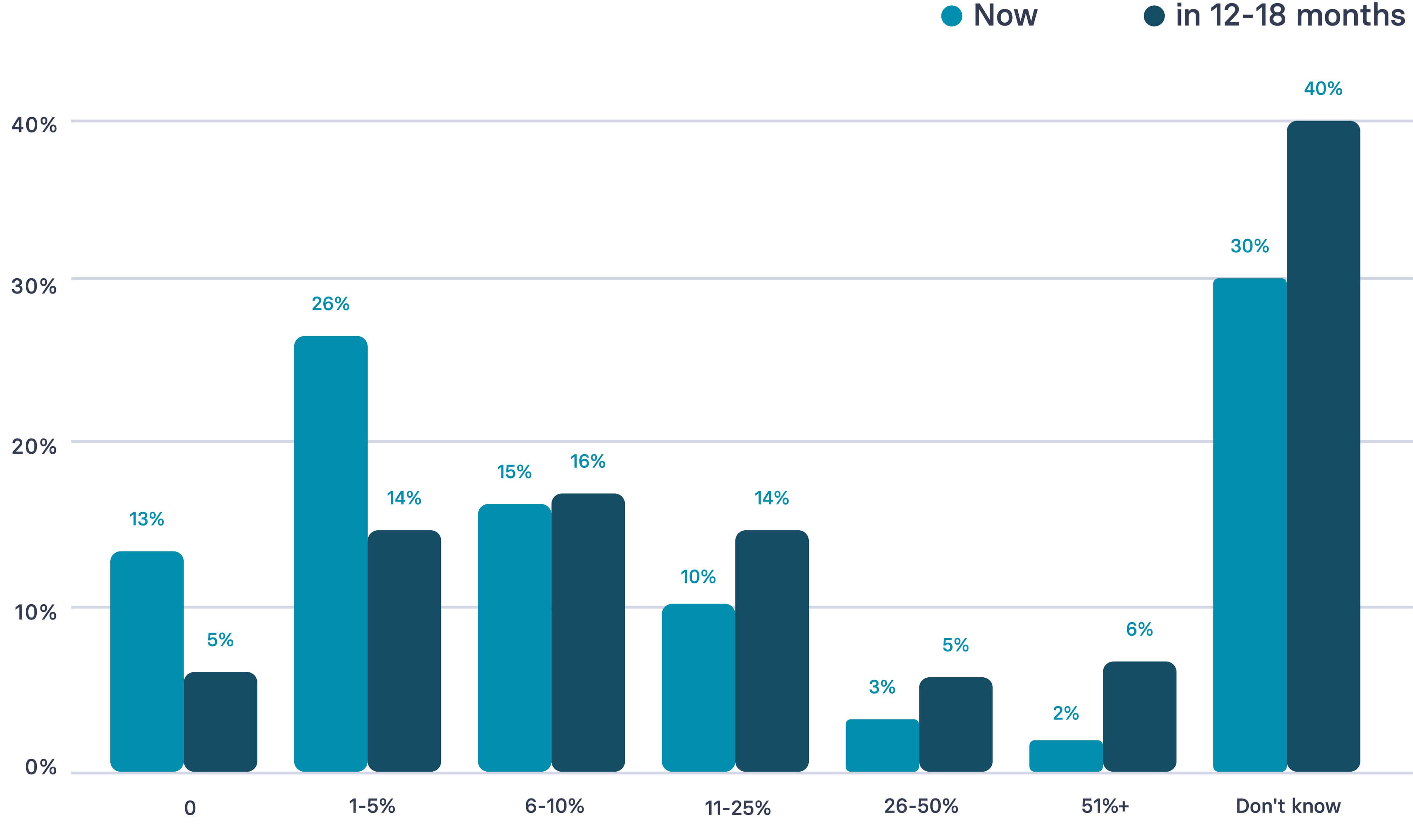
AI spending in L&D is still modest and often unclear. Most teams invest only small amounts, with 26% allocating 1–5% of their budget and 15% allocating 6–10%. Another 30% do not know their spend at all, which suggests that AI activity is still scattered rather than planned.
Over the next 12–18 months, the share expecting to spend nothing drops from 13% to 5%, and more teams anticipate moving into double-digit investment. Budgets are beginning to catch up with adoption even as governance lags behind.
Blockers reflect risk, infrastructure and capability gaps
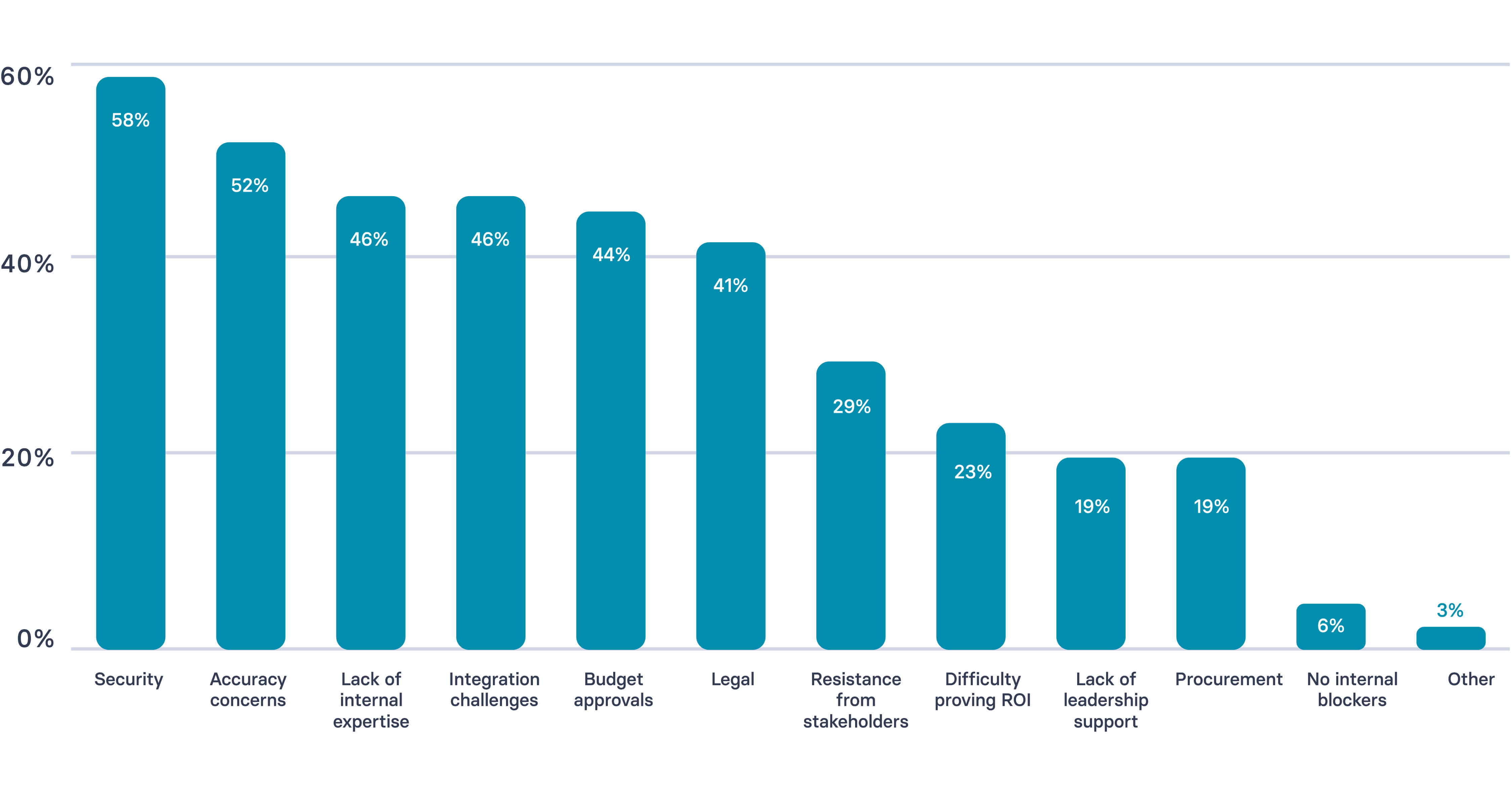
Security is the most common blocker (58%), followed by accuracy concerns (52%), integration challenges (46%) and legal restrictions (41%). Budget approvals (44%) and procurement processes (19%) add friction, while capability gaps, particularly a lack of internal expertise (46%) and stakeholder resistance (29%), continue to slow progress.
Only 6% face no blockers at all.
What percentage of your L&D budget is currently allocated to AI-related tools or initiatives?
Culture is supportive, but operational alignment is mixed
Cultural support for experimentation is strong, with 74% saying their organization encourages trying AI tools.
Governance of data and systems is still emerging
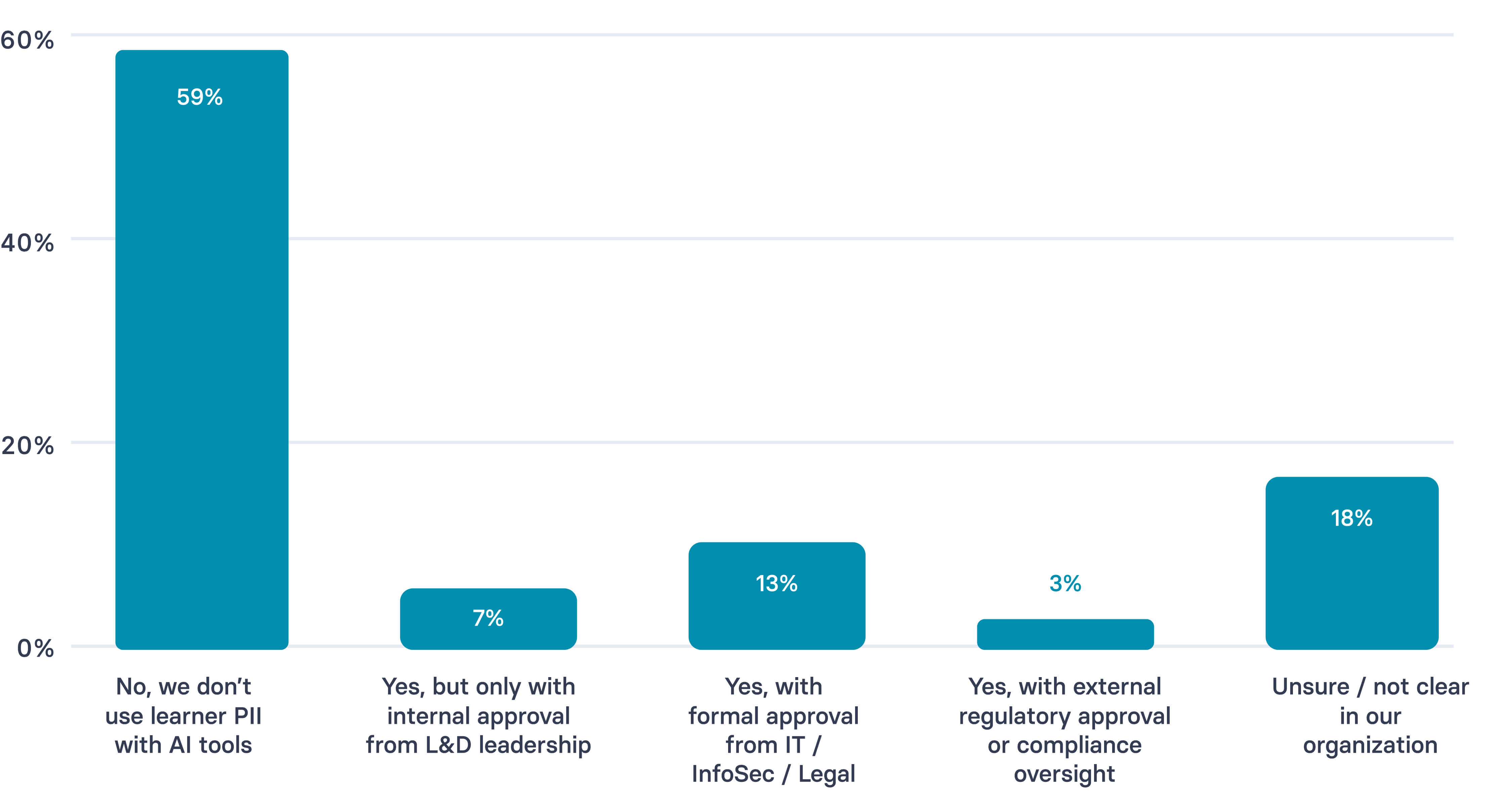
Most teams avoid using personal or sensitive learner data with AI (59%), which keeps experimentation focused on low-risk content tasks.
Among those who do handle PII (Personally Identifiable Information), oversight typically comes from IT, InfoSec or Legal (13%), and 18% say their approval process is unclear.
As adoption moves toward personalization, these governance gaps may become more limiting.
“As budgets catch up with adoption, the teams that will see real impact and ROI from AI aren’t just the ones buying tools they’re the ones investing in human capability. The real differentiator is still thoughtful learning design and problem-solving. You can automate production, but you can’t outsource cognition. The human touch- our ability to design meaningfully, ethically, and with intent- is what will keep L&D’s value growing in the age of AI.”
- Kristen Budd
Does your use of AI in L&D involve learner personal or sensitive data (e.g., performance records, PII)? If yes, what approval process is in place?
The Future Ecosystem & Agentic AI
The role of the LMS is becoming less certain
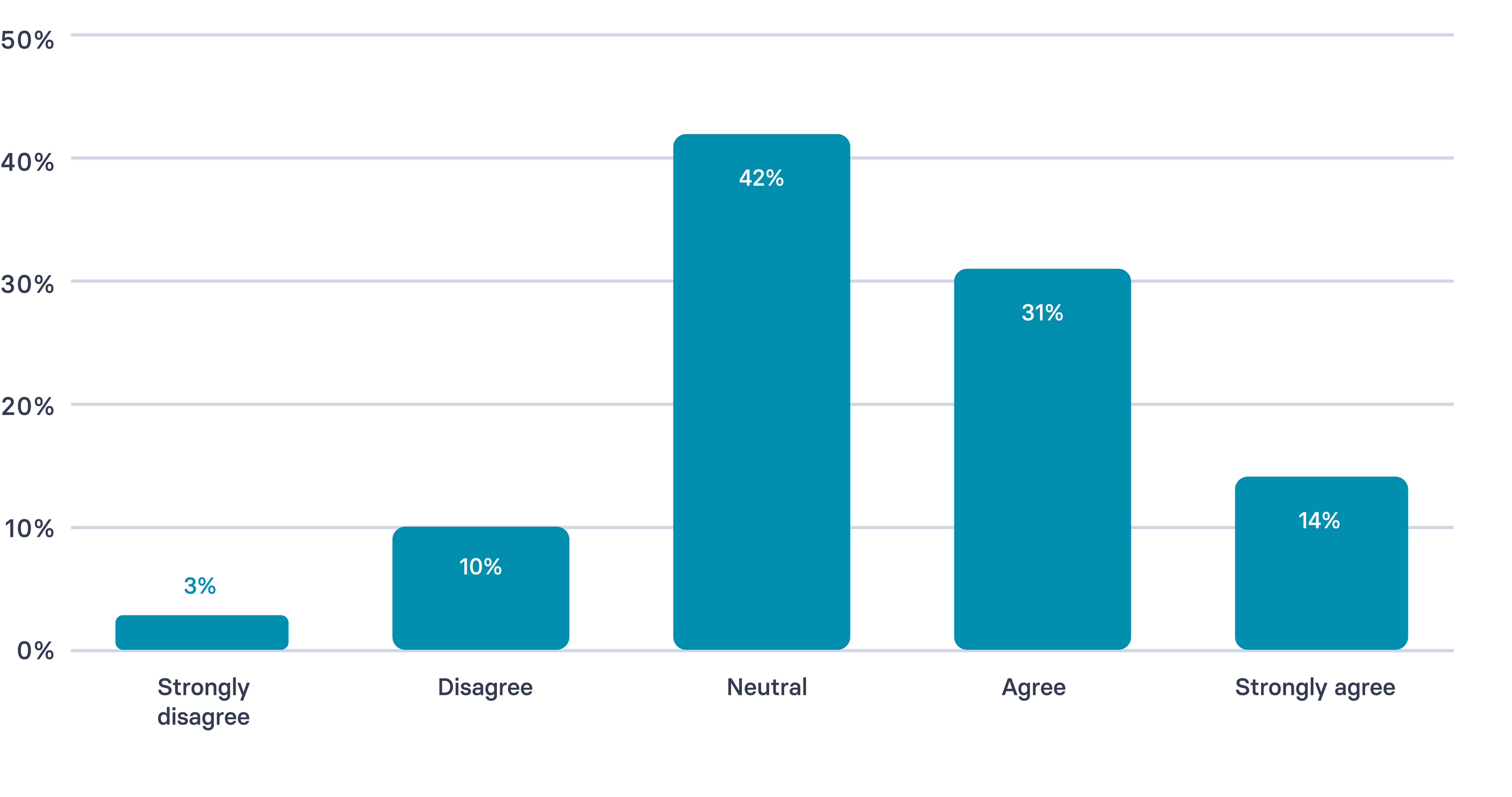
The LMS still anchors the learning ecosystem for many teams, but confidence in its long-term position is mixed. Only 47% believe it will remain the backbone of their stack over the next three years, while the rest are neutral or expect the centre of gravity to shift.
The picture that emerges is not of replacement but redistribution. The LMS is becoming one part of a wider, more connected ecosystem where learning content, data and AI-driven services move more freely across tools, and where L&D teams are shifting from point solutions to composable, multi-model AI stacks layered on general-purpose AI.
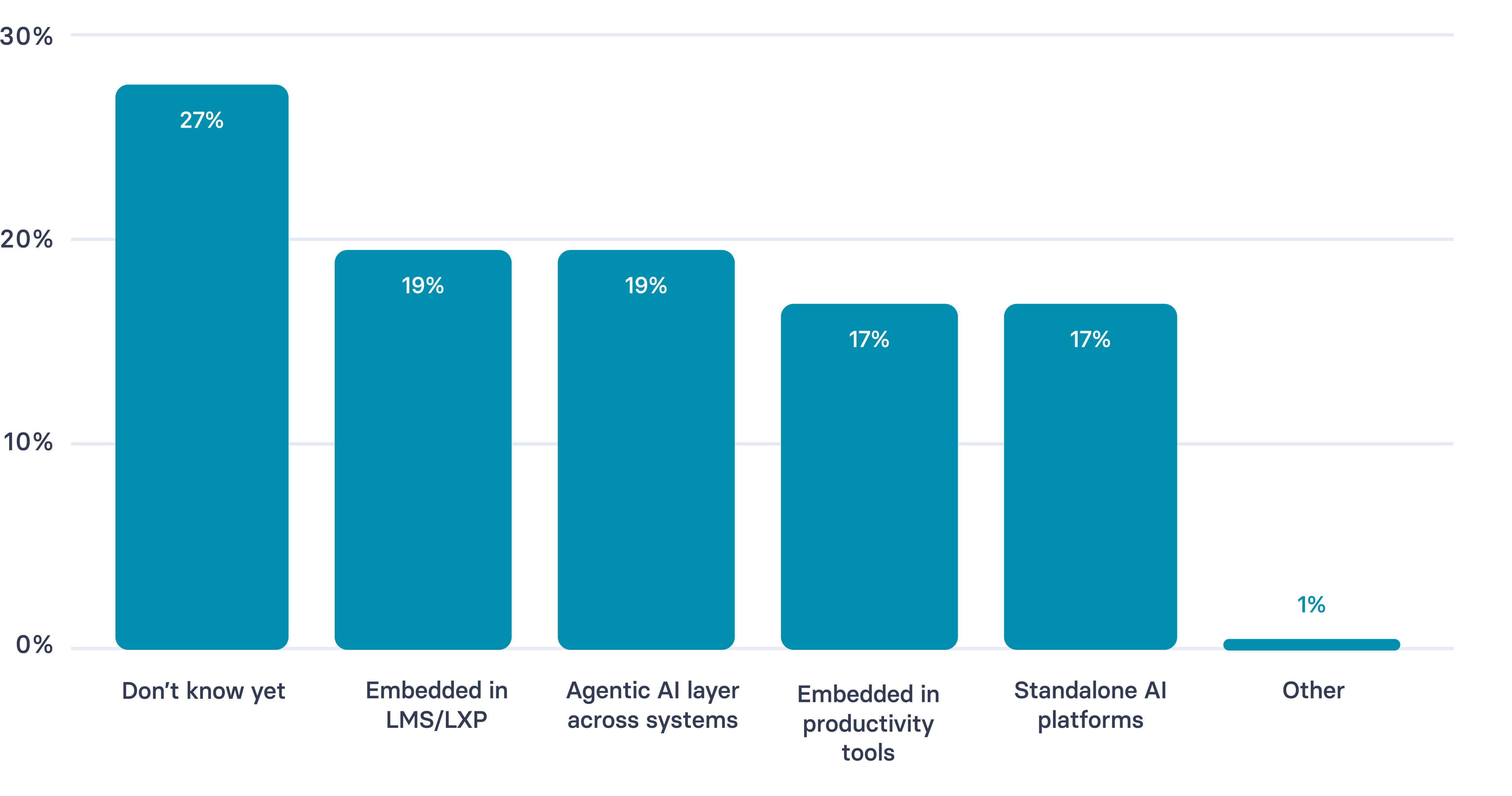
Where AI will live in that ecosystem is even less settled. Responses are almost evenly split across four possibilities: embedded in the LMS or LXP (19%), embedded in productivity tools (17%), delivered through standalone AI platforms (17%), or operating as a cross-system agentic layer (19%).
The largest group, at 27%, simply does not know yet. This uncertainty reflects a market evolving faster than any dominant pattern can form.
Agentic AI is generating interest, even if understanding is still developing
Most respondents see potential in agentic AI. Around 27% say they are already exploring it and another 39% are interested but cautious. Only 4% express concern and none reject it outright. The hesitation appears to come from unfamiliarity rather than resistance.
Exploration patterns show where agentic AI is gaining traction. AI tutors lead at 49%. Personalized guidance and coaching both sit at 43%, pointing to a shift toward tools that support learners continuously rather than only through scheduled training.
While interest is strongest in learner-facing experiences that adapt and respond in real time, 37% of respondents also pointed to course-building agents.
Admin automation (38%) and AI-driven assessments (34%) are also emerging as teams look to reduce manual effort and modernise how they measure skills.

“The LMS was built for a world that no longer exists. It solved the problems of compliance and content delivery twenty years ago, but learning has moved far beyond that. Today’s learners expect experiences that are fluid, personalized, and AI-powered, not static course catalogs. The future of learning will grow past the LMS, toward something more connected—where learning happens naturally across tools, moments, and conversations without needing a system to hold it all together.”
- Kristen Budd
What’s Next for L&D Teams?
84% of respondents said speed is the biggest incentive for using AI as part of their workflows.
The heaviest use sits in core production tasks like text-to-speech (63%), quiz generation (60%), video creation (52%) and translation/localization (38%).
These activities cluster in the design and develop stages of ADDIE (Analyze, Design, Develop, Implement, and Evaluate), with more than 65% of respondents now using routinely using AI to create learning materials.
What types of training or support would help your team use AI more effectively in L&D?
Proving value
L&D teams are under growing pressure to demonstrate the impact of AI. Measuring value is one of the top capability gaps, with 63% saying they need support in assessing impact rather than just speed.
Teams want to show that AI improves engagement, personalization and effectiveness, not only production efficiency.
“Over the next 12–24 months, I expect to see a sharper divide between teams who use AI to go faster, and teams who use AI to build smarter, more personalized, more evidence-based learning ecosystems.”
- Dr Philippa Hardman
Integration and architecture
Integration remains one of the biggest obstacles. While piloting AI is simple, connecting it to LMSs, HRISs (Human Resource Information Systems) and knowledge platforms is far more complex.
Half of respondents (50%) say they need more support with tech integration. As teams assemble multi-tool AI stacks, questions around data flow, governance and system architecture are becoming more prominent.
Rapid change
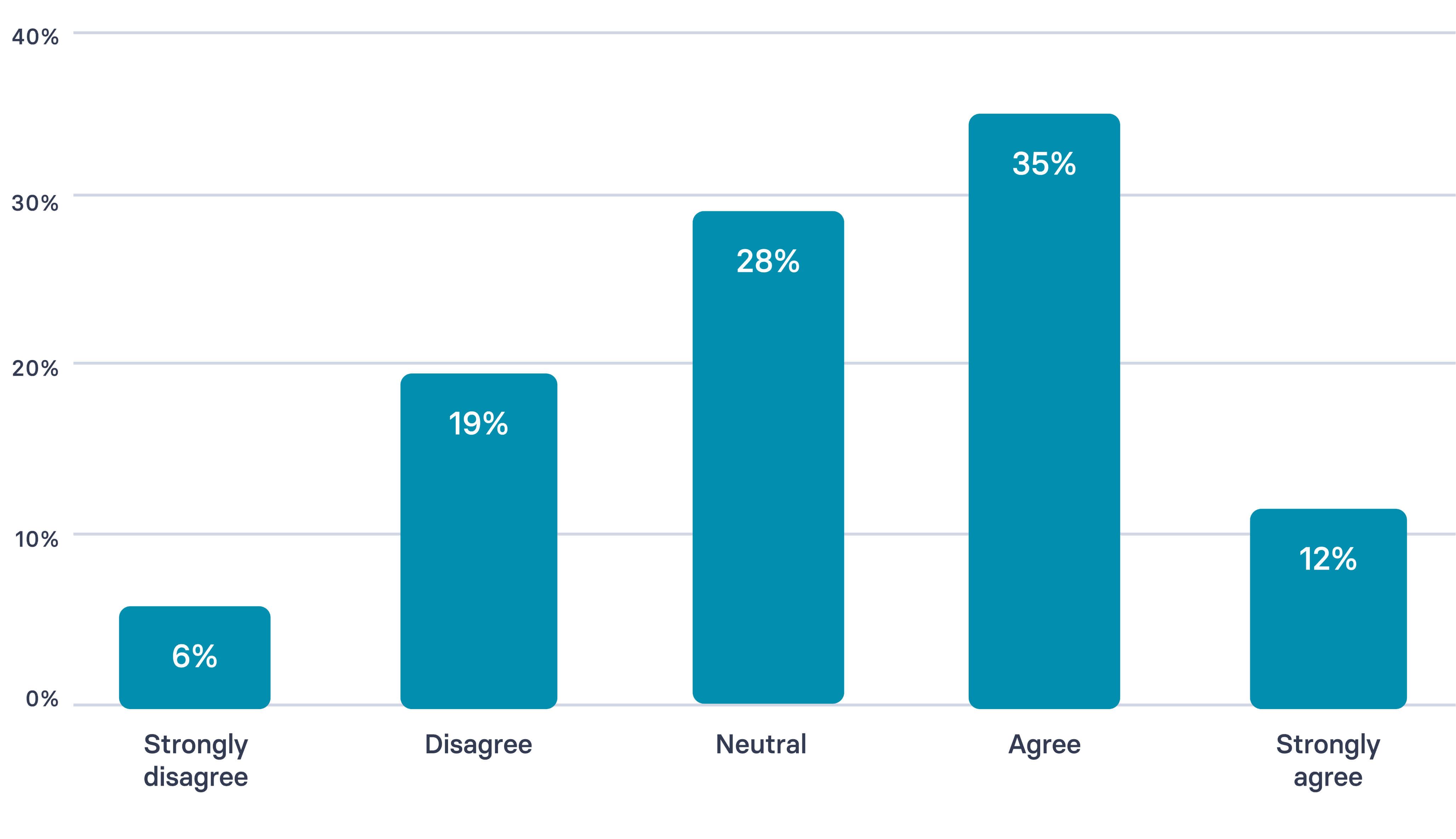
Despite the challenges, outlook is positive. Many believe AI will strengthen L&D’s strategic role, with 72% agreeing that the function will thrive by adapting, and 58% saying AI gives L&D more strategic influence. Concerns about eroding professional value exist (29% agree), but optimism clearly outweighs worry.
The main uncertainty is pace. Only 34% feel the speed of AI change is manageable, while many remain neutral or unsure. Confidence in L&D’s future is high, but real progress will depend on building the skills, governance and infrastructure needed to use AI responsibly and effectively.
The next step for L&D teams is learning how to connect everything. The outlook is positive, but the challenge is clear: move beyond just creating assets and start enabling real performance support. The unique value of L&D has always been driving transformation. The question now isn’t whether AI will replace us, but whether we can evolve the role to help the business adapt—shifting focus from pedagogy to business alignment and enablement.
- Kevin Alster
Insights from Dr Philippa Hardman
AI maturity is rising faster than strategy
Most teams have normalised AI in daily workflows, but many remain in early-stage adoption. The emerging risk is not low usage, but shallow usage that doesn’t progress toward data-informed or outcome-focused practice.
The centre of gravity has shifted to workflow integration
A majority of teams now operate at Stage 2 of the maturity curve, with growing cohorts reaching Stage 3 (data-informed decision-making) and Stage 4 (intelligent automation), and a small vanguard showing Stage 5 behaviours.
AI use is evolving from individual tools to full-stack architecture
Teams increasingly rely on multi-tool, multi-model ecosystems that blend general-purpose AI, L&D-specific tools, and emerging internal copilots or private LLMs. This shift introduces new requirements around governance, integration and data protection.
AI is spreading across the full learning lifecycle
Usage is expanding beyond production into analysis, implementation and evaluation, with teams using AI to synthesise feedback, cluster learner data, identify content gaps and inform portfolio decisions.
Content strategy is becoming more data-informed
Advanced teams are beginning to use AI to determine what to build, improve or retire, shifting the focus from producing more content to prioritizing the content that creates the most impact.
Agentic AI is moving into active experimentation
Early pilots include AI tutors and mentors, personalized guidance systems, Q&A assistants embedded in workplace tools, and semi-automated localization workflows. These prototypes signal an emerging shift from static courses to responsive, AI-enabled learning experiences.
Human-in-the-loop remains essential
While AI accelerates production and supports intelligence, L&D teams continue to own learning science, contextual judgement, ethical standards, quality assurance and brand voice — keeping humans firmly in control of relevance and rigor.
Governance is lagging behind adoption
As AI becomes embedded across tools and workflows, the need for clear guardrails, approved tool lists, data policies and shared accountability across L&D, IT, legal and security is becoming more urgent. Adoption has outpaced the underlying infrastructure.
Future value will come from personalization and measurable impact
Efficiency gains have become baseline. The next phase centres on adaptive pathways, in-flow support, richer guidance and clearer links between learning activity, performance and business outcomes.
Frequently asked questions
What is Synthesia?
Synthesia is the leading AI video platform that enables businesses to create, localize, and publish professional-quality training videos at scale, quickly and efficiently, without the constraints of traditional production.
With Synthesia, you can convert training materials into engaging videos, make training more engaging, reduce training costs, and speed up L&D content production without the traditional video production overhead.
Teams can produce effective employee training videos and corporate training videos, as well as impactful onboarding videos that set new hires up for success.
Sales teams can benefit from targeted sales training, while operations teams can deliver clear, consistent safety training videos and practical software training videos.
Organizations can also strengthen governance and risk management with training videos for compliance and cyber security.
For deeper engagement, Synthesia supports immersive scenario-based training and dynamic interactive training videos.
Trusted by over 90% of the Fortune 100, Synthesia is built for the enterprise with SOC 2 Type II, ISO 42001, GDPR compliance, SSO, and EU‑hosted data options.
Is it safe for businesses to create AI videos in Synthesia?
Synthesia provides a secure environment for businesses, ensuring your company's data is safe and under your control. Synthesia is SOC 2 Type II & GDPR compliant and has a team to keep your data safe. The integration of both human and AI moderation processes, along with proactive engagement in AI policy, ensures the ethical and responsible use of AI in video generation. Read more about our ethics policy.
What is the current state of AI adoption among L&D teams?
A large majority of L&D teams are already using AI.
Approximately 87% of teams are currently using AI for training and development, with only 2% having no adoption plans.
Most teams are past the experimentation phase: 36% are using AI in defined instructional design workflows, and 9% are beginning to scale its use across the organization.
How are L&D teams primarily using AI today, and what is the biggest benefit?
AI's strongest value today is speed, with 84% of L&D teams reporting faster production. The heaviest current uses include:
- Voice generation (68%)
- Content and quiz drafting (60%)
- Video creation (52%)
- Translation and localization (38%)
Where do L&D professionals expect AI to have the biggest impact in the future?
Expectations for the next phase of AI are shifting away from just production speed and towards learner impact. The main anticipated gains include:
- More personalized learning experiences (expected by 72% of respondents).
- Wider internal reach (65%).
- Improved learner engagement and satisfaction (56%). Planned adoption is rising for advanced, adaptive use cases like AI assessments/simulations, personalized pathways, and AI tutors.
What are the main challenges or blockers to wider AI adoption in L&D?
Teams are encountering several readiness challenges that slow progress. The major obstacles reported are:
- Security concerns (58%)
- Accuracy concerns (52%)
- Legal constraints (41%)
- Integration challenges (36-46%)
What kind of support do L&D teams need to use AI more effectively?
Teams are moving toward building practical capabilities and want structured support. The top areas where support is requested include:
- AI skills and design training (67%)
- L&D workflow guidance (63%)
- Help with measuring impact (63%)
- Tech integration support (50%)