



The Best Training Video Production Companies (2026)

Create engaging training videos in 160+ languages.
Not all training video production companies are the same. Some handle full-service production, while others focus on animation, learning design, or scalable AI workflows.
The right choice depends on what you need to produce, how often the content will change, and how you balance quality with speed and cost.
Here are some of the best training video production companies to consider.
How did we choose this list?
We’ve tried to represent a range of enterprise training video production companies to show you the variety of expertise available.
While we also offer training video creation tools, we want to be clear that AI video training is not always the best solution.
The best training video production companies
Training video production companies solve different problems. Some help teams create videos in-house with AI, while others offer custom learning design, full-service production, or both.
That difference matters. Some teams need speed and scale. Others need stronger instructional design expertise, better storytelling, or a partner for more complex training programs.
The companies below were chosen to reflect that range and help you find the right fit for your learning strategy.
1. Synthesia
URL: https://www.synthesia.io/
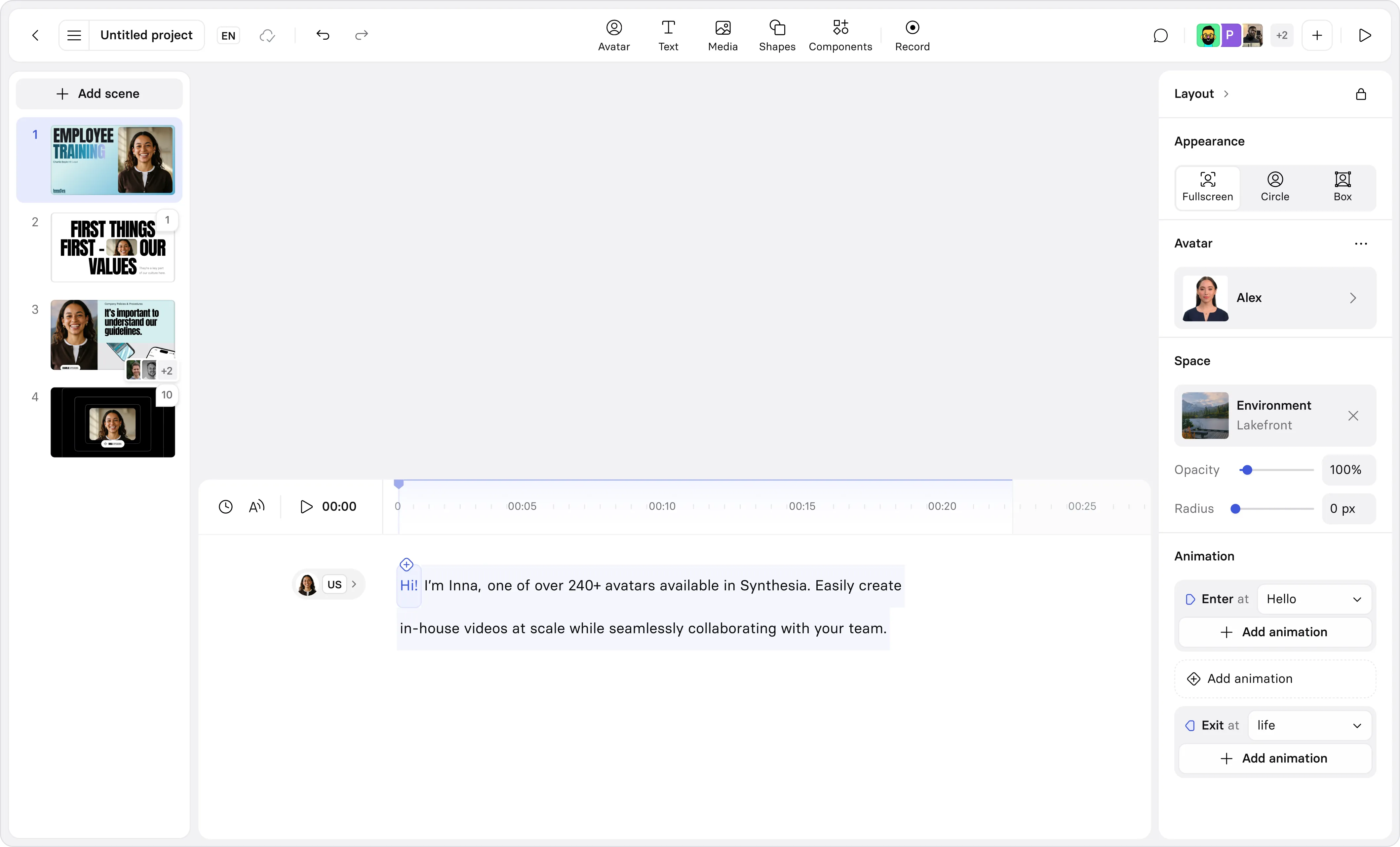
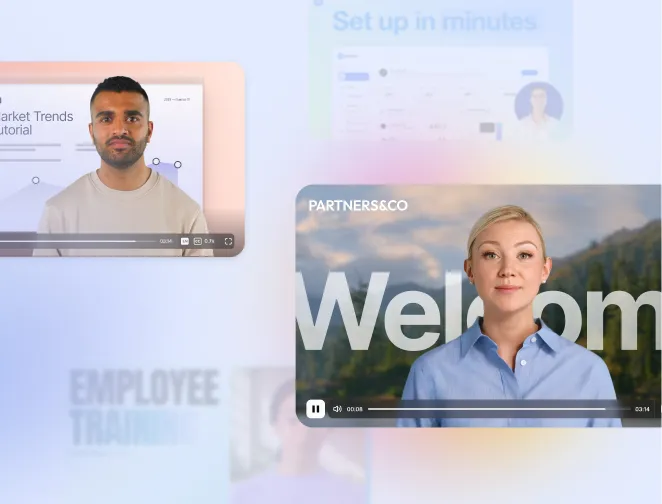
Synthesia is an AI video company that helps organizations create professional training, enablement, and internal communications videos without traditional filming.
When we're a good fit:
Synthesia works well when the main challenge is speed, scale, and consistency. It’s especially useful for onboarding, SOPs, product tutorials, and internal training that needs frequent updates or localization.
How we work:
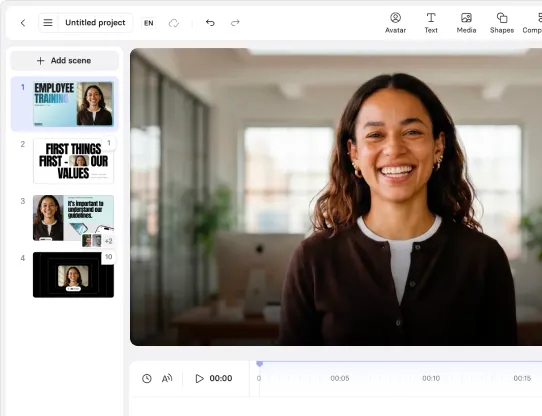
AI-first and self-serve, with avatars, voiceovers, translation, and templates that help internal teams create videos without relying on external production.
2. SweetRush
URL: https://www.sweetrush.com/
SweetRush is a custom learning company that combines instructional design, video, animation, immersive learning, and talent support for enterprise teams.
When they’re a good fit:
When you need more than video production alone. SweetRush is a strong fit for blended programs, custom learning experiences, and training that needs stronger design, storytelling, or immersive elements like XR.
How they work:
As a full-service learning partner, combining strategy, custom content, video, animation, and immersive learning based on the needs of the program.
3. AllenComm
URL: https://www.allencomm.com/
AllenComm is a corporate training company that designs custom learning solutions, including eLearning, video, learning technology, and performance-focused training programs.
When they’re a good fit:
When you need a strategic learning partner, not just a video vendor. AllenComm is a strong fit for onboarding, compliance, leadership, sales enablement, and skills development programs that need to connect content to measurable business outcomes and fit into an existing LMS, LXP, or learning ecosystem.
How they work:
Through a custom, platform-agnostic model that combines instructional design, creative services, video, and learning technology to build training tailored to your organization.
4. Kineo
URL: https://kineo.com/
Kineo is a global workplace learning company that helps businesses improve performance through learning and technology. It offers learning content, consultancy, and learning platforms.
When they’re a good fit:
When you need more than a production studio. Kineo is a strong fit for teams that want custom learning content alongside consultancy or platform support, especially for broader workplace learning and performance needs.
How they work:
Through a mix of custom eLearning, video, animation, interactive video, learning consultancy, and platform services, depending on the needs of the program.
5. NextThought
URL: https://www.nextthought.com/
NextThought is a learning and development company that designs and delivers custom training programs for enterprises.
When they’re a good fit:
When you want a partner that combines video production with stronger learning design. NextThought is a good fit for onboarding, compliance, upskilling, and training programs that need custom content rather than off-the-shelf courses.
How they work:
Through a custom model that combines learning design, animation, video production, and interactive training content based on your goals and audience.
6. Maestro
URL: https://maestrolearning.com/
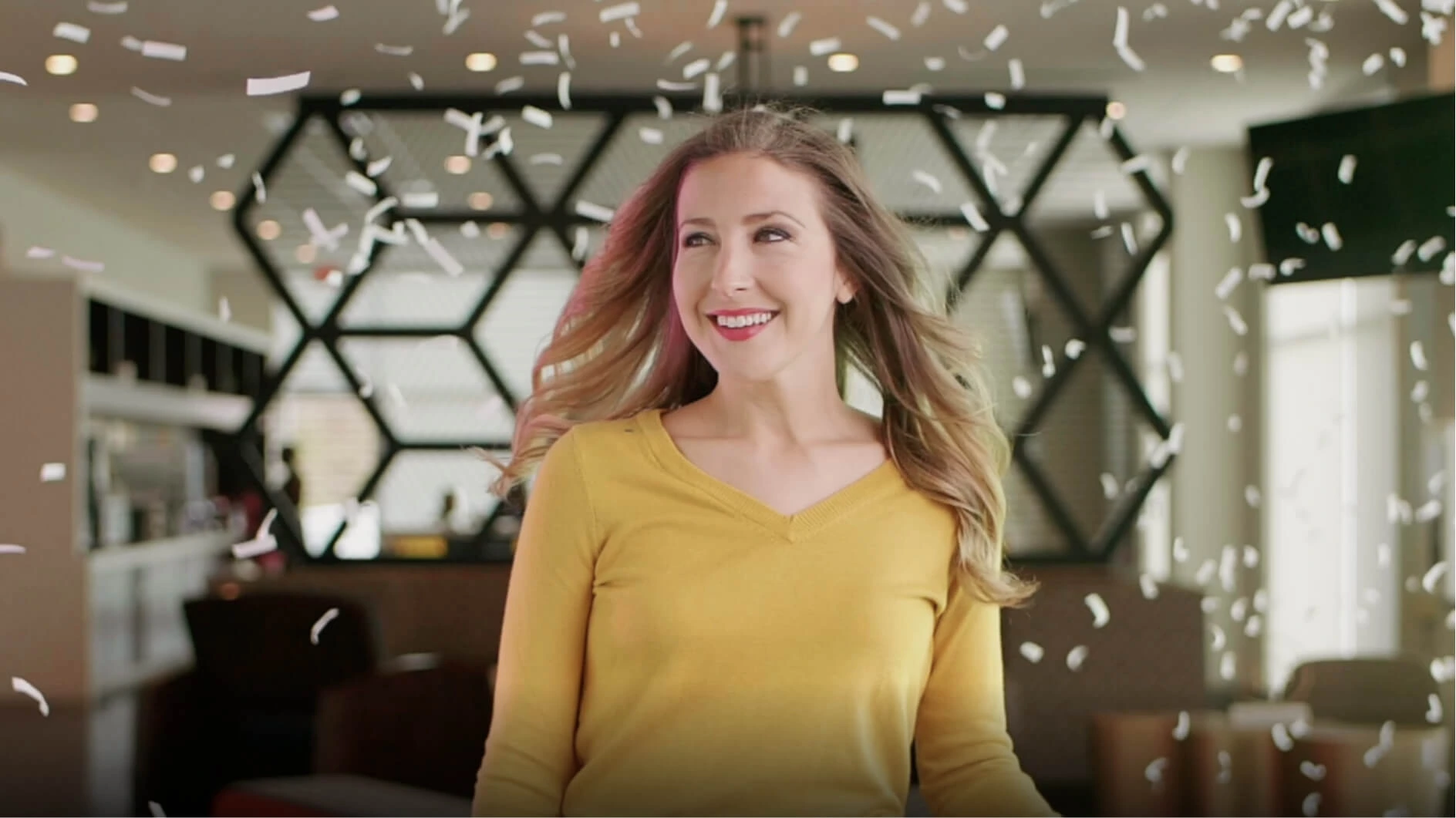
Maestro is a learning innovation company that works with organizations to design and build learning experiences across strategy, design, technology, and media.
When they’re a good fit:
When you want training that feels more creative and custom than a standard corporate video. Maestro is a strong fit for branded learning, hospitality and service training, and programs that need a mix of high-quality media and instructional design.
How they work:
As a custom learning partner, combining learning strategy with live production, animation, and media design to build tailored programs.
7. Demo Duck
Demo Duck is a video production company that works across animation, live action, and explainer formats.
When they’re a good fit:
When you need stronger storytelling and production craft than a self-serve tool can offer. Demo Duck is a good fit for explainer videos, educational content, and branded training that needs to simplify complex ideas in a polished, engaging way.
How they work:
As a creative production partner, combining writing, design, animation, live action, and editing to produce custom videos in a range of styles.
8. Blue Carrot
Blue Carrot is an eLearning development company that specializes in educational content creation, video production, and content localization.
When they’re a good fit:
When you need animated training content, custom e-learning, or localization support alongside video production. Blue Carrot is a good fit for teams that want more instructional design support than a standard video agency typically provides.
How they work:
Through a custom model that combines instructional design, e-learning development, video production, localization, and media formats like 2D, 3D, interactive video, and synthetic video.
9. Vidico
URL: https://vidico.com/
Vidico is a video production company that works with startups and enterprise teams to create product videos, explainers, and training content.
When they’re a good fit:
When you want polished product storytelling, especially for SaaS or tech brands. Vidico is a good fit for demos, explainers, and customer education content that needs stronger creative execution than a self-serve tool can provide.
How they work:
As a full-service creative partner, combining strategy, scripting, animation, live action, design, and localization to produce custom content for growing brands.
10. Archipelago Productions
URL: https://www.archipelagoproductions.ca/
Archipelago Productions is a production company that creates live-action video content for organizations and brands.
When they’re a good fit:
When you want polished live-action production and stronger creative execution than a self-serve tool can provide. Archipelago is a good fit for training or educational videos that benefit from a more premium, filmed approach.
How they work:
As a full-service production partner, covering concept, filming, editing, and related creative services across corporate, branded, and e-learning video.
What should you look for in a training video production company?
These criteria will help you narrow your shortlist, compare proposals more clearly, and identify potential delivery risks early.
- How do updates work after launch?
Ask about timelines, costs, and the update model. Clarify whether changes require a full re-shoot or a lighter edit to existing scenes. - How do reviews work?
Find out how SMEs, compliance, and other stakeholders are involved. Look for a process that keeps reviews structured and revisions manageable. - Do they offer localization?
(If applicable) check whether they can support terminology management, subtitles, dubbing, QA, and regional nuance across markets. - What accessibility deliverables are included?
Confirm whether they provide captions, transcripts, and audio description where needed, and whether they align with your accessibility standards. - Who owns the final assets?
Make sure you receive scripts, captions, project files, and a clear record of approvals and final versions. - Can they support distribution?
Ask whether they can publish into your LMS, LXP, or knowledge base, and whether they can help track usage or adoption signals. - How do they handle security and sensitive content?
Understand what happens when source material includes internal SOPs, customer information, or other sensitive business content.
How to compare providers
Use this table to identify the type of support that best aligns with the training you need to deliver.
Most teams do not choose just one approach. They combine these depending on the type of training they need to deliver, how often it changes, and how much polish or governance the content requires.
When does AI video make sense for training?
AI video production works best for training that needs to be frequently updated, personalized, and localized. In those cases, the ability to create and revise content quickly becomes more important than producing a single polished video.
If your goal is to scale sustainably, without blowing your budget or burning instructional design time, this is the way to go.
If, however, you’re trying to build your brand, capture leadership presence, or film on-site environments, you may still want a production partner. The same applies if the content depends on custom storytelling, cinematography, or a high-stakes flagship piece that represents the company.
In many cases, the answer may be to use both. A production partner might help create a foundational set of videos, while AI is used to scale, localize, and maintain that content over time. That combination gives teams more flexibility in how they balance quality, speed, and cost.
How to get your training video project started
Start by scoping the project. Define what you need to create, who it’s for, how often it will need to change, and whether you require localization, accessibility support, or LMS integration.
Then speak with a few providers. Review portfolios, ask targeted questions, and compare how each team approaches updates, review cycles, and delivery.
If scalability and speed are priorities, book a demo with Synthesia.
Amy Vidor, PhD is a Learning & Development Evangelist at Synthesia, where she researches learning trends and helps organizations apply AI at scale. With 15 years of experience, she has advised companies, governments, and universities on skills.
Frequently asked questions
What is an enterprise training video production company?
An enterprise training video production company helps large organizations create video content for onboarding, compliance, employee training, enablement, and internal communications. Unlike generalist video agencies, enterprise-focused providers are better equipped to handle scale, stakeholder alignment, localization, and governance requirements.
When should an enterprise choose a training video production company?
An enterprise should hire a training video production company when it needs high-production-value training content, specialized instructional support, or strategic help for a high-stakes initiative such as a major onboarding program, compliance rollout, or leadership-led change effort.
What should you look for in an enterprise training video production company?
Look for experience with enterprise training use cases, strong project management, instructional design capability, localization support, and a clear process for reviews, updates, and stakeholder alignment. For large organizations, long-term maintainability matters just as much as production quality.
What is the difference between a training video production company and an elearning vendor?
A training video production company focuses on creating video assets, while an elearning vendor may provide broader learning design, authoring, LMS integration, assessments, and program development. Some providers do both, but the distinction matters when comparing scope and cost.
Are AI video platforms a good alternative to training video production companies?
AI video platforms are often a strong alternative for ongoing training needs, especially when content changes frequently or needs to be localized across teams and regions. They are particularly well suited to onboarding, compliance updates, internal enablement, and repeatable training workflows. This fits the broader market shift in L&D toward speed, scale, personalization, and easier localization.
When is an agency better than AI for training videos?
An agency is usually the better choice when the project depends on custom creative direction, complex storytelling, or a highly polished flagship production. AI video is often the better fit when the priority is speed, repeatability, and keeping content current over time.
Can enterprise teams combine agencies and AI video?
Yes. Many enterprise teams use a hybrid approach: agencies for campaign-level or high-visibility productions, and AI video platforms for scalable updates, localization, and ongoing training delivery. This hybrid model is often the most practical way to balance quality, speed, and cost.


.webp)