The Business Case for Learning and Development

Written by
Amy Vidor
March 4, 2026

Create engaging training videos in 160+ languages.

L&D is often asked to justify its existence. Leaders want proof in tighter budget cycles, and training effectiveness gets reduced to vanity metrics like completion rates and satisfaction scores.

The good news is you do not need to rely on anecdotes to show the impact of L&D. A strong body of research connects investment in development to engagement, retention, and performance. More importantly, it shows how learning builds organizational capability, which is what helps companies adapt when priorities change.

Whether you’re building an L&D function, defending an existing program, or aligning leaders on what to fund next, this guide is for you. It lays out a practical business case grounded in learning science and proven best practices, including personalized learning and learning in the flow of work.

⚑ What to measure if you want training to pay off
  • Readiness for change: Teams adopt new processes, tools, or policies with fewer exceptions and less rework.
  • Adoption and transfer: Behavior changes after launch, supported by reinforcement, manager coaching, and guidance at the moment of need.
  • Time to proficiency: People ramp faster, so new hires and role changers contribute sooner with less transition risk.
  • Consistency at scale: Work stays aligned across teams and regions through shared standards and clear decision rules.
  • Mobility and retention through development: People can see progression paths, move internally, and stay longer because growth feels real.
  • Speed to update: Learning stays current as reality changes, including fast revisions and localization.

πŸ“š Learning and development (L&D) is the organizational function that builds employees’ knowledge, skills, and capabilities so the business can perform and adapt. It covers how learning is designed, delivered, supported on the job, and evaluated over time.

What does L&D need to deliver in 2026?

Enterprise learning is under pressure to keep up with an accelerating pace of change while budgets keep tightening. That combination makes training easy to dismiss unless it shows up as measurable performance.

What does β€œimpact” mean in enterprise L&D now?

Impact means the business can execute change with less friction. People ramp faster. Work is more consistent across teams and regions. Avoidable errors drop, especially after new tools, new processes, or new policies roll out.

This definition fits the reality most organizations are planning for. The World Economic Forum’s Future of Jobs Report 2025 describes continued disruption through 2030, with employers expecting significant change to jobs and skills. In that environment, L&D is less about delivering courses and more about keeping capability current. Here are a few signals leaders recognize when development is working.

πŸ“ˆ By the numbers
  • Retention: 73% of employees say stronger learning and development opportunities would make them stay longer at their company.
  • Leader alignment: 95% of HR managers agree that better training and skill development improves retention.
  • Retention is actionable: 63% of exits were attributed to preventable causes such as career stagnation, work-life balance issues, and management behavior.
  • Career development correlates with business confidence: Career development champions report higher confidence in retaining and attracting qualified talent, and higher confidence in profitability.
  • Manager development moves measurable outcomes: A manager training study found participants saw up to 22% higher engagement, their teams’ engagement rose by up to 18%, and performance metrics improved 20%–28% nine to 18 months after training.

πŸ“š Friction is any unnecessary obstacle that makes a task harder than it needs to be β€” extra steps, unclear handoffs, waiting, rework, or β€œworkarounds” that drain time and slow the workflow.

Why isn’t β€œmore training” the answer?

Because activity is not the same as performance. A 2025 meta-analysis finds a positive relationship between organizational training and organizational performance, but the strength of that relationship varies depending on what training targets and how performance is measured. Training can be well-produced and still miss the outcomes leaders care about if it is not tied to the right work and reinforced over time.

That’s why completion and satisfaction are weak as β€œproof.” They describe consumption. They do not confirm adoption, proficiency, or consistency.

What has to be true for learning to stick at scale?

Transfer has to be intentional. A 2026 systematic scoping review highlights a persistent challenge: evaluation tools for training transfer are widely used but remain fragmented and inconsistent. When transfer is hard to measure, it is harder to manage, and behavior change becomes guesswork.

Personalized learning works when it reduces effort and increases relevance. That means people get the right level of guidance for the task in front of them, based on role, context, and experience, without being pushed back into generic content. Personalization is less about building a unique course for every employee and more about matching support to the job.

Learning in the flow of work strengthens transfer because it shows up when decisions are made. People rarely fail because they forgot everything. They fail on the one step they can’t recall under pressure. Short guidance, examples, and refreshers delivered where work happens reduce cognitive load and make the right behavior easier to repeat until it becomes the standard.

πŸ“šΒ Personalization should narrow what someone sees (not expand it).

What should L&D leaders prioritize when budgets are tight?

Prioritize outcomes that reduce enterprise waste. Readiness for change is one. Adoption is another. Speed-to-update is the third. These three protect the business from the hidden costs of slow ramp, inconsistent execution, and outdated guidance.

This priority set also maps to how leading learning teams talk about value. LinkedIn’s 2025 Workplace Learning Report frames career development as a business strategy, not a perk, and pushes learning leaders toward measurement that connects development to retention, mobility, and business performance.

How does AI change the standard for what’s possible?

AI reduces the cost of producing, updating, and localizing learning. That changes what stakeholders expect. In Synthesia’s AI in Learning & Development Report 2026, teams report immediate value in time saved, and they also point toward growing value in localization and business impact. Β 

Speed alone does not solve the hard part. The same research surfaces blockers like security and accuracy concerns, integration challenges, and unclear approval paths. Mature teams will use AI to keep learning current while tightening governance, not loosening it.

What outcomes should L&D prioritize in 2026?

These outcomes give leaders a clear way to judge impact and give L&D a practical way to design for scale. For each outcome below, you’ll see what to build, what to measure, where to start, and how AI video helps keep guidance consistent and current.

Outcome What to build What to measure Where to start How AI video helps
Readiness for change Role-specific "Day 1" standards that describe the new behavior, common exceptions, and examples of "what good looks like." Exceptions & rework after rollout, error trends, time to baseline performance for affected teams. Pick one change in flight and write the Day-1 standard for the largest-impacted role; share with managers and publish where work happens. Publish a 2–3 minute Day-1 walkthrough that can be updated and localized as questions emerge so teams get a consistent, on-demand message.
Adoption & transfer A reinforcement plan (manager prompts, practice scenarios, quick refreshers) covering the first 2–4 weeks after launch. Usage of the new process/tool, quality signals tied to the behavior, and volume of repeat questions. Add one manager prompt + one short practice scenario to the next launch and schedule them for the peak adoption week. Create short reinforcement clips for weeks 1–4 and revise as edge cases appear so behavior change stays supported without heavy production overhead.
Time to proficiency Role paths with clear proficiency criteria for 30/60/90 days and practice that mirrors real tasks. Time to independent task completion, ramp quality scores, and escalation rates indicating low confidence. Choose one role, define three predictive tasks, and write what β€œindependent” looks like for each in partnership with the manager. Build short role-specific ramp modules that demonstrate the standard in action and can be updated as tools and workflows change.
Consistency at scale A shared definition of β€œgood” with decision rules and examples that allow acceptable local variation. Variation in outcomes across teams, rework rates, audit findings, and recurring exceptions tied to unclear standards. Identify one process with visible variation, publish a single definition of done with two examples, and retire older versions. Publish one core standard video and controlled localized variations so the core message stays aligned while supporting context and language.
Mobility & retention Progression pathways that map skills to role moves, with checkpoints managers can use to support transitions. Internal fill rates, time-to-productivity after moves, retention in critical roles, pathway completion tied to performance. Pick a common internal move, map the five skills that change between roles, and create a short monthly-checkpoint pathway. Show scenarios that demonstrate β€œwhat good looks like” in the next role; localize and update these videos as expectations evolve.
Speed to update Ownership, version control, and review workflows (including localization) to support fast updates and retirements. Time from change announcement to updated guidance, usage of outdated assets, and reduction in repeat questions after updates. Audit a high-traffic asset, add an owner and last-reviewed date, set a review cadence, and remove or redirect older versions. Update and republish short videos (and localized variants) quickly so frontline guidance stays accurate without full production cycles.

How do you prove impact, keep speed, and scale what works?

If you want L&D to earn trust, measurement has to support a business decision. Start by choosing one outcome the business already cares about. Define what β€œbetter” means in operational terms, and set a baseline so you can see movement over time.

Keep the system simple:

  • Choose one primary outcome tied to the initiative.
  • Define β€œbetter” in real work terms.
  • Capture a baseline before launch.
  • Schedule two check-ins: one early signal review and one later performance review.
  • Lead with business metrics and use learning signals as supporting context.
  • Use completion and satisfaction data to diagnose friction or clarity gaps.
  • Document changes between versions so results stay interpretable.

Vanity metrics such as attendance, completion rates, or satisfaction/NPS can look strong while behavior stays the same. They reflect participation and sentiment. They do not show performance improvement.

Once you can show movement, the next challenge is keeping speed while maintaining trust. Faster production only helps when guidance is accurate, approved, and easy to access. That requires operating discipline:

  • One accountable owner per asset
  • Clear approval roles before publishing
  • A single current version with visible version control
  • Removal or redirection of outdated content
  • Standardized localization from one source of truth
  • A feedback loop where questions and exceptions trigger updates

At scale, most breakdowns are operational. Impact slows when ownership is unclear, standards vary across teams, reinforcement fades after launch, or metrics focus on activity instead of outcomes. Strengthen the operating system, and learning becomes something you can run reliably and improve over time.

Key Takeaways

  • L&D pays off when it improves how work gets done. Anchor your strategy to outcomes leaders already recognize, then design your learning system to deliver those outcomes reliably across teams, regions, and change cycles.
  • Start with one priority outcome tied to a business initiative. Define what β€œgood” looks like in operational terms, establish a baseline, and show movement over time. Then scale what works with clear ownership, reinforcement after launch, and updates that keep guidance accurate as reality changes.
  • Use workflows that support ownership, approvals, and versioning so faster production strengthens trust. A practical next step is to draft one short video for a high-impact initiative, publish it where work happens, and measure what changes on the job.

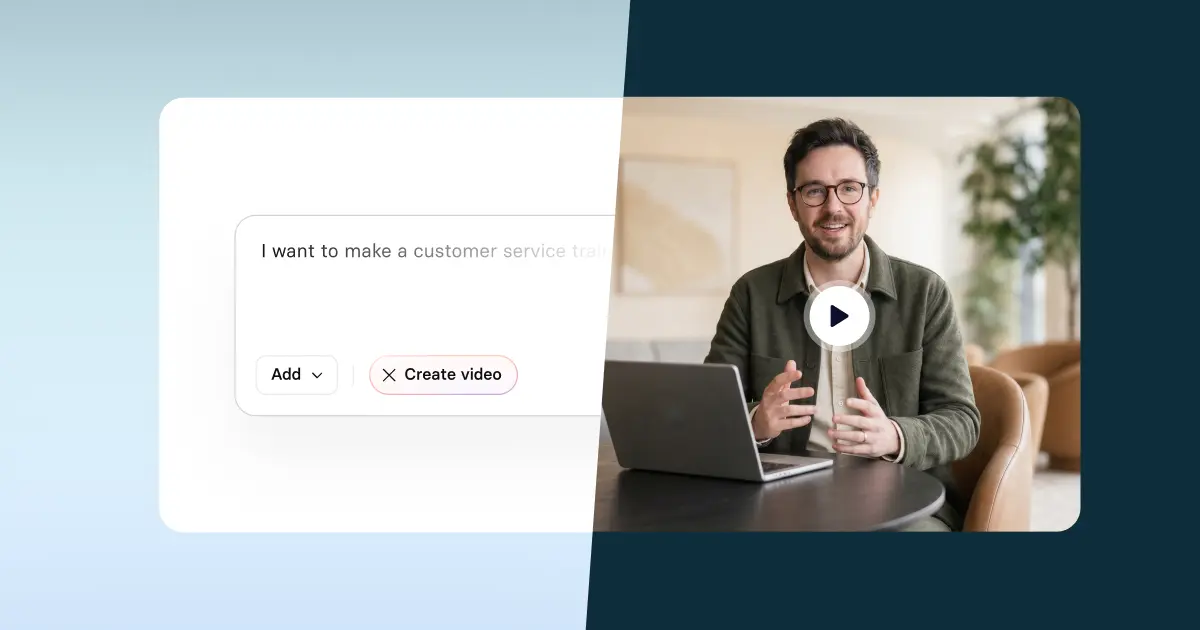
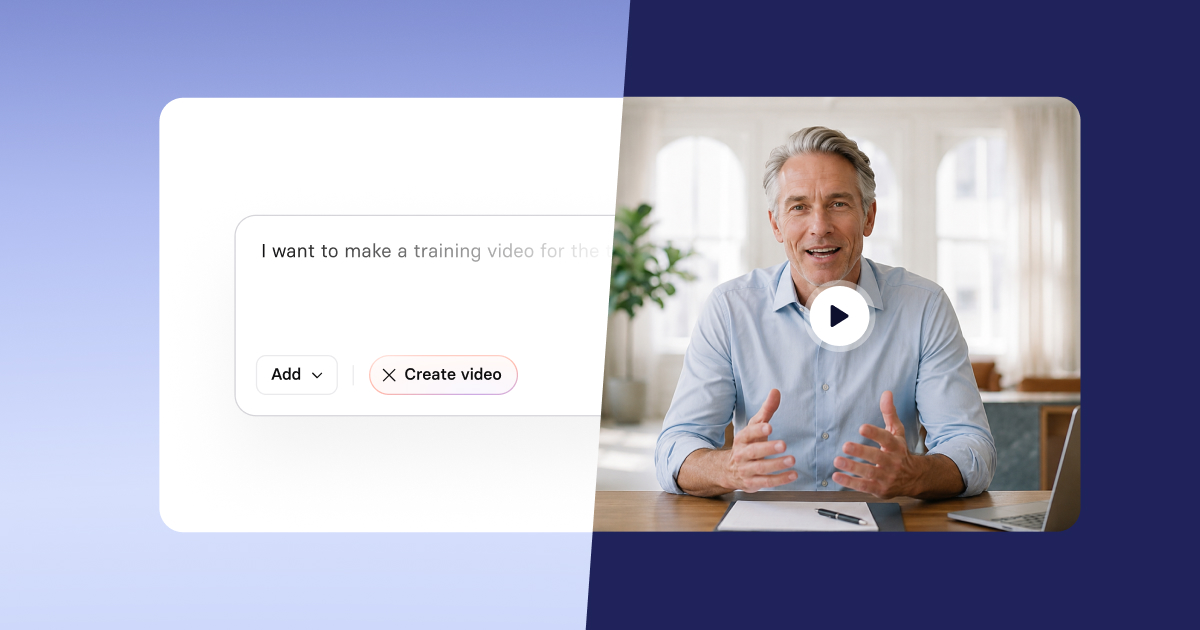
To see what that looks like, watch how you can create a video in minutes. Then try building your own with Synthesia’s text-to-video tool.

About the author

Learning and Development Evangelist

Amy Vidor

Amy Vidor, PhD is a Learning & Development Evangelist at Synthesia, where she researches emerging learning trends and helps organizations apply AI to learning at scale. With 15 years of experience across the public and private sectors, she has advised high-growth technology companies, government agencies, and higher education institutions on modernizing how people build skills and capability. Her work focuses on translating complex expertise into practical, scalable learning and examining how AI is reshaping development, performance, and the future of work.

Go to author's profile
Get started

Create engaging training videos in 160+ languages.

Try out our AI Video Generator

Create a free AI video
faq

Frequently asked questions

What’s the difference between training, enablement, and capability building?

Training builds knowledge and skill. Enablement removes friction so people can apply that skill in real work. Capability building is the system that keeps performance improving over time, even as tools, policies, and priorities change. When you invest only in training, you tend to measure completion. When you invest in capability, you see consistency in how work gets done.

Why do training programs fail to change behavior at scale?

Because learning often stops at understanding. People finish a course, then return to a job shaped by deadlines, habits, and local workarounds. If the training is not tied to a real workflow, if managers cannot coach it, or if the guidance is hard to find at the moment of need, behavior does not shift. The fix is usually fewer one-time events and more reinforcement that shows up where work happens, paired with content that stays current.

How do you reduce bottlenecked readiness when only a few experts can train everyone?

Treat experts as the source of truth, not the delivery channel. Capture what they know once, then turn it into reusable training that teams can access on demand. Standardize the explanation, the examples, and the expected outcomes so regions and functions do not diverge. This is where video earns its place. It preserves the expert’s clarity, scales across time zones, and is easier to update than repeating live sessions.

How do you build skills at scale without overloaded upskilling?

By designing for the workday you have, not the one you wish you had. Keep learning tied to real tasks, and keep the scope narrow enough that someone can use it the same day. Reduce β€œextra” training time by replacing long sessions with short modules that answer one question and remove one source of error. If people need the content again later, make it easy to return to the exact step they need.

What should enterprise L&D prioritize in 2026?

Prioritize outcomes that leadership can feel. Readiness for change matters because the organization will keep shifting. Adoption matters because new tools and processes do not pay off until behavior changes. Speed to update matters because stale guidance creates exceptions, rework, and risk. When you choose priorities through that lens, you can measure progress in time to proficiency, quality, cycle time, and policy adherence, not just course completions.

How can AI help without increasing risk?

AI helps most when it improves scale while keeping control. That means governed templates, approved language, and clear review ownership for anything that touches policy, legal, or technical accuracy. It also means tight access control and versioning so teams know what is current. Use AI to reduce repetitive work such as updates, localization, and role variations. Keep accountability with the humans who own the content.

VIDEO TEMPLATE