



How to Create Safety Training Videos with AI

Use AI video to deliver consistent safety training at scale
If your safety training doesn't seem to be making a difference in employee behavior, it's probably for one of two reasons: it's passive or generic (or both).
Safety training needs to be engaging. It needs employees to actively participate, whether through scenarios or decision-based practice. And it needs to be tailored to the actual work environment (yes, that's also an OSHA requirement for those of you based in the US).
Before AI, that was an expensive proposition. Safety trainings are often delivered as large group lectures or written manuals, keeping facilitation costs down. In those situations, workplace examples tend to rely on anecdotes, slides, and the occasional video.
Whether you're building standalone training videos, or creating videos to embed in an onboarding or compliance program, you can design scenarios that let employees practice the decisions that matter most, before they ever face them on the job.
Why use videos for safety training
Safety training videos aren't novel. There's evidence they were used as early as the 1950s and by the 1980s, they were being regularly produced by regulatory agencies. Historically, these videos have been passive learning experiences, shown in dark auditoriums to employees as they try not to fall asleep. That's why they're even cited in the research I just shared as examples of what not to do.
But that's changing. Video training is no longer constrained to being a one-way recording. Today, it's a medium that, when used effectively, can improve learner outcomes.
How to create a safety training video
Presumably you're here because you want to create a safety training video with an AI platform like Synthesia, in which case, keep reading. If, however, you're looking to create a safety training video without AI, I have a step-by-step guide on how to do so here.
Step 1. Choose your topic
If this is your first time creating a safety training video, I recommend picking a topic that can either be covered in 3-5 minutes, or broken down into videos of that length. (Research has shown that engagement begins to drop around the 6 minute mark.)
If you already have training materials, like a slide deck or transcript from a live session, you can segment that into topics for a video series. Each video should cover one topic and have a measurable outcome. You can use the sentences below as a way to think through segmentation.
This video is for [specific role] who is required to [procedure or regulatory obligation].
After watching, [specific role] should be able to [recognize a hazard / perform a procedure / respond correctly] so that [safety outcome].
Let’s say I’m designing an onboarding program for new hires who are working at an industrial site. There are four things that all new hires need to know: how to wear PPE, how to handle equipment, how to lift safely, and how to report hazards. I can design four short videos that cover each topic. For instance,
This video is for new hires who are required to report hazards through the correct channel as soon as they're identified. After watching, new hires should be able to recognize a reportable hazard and follow the correct reporting steps so that hazards get addressed before they cause an incident.
Now, this is an example, so it could benefit from more specificity, such as specific regulatory guidelines connected to this training (this may be important for compliance).
Remember, you want to make it as easy as possible for these videos to be referenced, so that if someone forgets a step in reporting a hazard, they can quickly find the right training and follow the steps. "How to report hazards" as a title helps with this, too.
Step 2: Generate a first draft
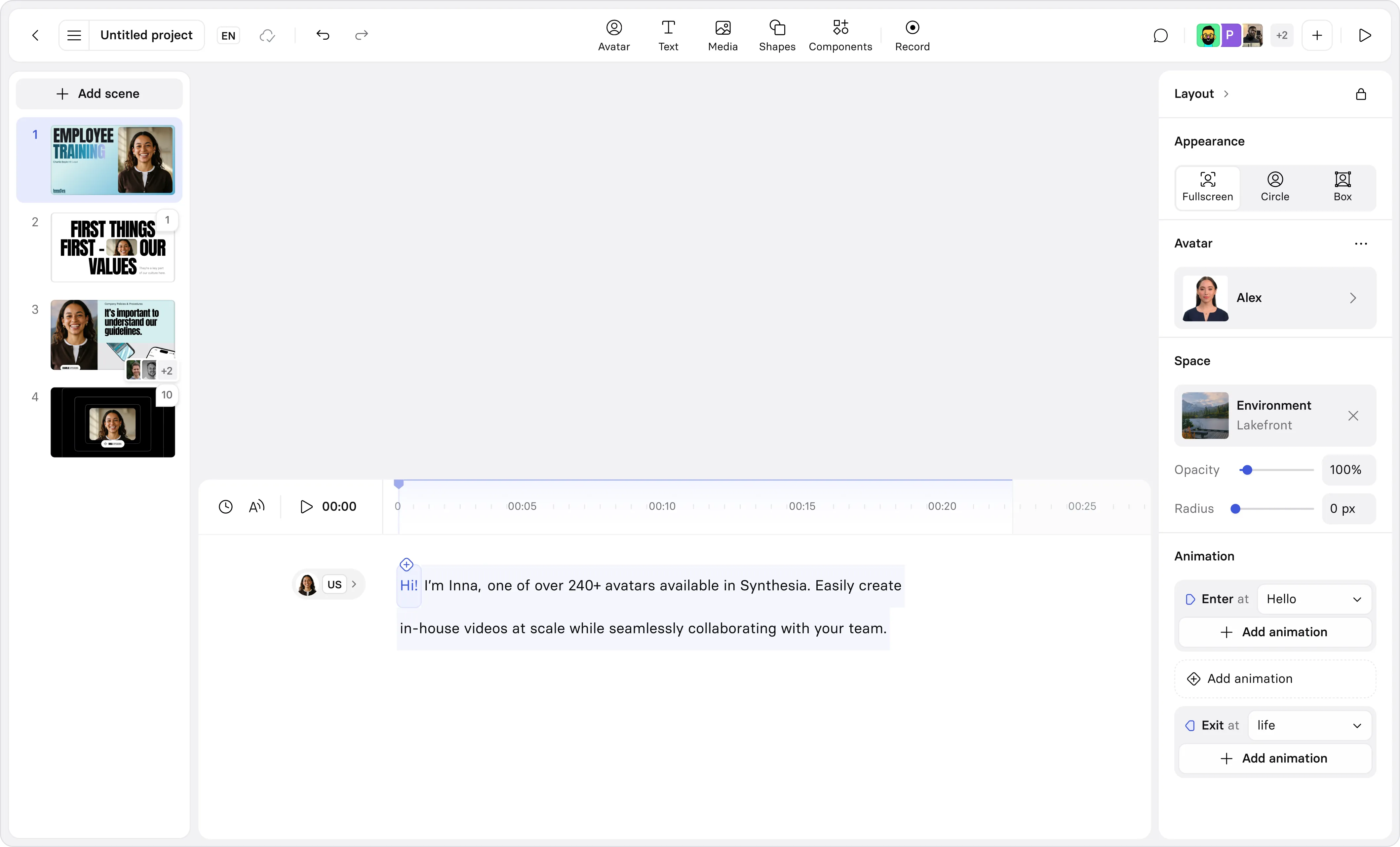
Once you have a clear focus for your video, you can head over to our free AI video generator. Upload the relevant content from your existing materials, whether that’s a selection of slides or a segment of a transcript (an LLM works wonders here). You can also type in a prompt, but given the specificity of safety training, I recommend having source material to start with, no matter how dry.

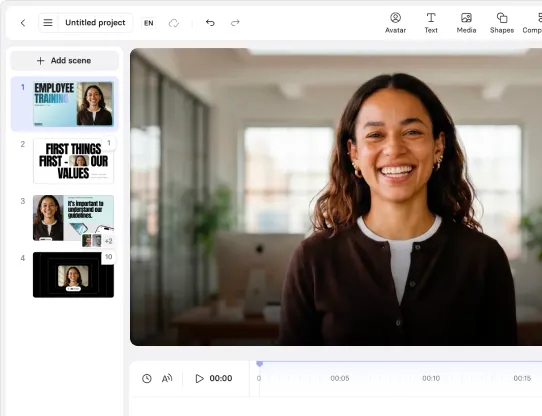
Alternatively, you can start with a template. A template is a fully customizable structure designed by our team so you can focus more on the content and less on the design. You can select from our library of 250+ templates or use the one below.
Some features are only available on paid plans.
Step 3: Choose your avatar
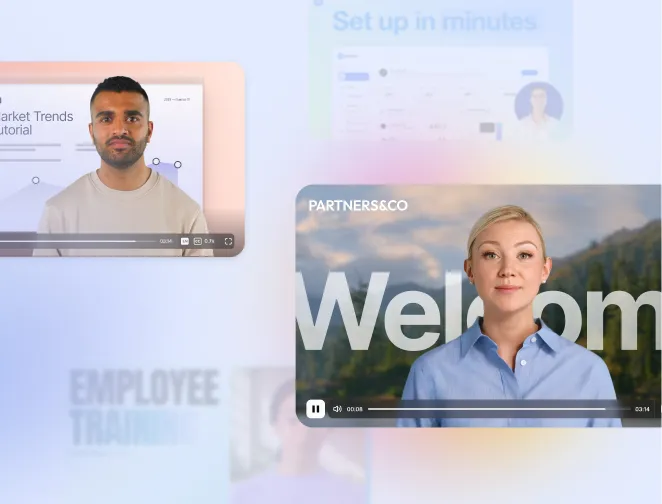
After you’ve generated a rough draft, you can choose what to focus on next. I recommend starting with the easy (and honestly, fun) parts, like choosing an avatar. If you plan to have an avatar visible, be sure to customize their outfit to align with your safety standards. You can also upload a photo of your worksite.

You don’t want the avatar, or any narration to be distracting. Select a voice that matches how your employees speak, and tweak any pronunciation, like specific equipment names or any acronyms or jargon.
Step 4: Customize your scenes
With that out of the way, you can move on to customizing your scenes. That starts with uploading the branding and other assets, like footage of equipment or your site.
A majority of your time should be spent designing the learning experience (with the help of our AI Assistant). Remind yourself of the purpose of the video. What do you want employees to be able to do differently after watching it? Then design towards that goal.

You may choose to incorporate interactivity, such as a scenario or knowledge check, but be judicious, keep attention on the safety procedure itself.
Step 5: Ask for SME approval
Unless you're a subject matter expert on the topic, your final step before publishing the video is to have someone who is an expert review it. That could be an operations lead or site supervisor, or someone else.
Share the video, and a list of targeted questions like:
- Does the training reflect the current procedure and equipment on this site?
- Are the common mistakes shown actually the ones employees make?
- Does the reporting guidance match our process?
You’re looking for a formal sign off, which is important if you need to track version control for any reporting purpose, as well as any feedback around the learner experience.
Step 6: Publish and distribute
Once you're ready to publish, you'll want to think through a few more things, such as:
- How will you distribute the video?
- How will you track completion and any other required data?
- How will you update content, when needed, while maintaining clear version history?
In most cases, safety training needs a paper trail, which means distributing videos via an LMS using SCORM packaging or directly from a platform like ours.
If, however, your video is a refresher or a topic that doesn't have regulatory implications, you may consider embedding it into the flow of work. That could look like having a QR code on site that links to a video on how to report a hazard, or a reminder video about proper PPE posted on the homepage of an intranet.
Measuring engagement
At the beginning of this post, I emphasized how important it is to make safety training engaging so that the information is retained and employees act appropriately on-site.
Simply making a training video doesn't guarantee that outcome. That's why I had you identify your learning objective and measurable outcome before you dove into our platform.
Part of transitioning to video is learning how to evaluate the impact of the medium on your safety objectives. To do this, you'll need to identify two types of metrics: snapshot data and impact data. The first is the information you capture from an LMS, like how many employees completed it (or what percentage, and when), and how they performed in scenarios or knowledge checks. The second is data that you capture from the workplace that shows whether or not the video is driving behavioral change.
Of course this isn't neat and tidy. You can't, with certainty, say that because you released a new training video the number of incidents reported decreased. There may be other factors at play. So you need to identify what counts as good enough measurement for your stakeholders to ensure you can make a data-driven decision about what is, and isn't, working.
After all, the goal is a safer workplace for everyone.
If you're interested in learning more about how Synthesia can help your workforce safety training, book some time with our team.
Amy Vidor, PhD, is the Learning and Development Evangelist at Synthesia, where she researches learning trends and helps organizations apply AI at scale. With 15 years of experience, she has advised companies, governments, and universities on skills.
Frequently asked questions
Why does safety training need to be tailored to the actual workplace?
Generic safety content is easy to ignore. Safety depends on where people actually work, and a video showing a generic warehouse is teaching people about a workplace that isn't theirs. It's also an OSHA requirement for those based in the US.
Why is passive training less effective for safety?
Passive safety training (lectures, written manuals, and one-way videos) is often ineffective because it leads to lower attentiveness and concentration.
More engaging training, one that has employees actively participate through scenarios or decision-based practice, leads to greater knowledge acquisition and reductions in accidents, illnesses, and injuries.
How do you measure whether a safety training video is working?
Track snapshot data (completion, timing, performance in scenarios or knowledge checks) from your LMS, and impact data (like incident trends) from the workplace itself.
You can't say with certainty that a new video caused a drop in incidents, so identify what counts as good enough measurement for your stakeholders.

.webp)

.webp)