

eLearning Course Development Made Simple: Your 2025 Guide

Written by
Kevin Alster
November 4, 2025

Create AI videos with 230+ avatars in 140+ languages.

Try Free AI Video
Get Started for FREE
Get started

I’ve been building eLearning courses for a while now, and one thing is clear: creating effective digital learning experiences requires a fundamental shift in how we think about corporate training.

As AI reshapes entire industries, I’ve noticed how employees need courses that teach adaptability alongside knowledge.

It reminds me of futurist author Alvin Toffler’s bold prediction: “The illiterate of the 21st century will not be those who cannot read and write, but those who cannot learn, unlearn, and relearn.”

Modern eLearning course development proves Toffler right every day in my work.

The learners I serve face unprecedented technological changes, making their ability to evaluate, update, and rebuild understanding essential for career success.

Consequently, they need courses that develop both technical expertise and cognitive flexibility — and as learning designers, that same adaptability applies to us.

AI-driven tools like Synthesia now allow course creators to “relearn” how content is produced — making agility not just a learner skill, but a design strategy.

💡 Summary: Modern eLearning course development
  • Plan with purpose: Define clear goals, know your audience, and set success metrics before building anything.
  • Choose the right tools: Combine authoring tools, LMS tracking, and AI video to create fast, consistent, and multilingual training.
  • Microlearning works: Keep lessons short, modular, and interactive with knowledge checks and branching scenarios.
  • Make content accessible: Use captions, responsive design, and mobile-friendly layouts so learners can train anytime, anywhere.
  • Iterate quickly: Launch, collect feedback, and update in minutes with AI—keeping content fresh and relevant.

Before You Start: Essential Planning

Every successful eLearning course I’ve ever launched started with a clear vision.

I always ask myself: “What do I want my course to achieve, and how will it help my learners?”

It’s tempting to jump straight into the creative side of development, but taking a step back to map out the bigger picture is absolutely worth it.

Defining Your Training Goals and Target Audience

After deciding to create an online training program, the first challenge is matching learning design with real business value.

Each course I develop needs to solve specific organizational problems:

  • Skills gaps in critical roles
  • Performance inconsistencies across teams
  • New system or process rollouts
  • Compliance and certification needs

I’ve learned that different learning scenarios warrant different approaches.

For example, sales enablement training might focus on interactive scenarios, while technical upskilling might require detailed step-by-step modules.

Every choice about format, length, subject matter experts, and delivery method should be rooted in your learners’ reality.

That’s why understanding your audience is so important to me. Are they new hires who need foundational knowledge, or experienced staff looking for advanced insights?

Do they prefer short bursts of written content, in-depth explorations, self-paced learning, or hands-on simulations?

Adjusting my style accordingly has helped me build stronger connections with learners.

From here, I define measurable success metrics. What does training success look like? It could be improved test scores, higher engagement rates, or faster onboarding times.

Setting benchmarks early on is crucial for refining and evaluating your course later.

📊 Measuring success with clear metrics

For example, when I built a new onboarding program for a software rollout, success was measured by reducing time-to-competency by 25%.

Establishing clear metrics like this early on helps me evaluate impact later (Kirkpatrick Levels 3 and 4).

And let’s be honest, money matters. I always have to look at the budget, the tools available, and the strengths of my team.

Every project has limits, so figuring out how far your resources can stretch keeps your project realistic and focused.

Choosing Your eLearning Tools

Selecting the right tools shapes how effectively I can create and deliver course content. In my own eLearning development, I typically combine several key technologies.

🧰 eLearning Tools at a glance
  • Standalone authoring tools: Build core course structure and interactive elements.
  • Screen recording software: Create detailed software demos and walkthroughs.
  • Assessment builders: Add quizzes, polls, and knowledge checks.
  • Learning Management Systems (LMS): Deliver courses, track progress, and analyze results.
  • Video editing software: Add transitions, annotations, branding, and polish to training videos.

Among all the tools I’ve tested, AI-powered video platforms like Synthesia have become integral to my workflow — not just for efficiency, but for instructional consistency and accessibility.

I remember when creating training videos took weeks and a small fortune, but with tools like this, I can now convert a script into a professional video in minutes. This shift has transformed my Design and Development phases of ADDIE.

📚 Quick refresher: The ADDIE model

The ADDIE framework is a classic instructional design model used to build effective training programs. It keeps course creation structured, measurable, and learner-focused.

  • Analysis: Identify goals, audiences, skill gaps, and success metrics.
  • Design: Plan learning objectives, structure modules, and storyboard content.
  • Development: Build the course using authoring tools, AI video, and assessments.
  • Implementation: Publish the course, launch to learners, and drive adoption.
  • Evaluation: Measure engagement, behavior change, and business impact—then iterate.

A 3-minute product update that once required two filming days can now be regenerated in 20 minutes, allowing me to focus more time on pedagogy and interactivity rather than production.

And speaking of making life easier, language barriers shouldn’t hold your courses back.

While I usually write my initial content in English, I rely on smart tool choices to reach learners worldwide. Synthesia’s built-in text-to-speech and multilingual avatar capabilities simplify localization, ensuring accessibility without recreating entire modules.

Ultimately, it’s about picking tools that match your team’s skills and your course goals, all while keeping an eye on the budget.

Step-by-Step eLearning Development Process

1. Develop a Course Outline and Storyboard

I see my course as a roadmap guiding learners to their desired outcomes.

Before diving into content creation, I outline how to write an eLearning course that flows seamlessly from start to finish. The roadmap starts with clear learning objectives, organized into focused modules.

I prefer weaving knowledge checks throughout the content. These quick comprehension tests act like milestones, helping learners see their progress. For example, I might include short quizzes after key concepts or ask learners to apply what they’ve learned through practical exercises.

Dynamic branching scenarios are another favorite of mine. Let learners face decisions along the way, like how to handle a demanding customer or solve a technical problem.

Learners who make these decisions become active participants rather than passive observers.

That said, I make sure not to overwhelm learners with too much info at once.

Bite-sized, 5-minute lessons work best. A recent study found that 72% of participants preferred microlearning, and I’ve seen similar enthusiasm because it prevents mental overload and fits neatly into busy schedules.

Each micro-module includes built-in evaluation checkpoints, helping me measure learner progress and identify areas for improvement — a simple way to close the loop in the ADDIE model.

2. Use AI to Create Engaging Video Content

{lite-youtube videoid="7k3N1bUURa4" style="background-image:url('https://img.youtube.com/vi/7k3N1bUURa4/maxresdefault.jpg');" }

AI avatars bring personality and warmth to eLearning content, which can be surprising at first.

While AI presenters aren’t always perfect, I’ve found that these digital presenters establish genuine connections through eye contact, natural facial expressions, and conversational speaking styles. This instantly makes complex topics more approachable.

It’s what Clark & Mayer call the “Personalization Principle.”

Humans learn better when information comes from a virtual pedagogical agent who speaks directly to them. AI coaches provide a relatable, engaging touch that is useful if your course content is especially dry or complex.

🎯 Real-world impact

When I transformed a compliance course using Synthesia, learner engagement scores rose by 40%.

The avatar’s conversational delivery made the information feel more personal and less like reading a manual.

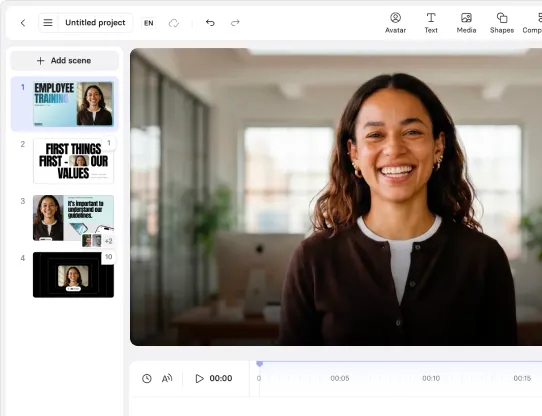
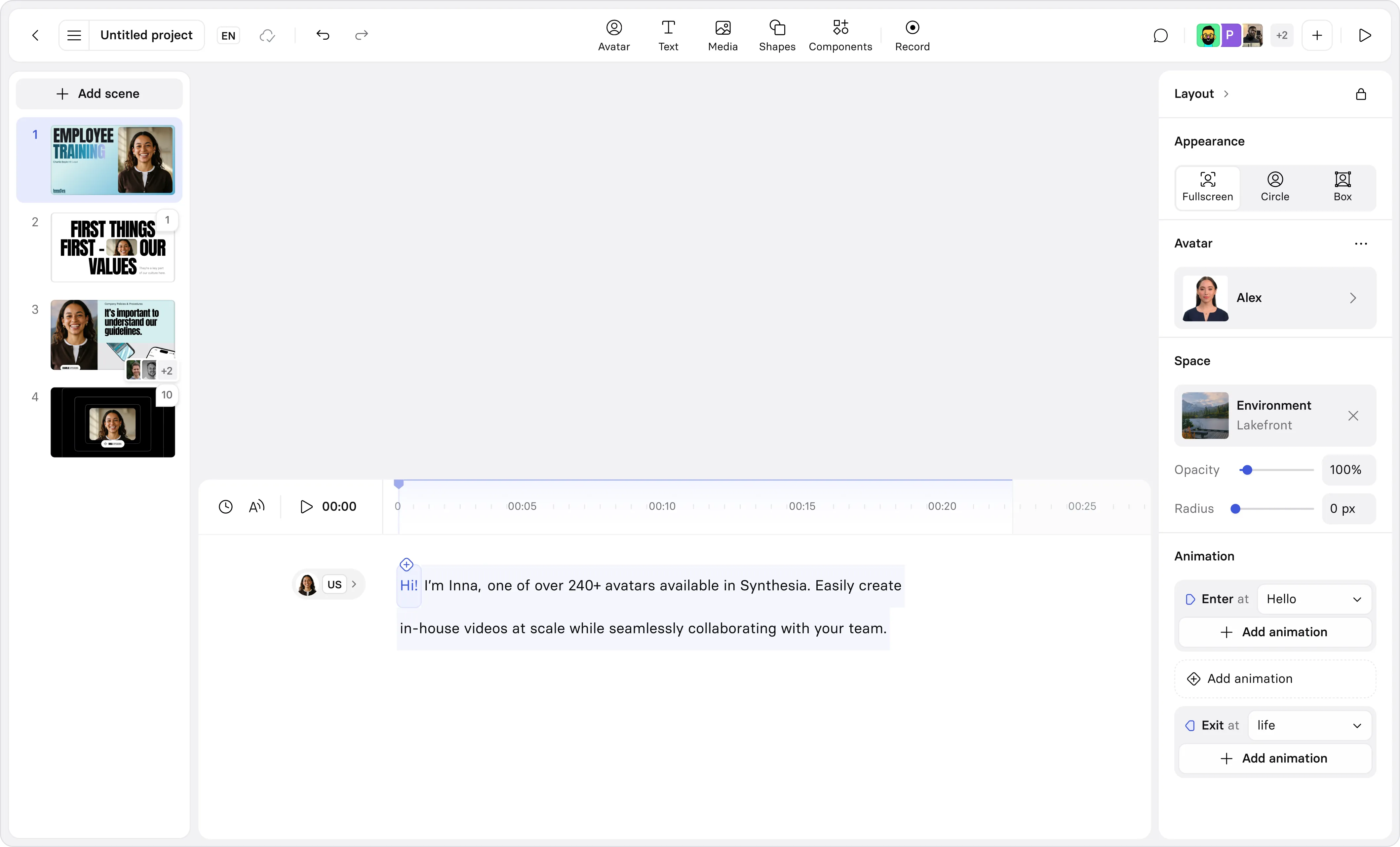
The creation process starts with a training video script. I paste my text, pick an avatar, and tweak visuals like backgrounds and transitions. The AI does the rest, delivering professional-quality content in minutes.

For software demos, I like using screen recordings to capture every click and keystroke in detail. Then I add a friendly voiceover later to guide learners through each step.

When localization is needed, I’ve found tools like Synthesia helpful for quickly adapting narration into different languages without having to re-record from scratch — a big time-saver that also supports accessibility and consistency across regions.

3. Incorporate Scenario-Based Learning for Interactivity

If there’s one thing I’ve noticed, it’s that scenario-based learning (where your employees practice decision-making in a setting that mirrors their daily challenges) reinforces knowledge like nothing else. It’s a great way to turn abstract concepts into real-world skills.

I’ve also experimented with creating short dialogue simulations using Synthesia — simple two-avatar conversations that model real customer interactions or team discussions.

They work well for letting learners observe tone, empathy, and phrasing in context, then reflect on what effective communication looks like.

{lite-youtube videoid="ltRZFaj2hTI" style="background-image:url('https://img.youtube.com/vi/ltRZFaj2hTI/maxresdefault.jpg');" }

Strategic decision points keep learners active throughout the lesson. By branching scenarios based on learners’ choices (e.g., how to handle a difficult client), each path leads to different outcomes, helping them build critical thinking skills they can use on the job.

This approach supports Kirkpatrick’s Level 3 (Behavior), as learners apply what they’ve learned in authentic workplace situations.

4. Add Assessment and Feedback Mechanisms

Sheila Heen once said, “There are three kinds of feedback, and organizations must utilize all three to be effective: Evaluation, Coaching, and Appreciation.”

I keep this in mind when building eLearning courses. Learners need to feel valued while growing their skills.

So, in my experience, the best courses blend multiple assessment styles:

  • Knowledge checks through quizzes and polls for objective measurement
  • Reflective questions to encourage deeper thinking
  • Game elements like points and badges to motivate learners
  • Scenario-based challenges that allow for practical application

To evaluate effectiveness, I track pre- and post-assessment data in the LMS.

Sometimes, I also use short Synthesia video clips as visual feedback — quick recaps that reinforce key takeaways or clarify common mistakes in a friendly, conversational way.

Intelligent feedback design complements these assessments.

Real-time responses (like instant explanations or hints) help learners immediately understand their choices, and personal observations about their effort plus suggestions for improvement can create a truly growth-focused environment.

🧪 Why assessments matter

Assessments do more than test knowledge — they reinforce learning, build confidence, and reveal where learners need extra support.

Mix quizzes, reflective questions, and scenario-based challenges to measure understanding and encourage real-world application.

5. Design for Accessibility and Mobile-First Learning

Modern learners need training materials they can access anytime, anywhere. So I prioritize flexible design that adapts smoothly across devices.

Meeting accessibility standards is also crucial when 15% of the population has some form of disability (World Health Organization, 2023).

Essential mobile-friendly elements include:

  • Responsive layouts that auto-adjust for different screen sizes
  • Touch-friendly navigation
  • Short, focused segments
  • Fast-loading media files

Mobile learning and accessibility go hand in hand. Videos and interactive content should load seamlessly on smaller screens without sacrificing clarity, captions, or navigation ease.

I’ve found that, using tools like Synthesia helps streamline this process — its auto-generated captions and transcripts make it easier to meet accessibility standards without extra post-production steps.

This ensures content remains usable and consistent across devices, supporting an inclusive learning experience that aligns with universal design for learning (UDL) principles.

6. Publish and Launch Your Course

Now it’s time to share your creation with the world.

I start by uploading my content to our eLearning platform, then double-check that all modules load smoothly and that tracking functions capture the right data.

From experience, the launch phase often determines adoption success more than the content itself.

A thoughtful rollout plan turns even the most technical training into something people actually use.

I map out key stakeholders and communication channels, set a clear timeline, and prepare support resources in advance.

Even a well-designed course can flop without a solid rollout strategy.

Occasionally, I’ll create a short Synthesia video teaser to announce a new course internally.

These quick, conversational clips feel personal and help generate early interest, especially when learners hear about the “why” behind the course directly from a familiar avatar or leader figure.

🚀 Strong launches drive adoption

Even great courses struggle if no one knows about them. A thoughtful rollout plan can be the difference between low engagement and a successful launch.

Communicate early, involve stakeholders, and make it easy for learners to access the course from the tools they already use.

7. Review, Test, and Iterate

Once the course is live, I enter the refinement phase. I invite stakeholders and test groups to experience the course and share feedback.

Data is key here. I track completion rates and engagement metrics to see how learners interact with content, then base my updates on that behavior.

Regular surveys add context by revealing specific pain points or opportunities.

Quick content changes keep your course fresh. Minor tweaks to scripts or visuals can have a big impact.

Synthesia makes iteration easy — I can update scripts, regenerate videos in minutes, and push new versions to the LMS, closing the ADDIE evaluation loop efficiently.

If it’s successful, I might create tailored versions for different teams or departments, preserving the core elements that made the course work in the first place.

At this stage, I also assess impact using Kirkpatrick’s Levels 3 and 4 — behavior change and organizational results — to validate whether learning outcomes translate into measurable performance gains.

Wrap-Up: Best Practices for Developing Modern eLearning Courses

Developing online training courses that truly engage learners requires a thoughtful approach and a willingness to adapt.

With the tools and strategies I’ve shared here, you’ll have everything you need to design learning experiences that are enjoyable, impactful, and long-lasting.

✅ Key takeaways
  • Start with a storyboard: Map clear objectives and a logical course flow.
  • Use microlearning: Deliver short, bite-sized modules to prevent overload.
  • Incorporate multimedia: Mix visuals, audio, and interactivity to boost retention.
  • Leverage AI video: Create scalable, inclusive content quickly with tools like Synthesia.
  • Add scenarios: Use branching challenges and realistic decisions to keep learners engaged.
  • Design for accessibility: Ensure courses work for all learners, on any device.
  • Plan your launch: Communicate, onboard stakeholders, and drive adoption.
  • Track performance: Analyze learner behavior and outcomes to improve content.
  • Update regularly: Keep training fresh, accurate, and relevant.

By integrating sound instructional design with AI-powered tools like Synthesia, learning teams can continuously adapt, localize, and improve their content — empowering both designers and learners to “learn, unlearn, and relearn” in an ever-evolving world.

In the end, effective eLearning design isn’t about tools or trends — it’s about staying curious, adaptive and human-centered.

About the author

Strategic Advisor

Kevin Alster

Kevin Alster is a Strategic Advisor at Synthesia, where he helps global enterprises apply generative AI to improve learning, communication, and organizational performance. His work focuses on translating emerging technology into practical business solutions that scale.He brings over a decade of experience in education, learning design, and media innovation, having developed enterprise programs for organizations such as General Assembly, The School of The New York Times, and Sotheby’s Institute of Art. Kevin combines creative thinking with structured problem-solving to help companies build the capabilities they need to adapt and grow.

Go to author's profile
Get started

Make videos with AI avatars in 140+ languages

Try out our AI Video Generator

Create a free AI video
Create free AI video
Unmute

Trusted by 50,000+ teams.

faq

Frequently asked questions

How can I localize my eLearning videos into multiple languages at scale with Synthesia?

Localizing eLearning videos becomes remarkably simple when you use AI-powered tools that handle translation automatically. With Synthesia, you can convert your training content into over 140 languages while maintaining perfect lip-sync with AI avatars, eliminating the traditional need to reshoot videos or hire voice actors for each language. This means you write your script once in your primary language, then generate localized versions in minutes rather than weeks.

The real advantage for eLearning course development is the ability to maintain consistency across all language versions while adapting to regional needs. You can update a single master script and regenerate all language versions instantly, ensuring your global workforce always has access to the most current training materials. This scalability transforms how organizations approach international training, making it feasible to provide truly localized learning experiences without multiplying production costs or timelines.

Can I update and iterate training videos quickly without reshoots using Synthesia?

Yes, updating training videos with Synthesia is as simple as editing a text document. When policies change, products update, or you receive learner feedback, you just modify your script and regenerate the video in minutes. This eliminates the traditional video production constraints of scheduling talent, booking studios, and coordinating complex reshoots that can delay critical training updates for weeks.

This rapid iteration capability fundamentally changes how you approach eLearning course development. Instead of treating videos as fixed assets that become outdated, you can continuously improve your content based on learner analytics and performance data. For example, if assessment results show learners struggling with a particular concept, you can quickly add clarifying examples or adjust the explanation, then push the updated video to your LMS the same day.

How do I design eLearning that's accessible and mobile-friendly for all learners?

Creating accessible, mobile-friendly eLearning starts with choosing responsive design principles and tools that automatically adapt content across devices. Focus on short, focused video segments under 5 minutes, touch-friendly navigation, and fast-loading media files that work smoothly on smaller screens. Tools like Synthesia help by automatically generating closed captions and transcripts in multiple languages, meeting accessibility standards without extra post-production work.

Beyond technical specifications, accessible eLearning course development means designing with all learners in mind from the start. Use high-contrast color schemes, clear heading structures for screen readers, and provide multiple ways to access the same information. When 15% of the global population has some form of disability, and learners increasingly expect to access training on their phones during commutes or breaks, building inclusive, flexible courses isn't just good practice—it's essential for maximizing engagement and ensuring no one gets left behind.

What's the best way to launch an eLearning course to drive adoption across the business?

A successful eLearning launch requires strategic planning that goes beyond simply uploading content to your LMS. Start by mapping out key stakeholders and communication channels, then create a clear timeline that builds anticipation before launch. Consider creating short video teasers using AI avatars to announce the course internally, as these personalized messages from familiar leaders or subject matter experts generate early interest and explain the "why" behind the training in a way that resonates with employees.

The most effective launches treat course rollout as a change management initiative rather than a one-time event. Prepare support resources in advance, communicate early and often through multiple channels, and make it incredibly easy for learners to access the course from tools they already use daily. Even the best-designed eLearning course can fail without proper launch strategy, but when you involve stakeholders, clearly communicate benefits to specific roles, and remove friction from the enrollment process, you transform mandatory training into an opportunity employees actually embrace.

How does scenario-based learning with branching improve learner engagement and performance?

Scenario-based learning with branching transforms passive content consumption into active decision-making that mirrors real workplace challenges. When learners face choices like handling a difficult customer or solving a technical problem, they become invested in the outcome and learn from the consequences of their decisions. This approach activates critical thinking skills and helps learners build confidence in a safe environment where mistakes become learning opportunities rather than costly errors.

The impact on eLearning course development extends beyond engagement metrics to measurable performance improvements. By incorporating branching scenarios that reflect authentic workplace situations, you help learners practice applying knowledge in context, which research shows significantly improves retention and on-the-job application. Tools like Synthesia enable you to create dialogue simulations between AI avatars, modeling effective communication styles and problem-solving approaches that learners can observe, practice, and internalize for real-world success.