



Best Training Video Production Companies (2026)

Create engaging training videos in 160+ languages.
Years ago, I was designing a program to teach new hires the business. The program was facilitated in person, but multimodal. We had case studies and eLearning modules, and originally had leadership rotate through in-person. But that wasn't sustainable, so we decided to capture their expertise in videos.
We had several options. We could record ourselves, using iPhones or even renting cameras and microphones. Then, we could stitch together something decent. But we wanted to preserve the ethos of our leadership, and low-budget solutions didn't necessarily reflect the message we wanted to send new hires about the company's ambition.
So we decided to hire a professional crew to do the work — everything from script assistance to overlays, closed captioning, and editing. The final product was worth it, even though it was a significant investment in both leadership time and production cost.
When selecting a production partner, I knew I needed someone local, who could accommodate our tight (and likely to change) schedule. If I were to do this project again today, I might reconsider my approach, opting to use an AI platform to make it easier to manage changes, like the product rebranding that happened two weeks after I received the first proofs. But, I'd likely still reserve the production crew for the CEO.
It really depends. And frankly, that's what this list is about.
The selection criteria
The "best" video production partner is one who can support your project and requirements. That's why I've curated this list to include vendors with different specialities.
Each vendor can support enterprise-scale training video production. It is based on recommendations from our network of L&D professionals, and therefore skews towards providers based in North America and Europe. (There are many talented vendors who may be in your region and able to better support your budget and schedule.)
Whenever possible, I've included examples of their work and how you could bring them in to support your strategy.
1. Synthesia
In our own words: "Turn text into engaging learning videos. Update anytime, translate instantly, and scale training without production delays."
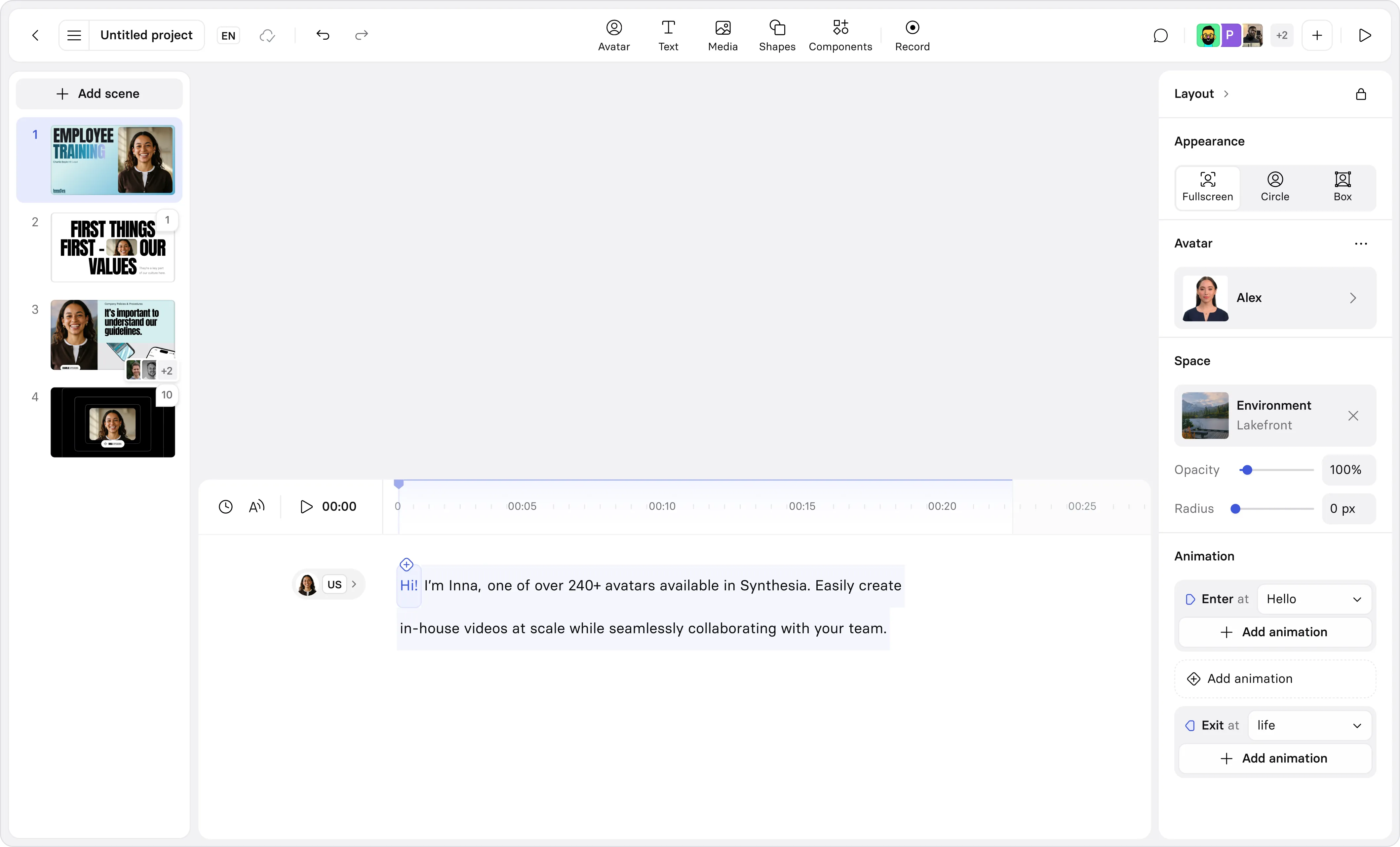
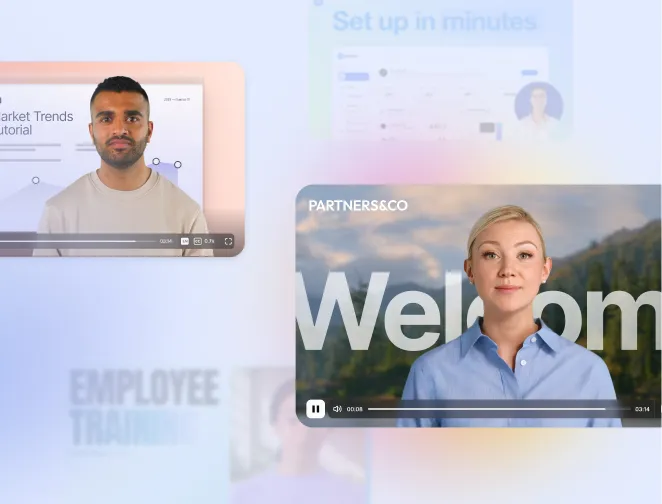
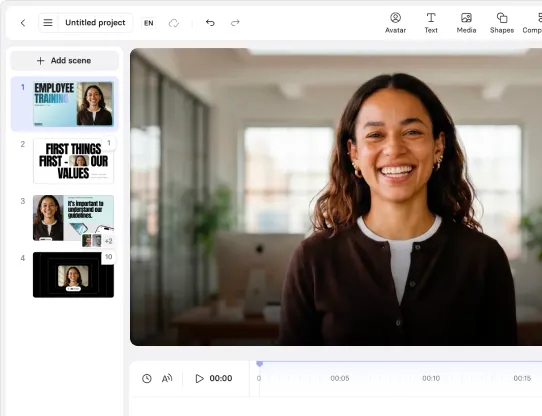
Synthesia is an AI video platform used by 90% of Fortune 500 companies. Teams can use Synthesia to create training videos without professional recording equipment or actors. It's well-suited for training videos that need to be regularly updated or localized. Customers highlight the platform's ease of use and multilingual capabilities.
2. SweetRush
In their own words: "SweetRush delivers innovative learning and development solutions, including custom eLearning, immersive training, and talent development strategies."
SweetRush has been building enterprise learning programs since 2001. In 2025, they were acquired by NIIT, expanding their capacity for global delivery. Their clients include Hilton, Google, Capgemini, and Bridgestone. Clients highlight their flexibility when priorities shift mid-project and note their expertise in learning programs that combine immersive and experiential learning.
3. AllenComm
In their own words: "With the largest in-house L&D design team in the country, we can easily scale to deliver large eLearning projects on short timelines that are uniquely tailored to your organization."
AllenComm partners with Fortune 500 companies in healthcare, finance, manufacturing, and retail industries. They’re known for helping companies connect training to measurable business outcomes. Clients appreciate their ability to manage complex stakeholder relationships, and pivot when priorities shift.
4. MindTools Kineo
In their own words: "Workplace learning solutions that build capability and drive performance."
Formerly known as Kineo, the company merged with MindTools in 2025. That means clients get access to custom learning solutions as well as MindTools' content library and platform services. If you're looking for training videos to be produced as part of a learning program, they're a strong fit.
Note: I recommend carefully evaluating companies post-merger, as it can impact how they deliver and who you'll work with.
5. NextThought
In their own words: "Our expert learning designers, animators, and production team create effective content at scale, for less."
NextThought has produced over 5,000 videos for clients including Amazon, McDonald's, Cummins, and the US Postal Service. They work across healthcare, manufacturing, logistics, and financial services. Their clients highlight their communication and project management skills. 90% of their clients return for additional projects.
6. Maestro
In their own words: "We inspire change through learning, using innovative design, technology, and media."
Maestro is a learning agency with experience in hospitality and service industries. Their clients include Royal Caribbean, BWH Hotels, and Johnny's Markets. They're known for their aesthetic designs that incorporate innovative learning approaches, and in the case of Best Western, humor.
7. Demo Duck
In their own words: "You know your brand. We know video."
Demo Duck is a Chicago-based explainer video company specializing in animation, live action, and mixed media. Their clients include Rippling, GEICO, and Cisco. Clients who have strong learning design but lack the creative skills to execute find Demo Duck a strong fit.
8. Blue Carrot
In their own words: "Blue Carrot is a full-cycle learning provider with more than 300 global projects under our belt, delivering measurable results worldwide."
Blue Carrot offers eLearning development, video production, and content localization as integrated services. They specialize in Articulate Storyline development and support 2D, 3D, and interactive video formats. For clients looking for a training video partner that can support their existing tech stack and provide localized content, Blue Carrot is worth considering.
9. Vidico
In their own words: "We craft by hand, but move fast through AI-enablement and modern tools."
Vidico is a video production agency built primarily for tech and SaaS brands. Their clients include Spotify, Square, Airtable, and Amazon, and they've generated over 1.5 billion views across 2,000+ campaigns. Their core business is production, so be prepared to come to them with strong learning design.
How to compare providers
If this is your first time sourcing a video production partner, you’ll want to invest some time in properly scoping your project and defining your requirements. That includes the usual suspects — budgets, timelines, and deliverables — but should also include the following:
- How you would like to partner with them
Are you looking for someone who will take control and keep you updated, or do you want to be more involved? Make your expectations explicit. - How they work with other stakeholders
If you have SMEs or individuals who will be in the training videos, how will that work? - How content can be updated
Will you receive the original project files so you can make any necessary updates yourself, or will you need to amend the contract to handle revisions? (Or is a certain number of revisions included?) - How they handle accessibility
Depending on your workforce and regional requirements, you may need to consider things like closed captions, screen reader compatibility, or localization into specific languages. Can they support that? - How they handle data
If you're planning to share sensitive materials, whether IP, customer data, or something else, how is it securely managed and controlled? - When deliverables are considered "done"
Are you responsible for determining if the final product meets expectations, or is there a review period before acceptance? What if you're not satisfied?
How vendors respond to these questions will tell you a lot about how you can expect to work with them. For some projects, you may be looking at a lengthy partnership, in which case you'll want to be confident you've found a partner who can execute your vision.
That said, one vendor may not be best suited for all of your training video needs. You might combine options, including creating some videos in-house, based on your criteria. Here are some examples of when you might vary your approach:
Ultimately, the right choice will depend on your team's capacity and capability, the type of training content you're producing, and how often you expect it to be delivered and updated.
If you're interested in learning more about how Synthesia can support your strategy, reach out. Our team would be happy to walk you through how we can help.
Amy Vidor, PhD, is the Learning and Development Evangelist at Synthesia, where she researches learning trends and helps organizations apply AI at scale. With 15 years of experience, she has advised companies, governments, and universities on skills.
Frequently asked questions
How much does it cost to produce a corporate training video?
The cost to produce a corporate training video depends on the scope of your project: the type of video(s), the production and instructional approaches, the timeline, and any changes. If this is your first time working with a vendor, I'd recommend having a few calls to get a range of estimates before finalizing a budget request from Finance.
Can AI replace a training video production company?
AI training videos can be a cost-effective alternative to working with a video production company. AI platforms like Synthesia allow you to design and deliver training videos with interactivity, b-roll, motion graphics, and more. Depending on the scope and audience of your training video, these capabilities may be sufficient.
If, however, you're looking to produce an especially creative or cinematic training video with on-site footage, you may benefit from a video production partner who has the equipment and team expertise to manage video and sound quality. Of course, you can always use an AI platform to complement these training videos.
What's the difference between a training video production company and an eLearning company?
A training video production company specializes in creating video assets. They may or may not have instructional designers on staff, and typically can offer a range of production approaches for your video design.
An eLearning company offers authoring of digital assets, including video, but also courses. They may also offer instructional design or learning experience expertise.
How do I create training videos in multiple languages?
There are three main options for creating training videos in multiple languages. The first is to use an AI platform, like Synthesia, that supports localization. The second option is to partner with a video production company that offers localization as part of their services. The third option is to partner with a localization firm that can provide subtitling, dubbing, and/or content-related edits.

.webp)