



Cold Calling Tips to Book the Meeting

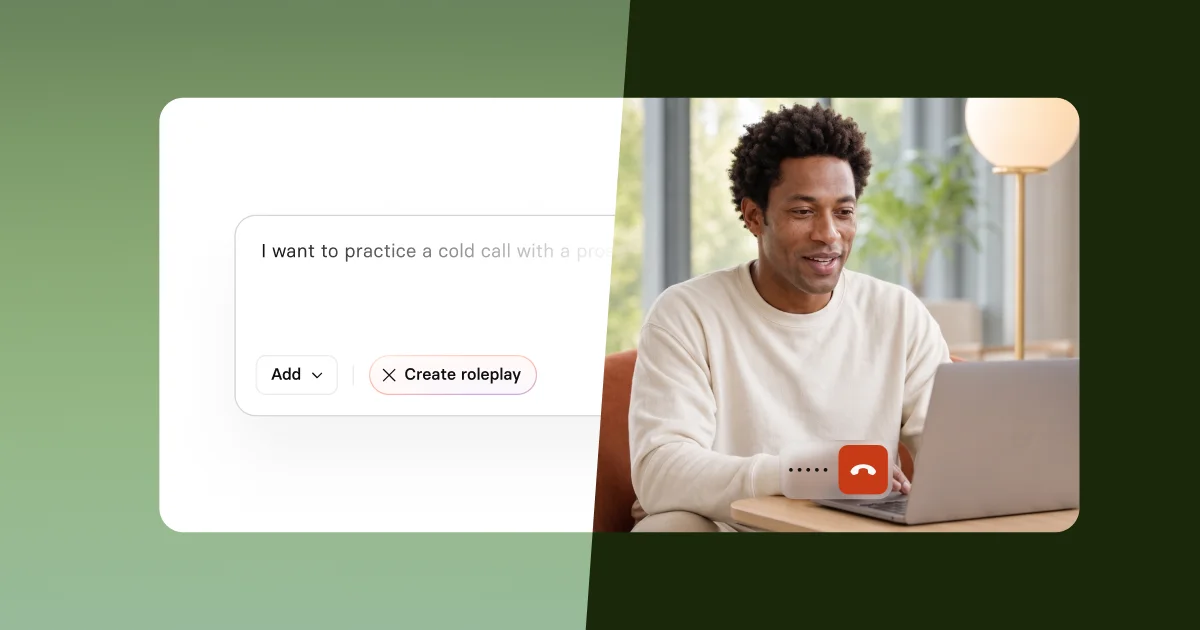
Practice real sales conversations with Interactive Avatars.
I once had a deal take 58 weeks to close. I sent a LinkedIn message and followed up with a cold call shortly after. From there, I was able to get a meeting seven weeks later. A cross-functional sales cycle followed for the better part of a year.
Here's what I learned from that. The cold call wasn't spontaneous. I had a hypothesis, supported by research and a colleague, and I decided to validate it. This was someone whose calendar was always booked. But I did, and they answered. And it started the relationship.
Before the call
If you dread making cold calls, know you're not alone. Some days I pick up the phone and am met with people frustrated or angry that I've called them. It can be hard to motivate yourself to do that over and over again.
There's plenty of advice out there about how to nail cold calls. In my experience there are only two things that make a difference: preparation and practice.
Preparation
The best use of your time is researching before a cold call. Even if the call doesn't go somewhere right away, you never know when it might. Here's how I approach that research:
- Segment your call list by industry, company size, or even the role or seniority of individuals. One tactic I've found helpful is to build an org chart with the information I can find. I identify who sets the strategy, who owns the budget, and who is going to use what I'm selling. I never make assumptions, and leave placeholders like "HR Leadership" if I'm uncertain. I also use this as an exercise to figure out which names I'm not pursuing.
- Find something you can use to build rapport with your segmented list, whether that's a personal connection, an important update at the company or in their industry, or anything else that works as a conversation starter.
- Refine and automate this process, so you're building a research engine that is continuously learning, and that you can easily mine if you go after inactive lists.
Practice
Whether or not cold calling is effective, in my opinion, comes down to one thing: practice. Every successful rep I know will tell you the same thing. You've probably already been given advice like "practice in a mirror" or "rehearse with a colleague."
Here's the thing you need to know. Practice doesn't make it easier to cold call, but it does help you build the skills you need to be better at it.
Cold calling requires you to think on your feet. You have to be able to actively listen, ask good questions, and, sometimes, respond unexpectedly. I like to match the energy of the person on the other end of the line. If someone answers confrontationally, like "I never take cold calls" (something I've actually been told), I might try to disarm them with something like, "I'm just trying to do my job."
No clever opening line or prepared script can save you if you haven't practiced. The confidence to just talk to someone, instead of reciting something at them, only comes from having done it enough times.
As our Head of Revenue Enablement at Synthesia, Mollie Sonnenberg, explains:
You can watch a training video a hundred times and still fold the first time a real objection comes at you. What actually changes behavior is doing it, failing at it, and doing it again with nobody's revenue on the line.
That's why we built Roleplay Sessions to give you the opportunity to practice with our Interactive Avatars. Unlike your mirror or well-intentioned colleague, our avatars will surprise you. They'll challenge you by asking something unexpected or push you to demonstrate your product knowledge.
Once you've practiced the call, you'll have an opportunity to reflect on how it went before getting structured feedback so that you can improve on the next call.
Give it a go below.
If you found that helpful, share Roleplay Sessions with your enablement leadership.
During the call
Getting someone to pick up the phone is the hardest part of cold calling, and honestly, nothing in this section can help you with that. It's a numbers game, solved by dialing more, not by anything I can teach you here. What I can help with is what happens in the 30 seconds after they do.
At this point, you've done your research and you've practiced your pitch. You have all the information you need to be successful. It's about performing under pressure. (You'll be grateful you did those practice reps.) From here, it's up to you to persuade someone to continue the conversation. I'm not going to give you boilerplate language about how to open a call, or go on about the value of the "first 30 seconds." Each cold call should be personalized and tailored to what you're selling.
Your enablement team may have a recommended structure they provide in training. I recommend asking successful reps what's been working for them. Rather than replicate verbatim what they say, focus on the structure: give yourself a pattern to build from. The rest of the call comes down to handling objections and getting to next steps.
Objection handling
There are two common types of objections: someone brushing you off, and someone pushing back on relevance.
Brush-offs
When someone tells me this isn't a priority right now, I don't argue with their priorities, I ask what is. That's not a trick, it's genuine curiosity, and it usually tells me whether there's a real opening later or whether this genuinely isn't relevant to them at all.
If someone asks me to send them an email, I follow up by asking what would be beneficial to them to include. If they don't have anything, then I won't send an email. I don't recommend wasting time writing an email no one will read.
Relevance pushback
If someone pushes back on the relevance of what I'm selling, that's my opportunity to decide whether to continue the conversation. Remember the data about reps not knowing when to cut a call? Sometimes an objection is someone signaling you're genuinely not a good fit. That's okay, cut the call. If they're less certain in that conviction, you have an opportunity to pivot to persuasion.
Next steps
Handling an objection doesn't guarantee next steps. I try to wrap up a call with specific next steps: a meeting on a calendar, an action we've both agreed to (like me sending an email with specific information for them to forward to a stakeholder), or even a mutual decision to part ways.
After the call
A cold call doesn't end when you hang up. You need to log what happened on the call: whether you got a voicemail, booked a demo, or decided to part ways.
If you're using a call intelligence tool, it may already track call metrics (talk time, connect rate, duration) and compile activity reports (prospects added, outbound calls made, overdue tasks) for you, provided you're dialing through the app itself. If not, you'll want to get into the habit manually, especially for any quota requirements you're expected to meet.
Don't stop there. Note down anything relevant, especially if something came up that you were unsure how to respond to or handle. Then go do your research. Find the information you need to respond next time, and practice.
That's the key to building the skills you need to cold call with confidence.
Will Chapman is a Senior Strategic Account Executive at Synthesia. He's spent the past two and a half years at Synthesia helping enterprise teams work better with AI video.
Frequently asked questions
What's the difference between a hot call and a cold call?
The use of terms like "cold," "warm," and even "hot" to describe calls or meetings describes the level of interest someone has demonstrated in your product (or service). Someone is cold if they haven't previously signaled interest in your product or service, warm if they've demonstrated interest (but not buying intent), and hot if they've demonstrated buying intent.
What's the best time of day to cold call?
Call during local business hours, aiming for no earlier than an hour after the workday starts and an hour before the workday ends. I’ve found the most success between 10AM and 4PM, taking into account lunch hour and commuting times.
How do I handle "I don't have time" or "send me an email"?
When someone says, “I don’t have time” to talk, I don’t take it personally. I explain I’m just doing my job, like they’re doing theirs.
If someone asks me to send them an email, I follow up by asking what would be beneficial to them to include in the email. If they don’t have anything, then I won’t send an email. I don’t recommend wasting time writing an email no one will read.
Is cold calling still effective?
Personally, I've found it effective. However, the data (albeit limited) shows mixed results across industries and regions. In my experience, the right question isn't "is cold calling effective?" It's "how can I get better at cold calling so it is a more effective use of my time?"
The key to that is practicing, so you know when a call is going somewhere, and when it's not.
How can I practice cold calling before making real calls?
There’s plenty of advice out there to practice cold calls in the mirror or with a colleague. Neither are particularly effective (unless your mirror talks back). To practice you need to simulate a realistic scenario — someone picking up the phone impatient to get back to work or ready with a tough question.
That’s where our Roleplay Sessions come in, offering as many reps as you need to practice thinking on your feet and successfully turning cold calls into warm leads.

.webp)