



How to Run a Discovery Call (That Actually Leads to a Demo)

Practice real sales conversations with Interactive Avatars.
I often see new reps treat discovery calls like a fishing expedition. They have a list of questions and they're hoping enough of them land to justify booking a demo. The problem with this approach is that it prioritizes breadth over depth. Reps are trying to catch anything, rather than confirming whether what they're selling is actually the right solution to the prospect's problem.
Successful reps know that discovery calls are about listening: identifying what's actually causing a prospect pain, and understanding how it's affecting them, their team, and the business.
How to run a discovery call
There's no magic script that makes a discovery call successful, although plenty of people will promise you there is. Take it from me, someone who's run hundreds (or maybe thousands, I haven't run the numbers) of discovery calls. It just takes preparation and skill.
Step 1: Research
Before you get on any discovery call, you need to do real research. Not a cursory Google search or a quick look at their website, but an intentionally structured approach to learning about the company, their industry, and the stakeholder you're meeting with.
Start by learning about the company and their industry. You should be able to answer foundational questions, like:
- What do they do, and how do they make money?
- Where are they located, and how big is the team?
- What does their competitive landscape look like?
Then, research the stakeholder you're meeting with:
- Who are you meeting (their title, experience)?
- What do you already know about them?
- Are they already using a product like yours?
- What are their expectations for the call?
With this information, you can identify current customers who share similarities with the prospect. Find the most relevant example, a company or contact whose story will actually resonate with them.
Download this template to help you prepare for your next call, and consider using an AI tool to automate your research moving forward, like one of my colleagues did.
Step 2: Set the agenda
The next step in preparing for a discovery call is setting an agenda. The agenda shouldn't be rigid. It should include what you'd like to accomplish during the call, and be informed by any previous conversation (like a cold call) and subsequent research. It will typically cover:
- Why you're meeting
- What you'd like to learn from them
- What you'll share in return
- A proposed next step
Start the meeting by sharing the agenda, but be prepared to pivot. If a prospect shows up to the call with something top of mind that's a departure from the original reason for the call, indulge the conversation. You never know where it will take you.
Tip: Before you outline the agenda for the call, I recommend checking in with the prospect to make sure they want to proceed with their call. Things change, and I’d rather give someone back 30 minutes than have them sit through a conversation they really don’t want to have.
Step 3: Diagnose
Earlier, I said that discovery calls are about listening. More specifically, they're about diagnostic listening. That's exactly what it sounds like. Much like a medical professional might ask questions to determine the root cause of symptoms you might be having, you should ask questions that encourage the prospect to share their real pain point.
At Synthesia, I often hear from prospects that video training production is too expensive or time consuming. But that's usually not why they've scheduled time to talk to me. Instead, they might be dealing with the challenge of training a global salesforce on biweekly product updates, and struggling to find a medium that is both engaging and able to manage localization. Delays between product updates and reps knowing how to address them in calls can be costly.
That's why the questions you ask should trace the problem through the individual, team, and business lens. In a call with a prospect, I might ask:
- Individual: How do you currently train reps on product drops? What's working or not about that workflow?
- Team: How many reps end up on a call without the latest update because the training didn't reach them in time?
- Business: What's the impact on the business when a rep gives a prospect outdated information?
Ask one question at a time, and then stop talking. Remember, this isn't an interrogation. You might be helping them articulate their problem for the first time, and that can take time.
If, however, you find the call drifting, don't hesitate to bring it back on topic. Summarize what you're hearing and ask the prospect to validate that it's correct. This redirects attention, while showing you're paying attention.
Step 4: Align on next steps
A discovery call should end with clear next steps, whether that's scheduling the next call or looping in additional stakeholders. What that next step actually looks like depends on what came up during the call. Maybe it's looping in other decision-makers before a demo. Maybe the solution is technical enough that IT needs to weigh in on feasibility first. Either way, you should know by the end of the call, not figure it out later over email.
Sometimes the next step is nothing. If early in the call you realize your product isn't a good fit, or the prospect seems uninterested, address that directly. I've said something like, "I want to be upfront: based on what you've shared, I'm not sure this is the right fit. I don't want to waste your time if it isn't." I've ended discovery calls ten minutes in, and people have been appreciative every time.
No matter how the call ends, you want to leave the prospect with a positive impression: that they were heard, and that you genuinely tried to understand their problem, even if you didn't have the right solution for them.
How to get better at discovery calls
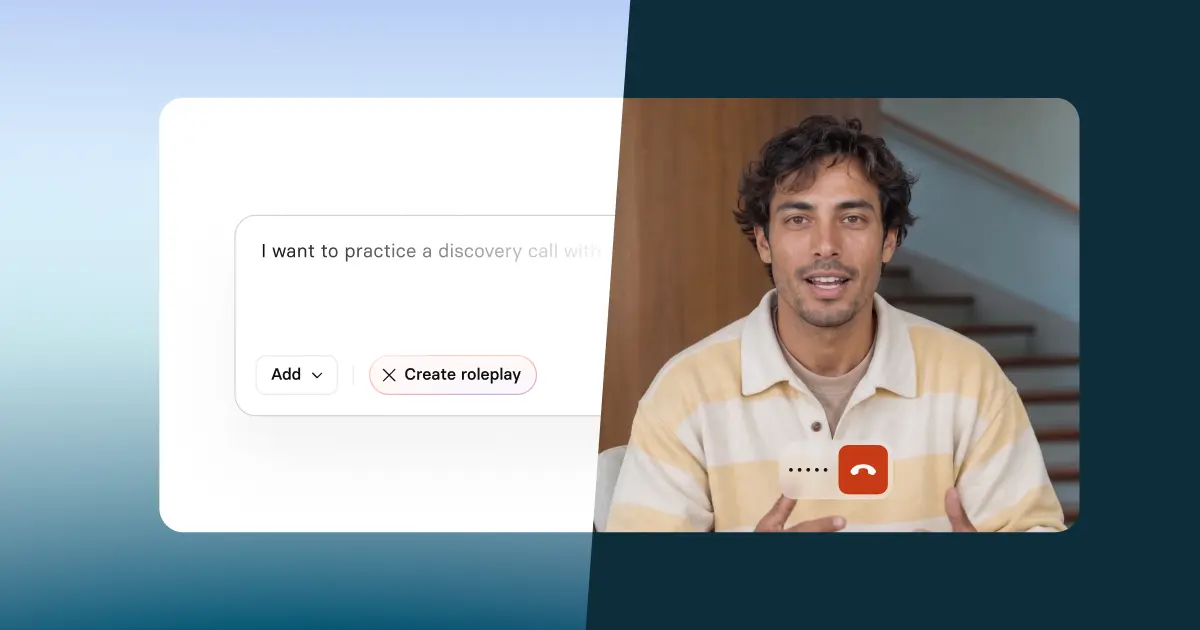
The only way to get better at discovery calls is to practice, get feedback, and try again. That’s why we launched Roleplay Sessions, to give reps the opportunity to practice critical conversations before you ever jump on Zoom with a prospect. As my boss, Will Eves, explains,
"Every rep's first attempt at anything is rough. The only choice you have is whether that first attempt happens in practice or in front of a customer. We chose practice."
With our Roleplay Sessions, you’ll have a real conversation with one of our Interactive Avatars. After the call, you’ll be prompted to reflect on your performance before receiving structured feedback and coaching.
If you think this will be easy, go ahead and give it a try. Just know our sales team made sure the avatars will push back, just like a prospect.
If you found that helpful, share Roleplay Sessions with your enablement leadership, and reach out to me on LinkedIn with any questions.
Will Chapman is a Senior Strategic Account Executive at Synthesia. He's spent the past two and a half years at Synthesia helping enterprise teams work better with AI video.
Frequently asked questions
Do I need a script for a discovery call?
No. In fact, I’d recommend against it. Instead, prepare an agenda that gives you enough structure to stay on task, but allows for flexibility in real-time. You want this to be a conversation, not an interview. If you’re following a script, it will be obvious that you aren’t really listening to what they’re sharing.
What’s the difference between a discovery call and a cold call?
A cold call is unsolicited. It’s a brief call designed to capture the prospect’s attention and, if there’s interest, schedule a follow-up call. A discovery call is an intentional meeting with a handraiser or sourced lead (a warm lead).
How long should a discovery call be?
There’s no right length for a discovery call. Some calls take 15 minutes, others 45 minutes. It depends on several factors, including the complexity of your product or service as well as the number of stakeholders who may be involved in the decision-making process.
I recommend asking for 30 minutes, and blocking some buffer time in your agenda, in case the prospect has additional topics they would like to cover. That being said, you do not need to use the entire 30 minutes. You might realize 10 minutes into a call that what you’re selling isn’t a good fit, or there’s misalignment in expectations, at which point you should just ask them what more information they’d need to make the meeting a good use of their time.
Bottom line: be respectful of people’s time.
What questions should you ask on a discovery call?
A good discovery call asks questions that identify the root of a problem, and how it's affecting the individual, their team, and the business. That means planning to ask a few strategic questions, such as:
- How do you currently handle [the relevant workflow]? What's working or not about that?
- How does this affect the people around you when it goes wrong?
- What is the impact on the business if this issue doesn't get resolved?
Then, listen to their responses. Any follow-up should validate what you heard, and push further.
What happens after a discovery call?
If there is a genuine fit, the next step is typically a demo or solution presentation, where you show the prospect and relevant stakeholders how your product addresses the problem you surfaced during discovery.
This is why it's essential to ask the right questions during the discovery call, to ensure you have the details necessary to tailor the next conversation.
If there isn't a fit, end the call by addressing that directly and closing the conversation respectfully. Not every discovery call should lead to a demo, but you never know who could refer you new business.



.webp)