



Just-in-Time Training: What It Is and How to Make It Work


Create engaging training videos in 160+ languages.
A manufacturer installs new equipment on their packaging line. They operate around the clock, and don't have time to send their hourly workers to a formal training program. They need the team to be able to operate the new equipment.
They need just-in-time training.
What is just-in-time training?
Just-in-time (JIT) training is exactly what it sounds like. It's workplace training triggered by, available at, and scoped to a specific need.
That might mean just-in-time for someone to respond to an emergency, like someone needing to administer an EpiPen to someone having an allergic reaction, or just-in-time for a retail associate to process a return properly when the policy changed yesterday.
It can be delivered in any format: as a live session, an eLearning course, training video, or even a job aid. Here are a few examples:
The origins of just-in-time training
The origins of just-in-time training in the workplace are unclear, but most sources attribute it to the manufacturing practice of just-in-time production, which originated at Toyota.
What you need to know is that Toyota, in efforts to reduce waste, developed a lean manufacturing system where parts arrive only as they are needed. This process inspired the lean-agile movement, which has infiltrated product design and, yes, even L&D instructional design frameworks like SAM.
What makes just-in-time training work
For JIT training to support learning transfer, it needs to be:
- Findable: The learner can quickly and easily locate the training in their moment of need.
- Understandable: The learner can understand the training well enough to immediately apply it to address their need.
- Up to date: The content is current at the moment it is accessed.
That all starts with strong instructional design that anticipates the moment of need, designs content around it, and then delivers that content in the flow of work.
It also requires a systematic approach to maintenance: updating content when things change and deprecating it when the need goes away.
How to choose a JIT training format
There's a lot of advice I've seen about "the best" format for JIT training. The truth is that there's no research (at least that I've been able to find) that concludes one format is better than another. That's probably because each JIT training has unique design constraints.
So instead of trying to find the best format, try to find the right one. Here's how to do that:
- Start with the moment of need: where the employee will be when the need arises.
- Determine what they need to do in that moment, and whether the instructions need visuals to be understood.
- Identify what they have access to in that moment (e.g., a phone, computer, paper).
- Make an educated guess about how often the JIT training will need to be updated.
- Use these inputs to select the best format possible for your situation.
The benefits and challenges of JIT training
JIT training addresses well-known challenges in skill building and knowledge retention. You've undoubtedly heard the expression, "if you don't use it, you lose it." Research backs this up. JIT training is there to fill this gap by being readily accessible at the moment of need.
Of course, JIT training is not a perfect solution. One of the primary challenges of JIT training is being able to evaluate the training within the context of the moment of need.
Going back to the example of the allergic reaction, it is unlikely that someone who administered the pen successfully will report back. Trainers will have to rely on proxy signals, whether that is data shared from healthcare providers in aggregate about patients treated after a kit was used (where available), or usability tests where people follow the card with a trainer pen before the kit ships.
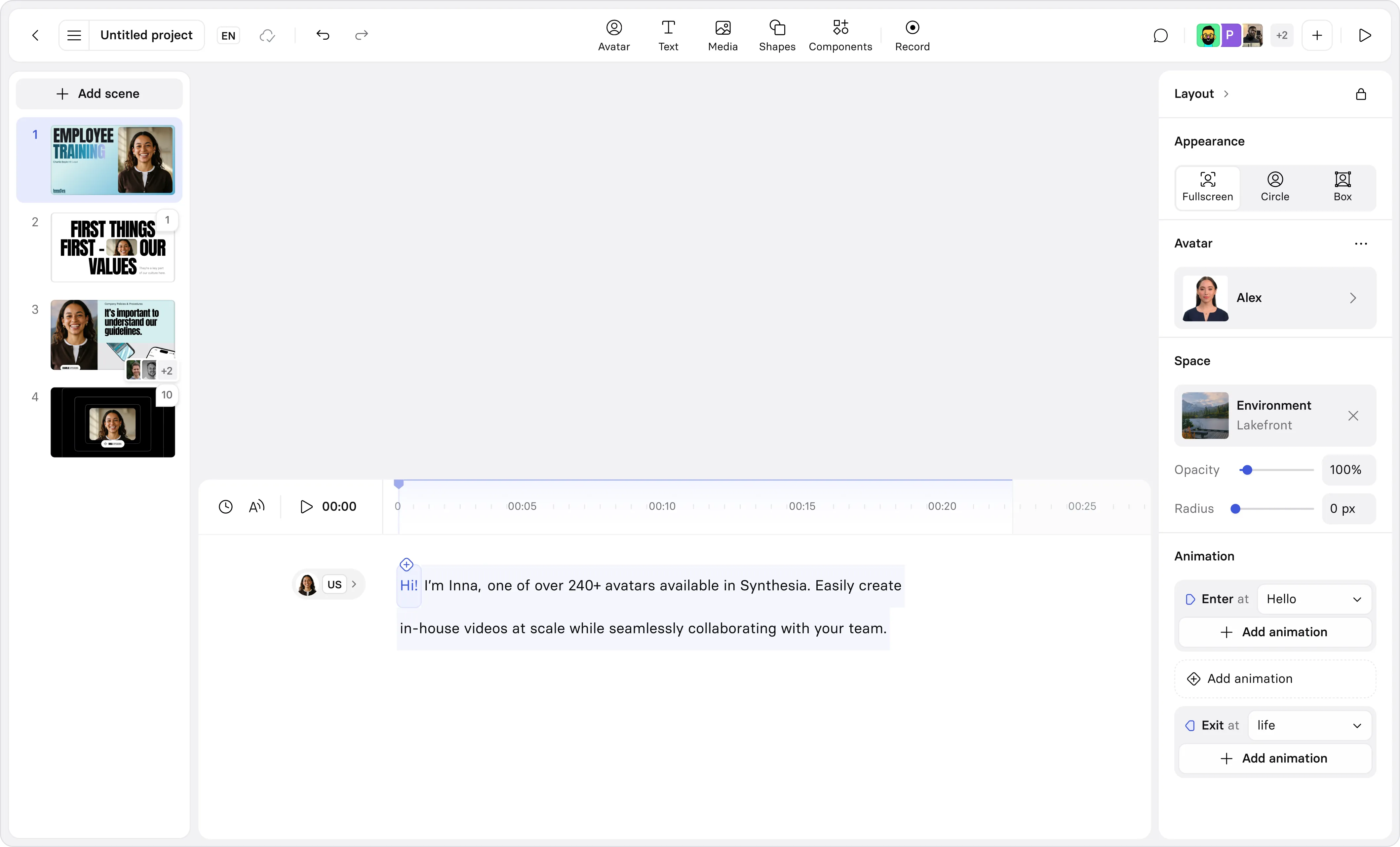
Another challenge of just-in-time training is maintenance (which, let's face it, is a challenge for all training content). It's much faster to update a training video with an AI platform like Synthesia than it is to update printed instructions at 1,000 retail stores. But it's much easier for cashiers to reference an index card with details on a return policy than watch a video when a customer is waiting. These are the tradeoffs you make when designing for the moment of need.
At Mondelēz International, maker of some of your favorite snacks, these are tradeoffs they know all too well. That's why, when designing training for their supply chain, they turned to Synthesia to make it possible for four people to support 150 global plants.
If you're interested in learning more about how Synthesia can support your just-in-time training, schedule some time with the team.
Amy Vidor, PhD, is the Learning and Development Evangelist at Synthesia, where she researches learning trends and helps organizations apply AI at scale. With 15 years of experience, she has advised companies, governments, and universities on skills.
Frequently asked questions
How is just-in-time training different from learning in the flow of work?
Just-in-time training is one way to execute on learning in the flow of work, a strategy for how to deliver content. Learning in the flow of work means giving people the knowledge they need, when they need it, without pulling them out of the tools and systems they're using for work.
Just-in-time training does this by anticipating a specific need and designing and delivering around it.
Is just-in-time training the same as just-in-time teaching?
No, they are two different things. Just-in-time teaching is a pedagogical approach developed in 1996 by faculty at the US Air Force Academy and Indiana University Purdue University Indianapolis, where students complete web-based assignments before class and the instructor then adjusts the lesson based on their responses.
Just-in-time training doesn't adjust to learners' responses (although it can always be modified). It anticipates a specific need and designs training that meets it.
How do you measure whether just-in-time training is working?
To measure just-in-time training, you will likely need to rely on proxy signals, because the moment of need is often brief (and rarely observed).
Use snapshot metrics like views, searches, or QR code scans to see whether people interacted with the content (if it's digital), or task-level metrics to track performance-level changes against a pre-deployment baseline.
How do you update a training video without re-recording it?
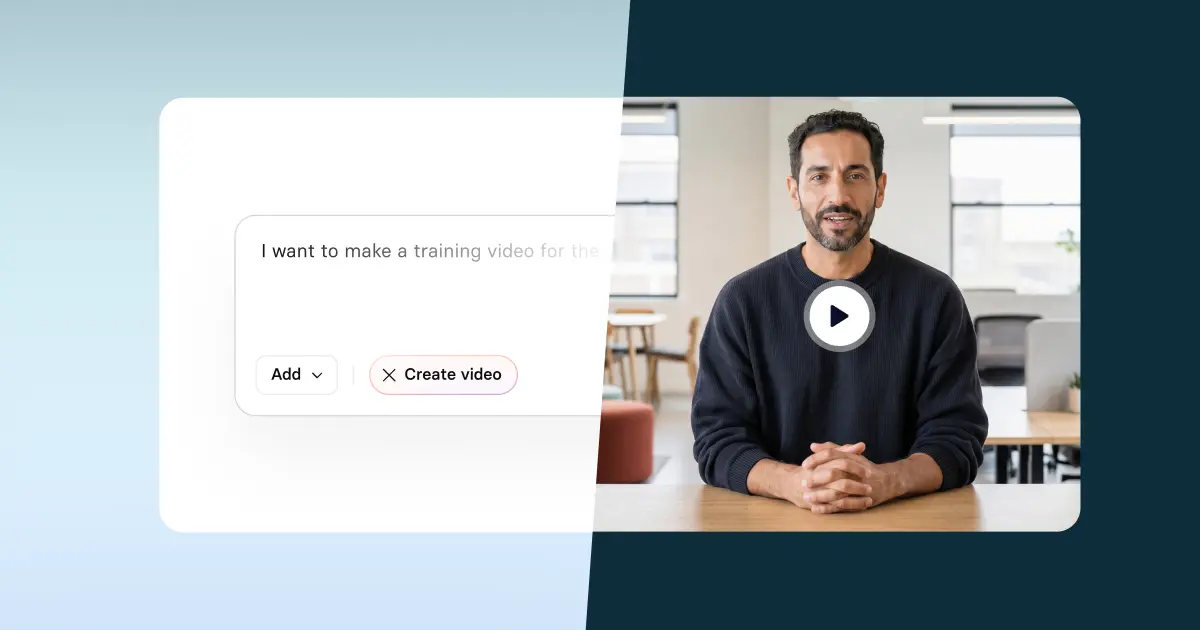
If you're using an AI video platform like Synthesia, you can quickly update a video by editing the script, reviewing the new version, and publishing it, with no need to re-record.