How Mondelez Accelerates Supply Chain Training Across 150+ Global Manufacturing Plants
How a four-person team brought video training in-house to deliver localized learning 4x faster across 150+ plants worldwide.
4x faster
creation of supply chain training content
3x output
without increasing headcount
40% increase
in employee engagement
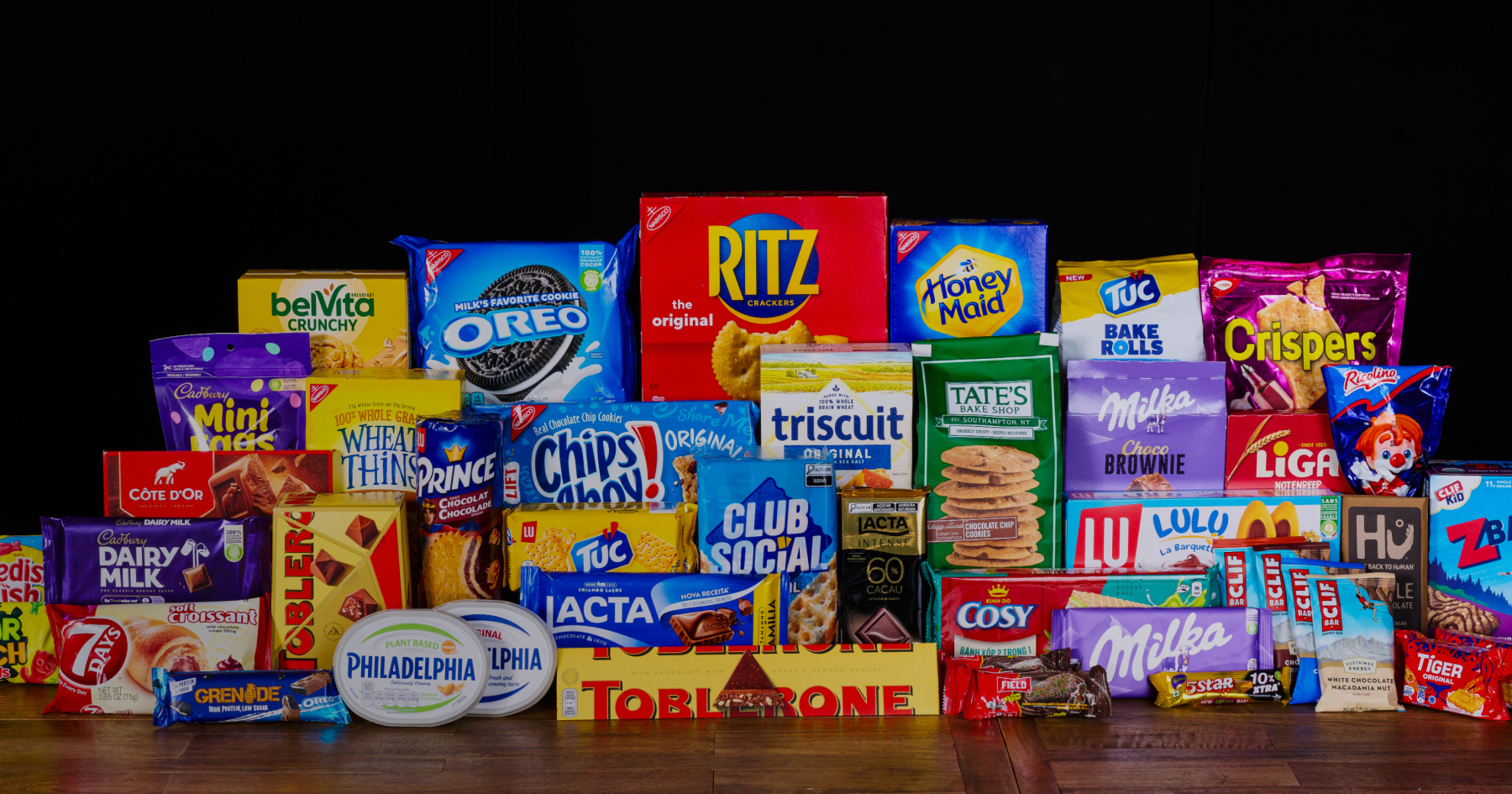
Mondelēz International is one of the world's largest snack companies, behind global brands like Cadbury, Oreo, and Toblerone. With more than 150 manufacturing plants supporting its global supply chain, training is critical to ensuring smooth operations.
We spoke with Dean Pearson, Global Capability & Culture Lead for the Mondelēz supply chain, and Steve Carter, Learning Experience Designer. They shared how Mondelēz transformed traditional training into a fast, video-first model — and why Synthesia became central to scaling learning across plants worldwide.
The result: faster production, significant seven-digit cost savings, and stronger engagement at the frontline.
Industry Context
Global food manufacturing is complex. Equipment changes. Standards evolve. Plants operate across regions, shifts, and languages. Supply chain training must be consistent, accurate, and easy to update.
At the same time, source material often begins as detailed technical documentation written by engineers. Translating that into clear, engaging learning for frontline operators is a challenge — especially at global scale.
For Mondelēz, training needed to do more than inform. It needed to protect people, safeguard product quality, and reduce operational risk across hundreds of sites.
The Challenge
Dean's team faced a structural problem: training production was too slow, too expensive, not engaging enough for frontline teams, and difficult to localize.
A production model that couldn't keep pace with operations
Most of Mondelēz's training content was outsourced. Each project required agency briefings, long production cycles, multiple revision rounds, and a price tag that didn't match the results.
The financial impact was significant.
"Outsourcing the content we needed was expensive, time-consuming and we still weren't getting content that felt like ours." — Dean Pearson, Global Capability & Culture Lead
Beyond cost, the model created a deeper problem: training that couldn't keep up with operational change. When a process updates or new equipment comes in, you need to update the content now, not in two months.
Traditional formats weren't landing
PowerPoints, PDFs, and generic e-learning struggled to resonate in real manufacturing environments.
"A good quality video needs to look like a Mondelēz plant… it should look like a Mondelēz product." — Dean Pearson, Global Capability & Culture Lead
When content didn't reflect real plants, credibility and engagement suffered.
English-only delivery limited reach
With operations spanning continents, English-only materials didn't consistently reach plant-level teams.
"Producing training only in English created real challenges. Localization was difficult to manage, slow to validate, and ultimately delayed consistent supply chain training across regions." — Dean Pearson, Global Capability & Culture Lead
The result: slower rollout of supply chain standards and inconsistent adoption across regions.
The team didn't just need better content. They needed a new operating model.
The Solution
Mondelēz partnered with Synthesia to bring supply chain training video production fully in-house — and to rethink what "in-house" could mean for a team of four people supporting 150+ plants globally.
Instead of briefing agencies and waiting months, Dean's team rebuilt their approach around a new philosophy.
"We use fast design, rapid development. When producing learning, this allows two major improvements in the design process — stakeholder engagement is higher, and the production time is significantly faster." — Dean Pearson, Global Capability & Culture Lead
Rather than handing off a brief and waiting six months only to find the output missed the mark, the team now returns a working draft within one to two weeks — creating an immediate green or red flag moment that keeps projects moving without expensive rework cycles.
Synthesia became the production engine that made this pace possible.
"Synthesia stood out as a differentiator. It allowed us to create much more engaging content and significantly improve the learning experience for our global team." — Dean Pearson, Global Capability & Culture Lead
Synthesia's built-in collaboration features also support this accelerated approach — content can be shared for review without the need for formal meetings, further compressing the feedback loop.
Today, training that once took months now goes live in 1–2 weeks.
"We get something back to you in about a week to two weeks. If you went to an agency, that would take months."
The contrast is clear in one example. A training video originally produced by an agency cost approximately $50,000 and followed a traditional production cycle. When it needed to be translated and updated, the team rebuilt and modernised it internally — in a single day.
"We had a solution that was designed by an agency… it would've cost around $50,000 originally. I recreated that in a day." — Steve Carter, Learning Experience Designer
That moment wasn't just about one video. It was proof that a small team, with the right capability system, could out-produce what used to require large budgets and long timelines.
The Results
By modernising production and bringing video creation in-house, Mondelēz transformed the speed, scale, and economics of supply chain training across more than 150 plants.
- 4x faster content production: Training that previously took months now goes live in 1–2 weeks — sometimes days.
- 3x output without increasing headcount: The team more than tripled annual delivery while maintaining the same four-person structure.
- Significant seven-digit cost savings: Bringing production in-house eliminated recurring agency spend while increasing total output.
- 40% higher employee engagement: Localised, scenario-based video learning improved relevance and adoption across frontline teams.
- Greater agility and responsiveness: Training can now be updated and republished quickly as standards, equipment, or processes change — reducing the risk of outdated guidance reaching plant teams.
Together, these outcomes gave Mondelēz something it hadn't had before: a training function that can actually keep pace with the business. Consistent standards, reaching every plant, in the languages their people actually speak.
.png)
.jpg)