



One-on-One Sales Coaching That Changes Behavior


Practice real sales conversations with Interactive Avatars.
Coaching is often a de facto responsibility of managers in sales orgs. That's a problem, especially since most sales managers never receive training on how to coach. They get promoted into managerial positions because they're good at selling, not because they're experienced at developing other sellers (at least in most cases).
But one-on-one sales coaching shouldn't be left to defaults, especially since quality coaching is one of the biggest levers on quota attainment. Without training, or a shared standard, managers are left to improvise. This creates a wide variance in the quality of coaching.
That's why, if you're looking to improve the quality of sales coaching in your org, you have to start by supporting your managers with the training and resources to turn coaching conversations from platitudes and pipeline check-ins to data-driven opportunities to build skills and improve performance.
Note: Although one-on-one sales coaching most commonly happens between managers and their direct reports, the coach can also be an enablement lead, peer, or even a third party. I focus on managers because that's where there's the most variance in quality.
What managers need to be effective coaches
There are two things sales managers need to be effective coaches:
- Evidence of what a rep did or didn't do, and
- A standard to judge that behavior against.
For B2B and SaaS teams, evidence usually comes in the form of transcripts and recordings from a call intelligence platform. For field sales without that technology layer, it's shadowing or ride-alongs. Evidence only tells you what happened, not whether it was the right call. That's what a standard is for: a sales org's internal playbook or a third-party methodology.
You need both the evidence and the standard for effective coaching.
Let's say a new rep is on a discovery call and the prospect pushes back on pricing. The rep responds by offering a discount. Your internal sales methodology says that you shouldn't lower a price without re-establishing value.
Two managers should be able to review this transcript and come to the same conclusion, perhaps even recommending a strategy such as responding with a value-driven question, like "What are you comparing this price to?"
What a good coaching session looks like
There’s a misconception that “sales coaching” needs to happen in dedicated “coaching” sessions. I think that’s unrealistic. Sales coaching happens in regularly scheduled one-on-ones, and that probably won’t change. It needs to fit in the agenda, between the check-in and the wrap-up.
Here’s how to do that with five steps:
- Identify the specific behavior you observed
“I was reviewing your discovery call transcript with [company] and noticed that when they pushed back on pricing you immediately offered them a discount.” - Connect your observation to the standard
"Our playbook says we shouldn't lower the price without re-establishing value first." - Ask for their perspective (and genuinely listen)
“What were you trying to accomplish with that response?" - Provide targeted feedback
"Next time, try asking what they're comparing the price to before offering anything." - Align on next steps
“Let’s quickly roleplay that so you’re prepared for your next price objection.”
You can squeeze this coaching into as little as 5 minutes, if that’s all you have. Here are examples of sales coaching questions for you to save for easy reference.
This approach does assume two things: that managers are actively reviewing call intelligence before one-on-ones, and that they're well-versed in the standard.
Using AI in your sales enablement can help reduce the amount of time managers spend reviewing by proactively surfacing patterns or trends. Sales training that can be delivered in the flow of work can solve the latter.
How to make coaching stick between sessions
For sales coaching to be effective, it needs to be ongoing and supplemented by practice. (And no, I don't consider calls with prospects to be practice.) As we've established, managers don't have additional time to supervise roleplay scenarios, and there's only so much you can accomplish rehearsing a script in front of a mirror.
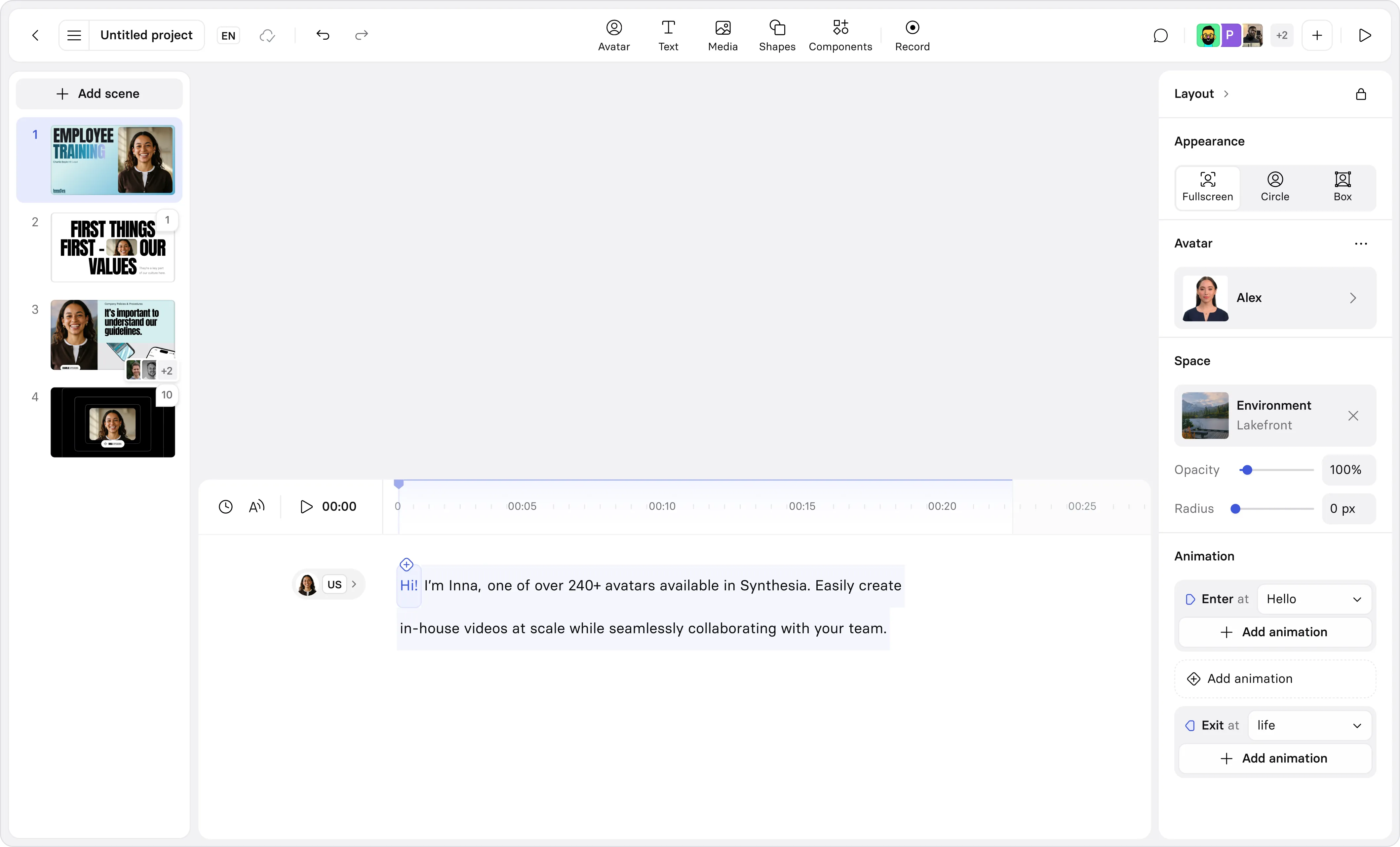
Good practice is structured, but unexpected. It keeps reps on their feet and gives them real-time feedback on their performance. That's why we've built Roleplay Sessions, to close the loop between reps knowing how to do something, and being able to do it consistently.
Hear more from our CEO, Victor Riparbelli.
Then, when reps need to practice responding to price objections, they can jump on a session. Anytime, anywhere. An Interactive Avatar will be there to push back and ask questions, just like a real prospect.
But the practice doesn't end there. The rep will be asked to reflect on how they thought the session went before getting structured feedback and the opportunity to try again.
Give it a go for yourself.
The best part of Roleplay Sessions is that it aggregates data from every session into dashboards that can be filtered by manager. That means a manager can coach a rep, see how they perform in practice, and follow up with actionable feedback — all before another prospect objects to pricing.
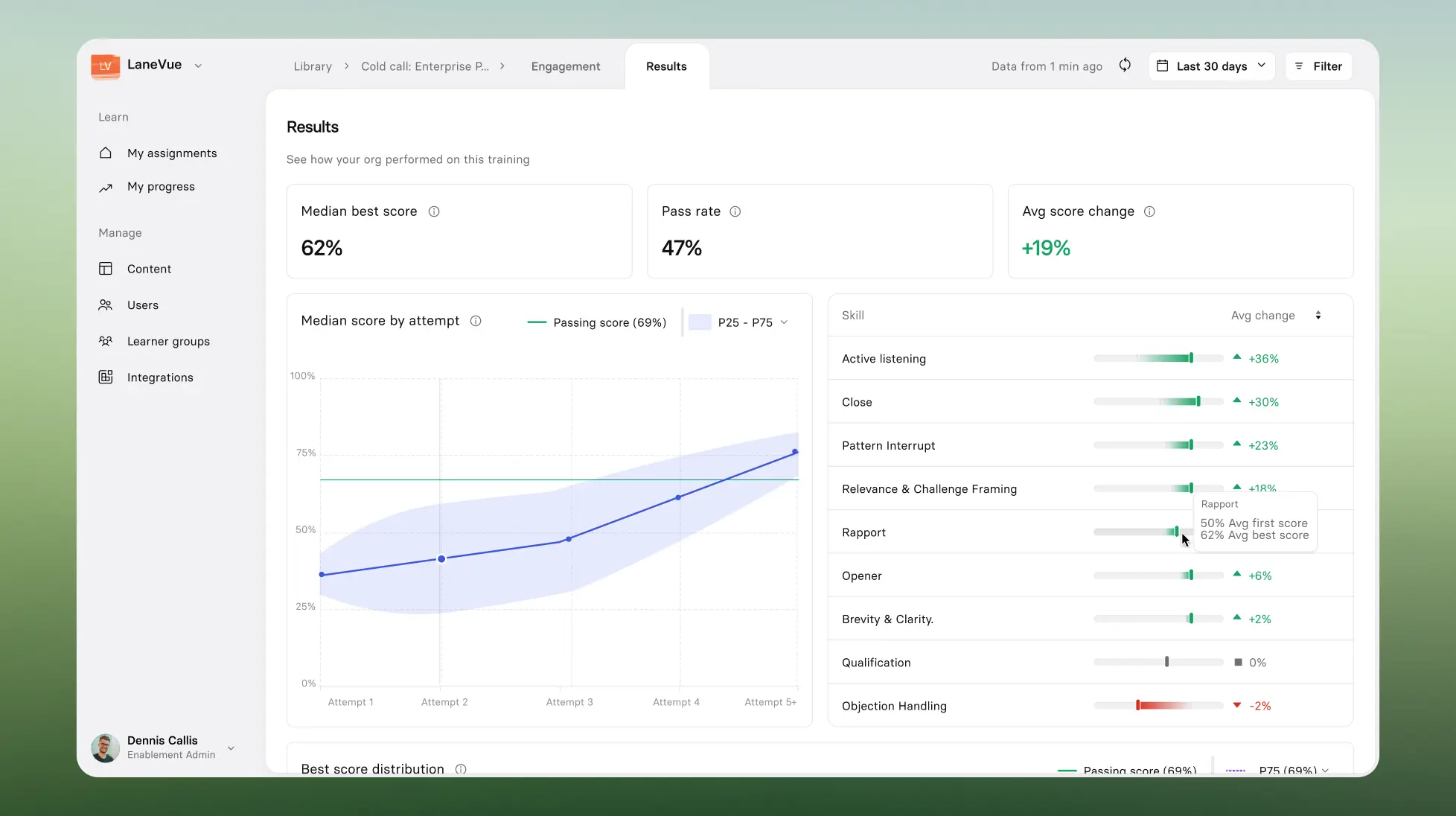
This approach allows you to scale the impact of one-on-one sales coaching without additional manager time.
Previous coaching strategies have relied on advice like "moving the middle," which isn't so much a strategy as an admission that you can't coach everyone. Instead, this gives you actionable insight that can help you coach any rep into better performance.
If you're ready to evolve your one-on-one coaching strategy, schedule some time with the team.
Amy Vidor, PhD, is the Learning and Development Evangelist at Synthesia, where she researches learning trends and helps organizations apply AI at scale. With 15 years of experience, she has advised companies, governments, and universities on skills.
Frequently asked questions
How often should you hold one-on-one sales coaching sessions?
There is no right cadence for one-on-one sales coaching sessions as long as they are consistent. They can be integrated into recurring meetings with your direct reports, whether that’s weekly, bi-weekly, or monthly.
Your direct report should know when to expect coaching, but also how to ask for it if they have a specific issue they want to address.
How do you measure whether sales coaching is working?
If you're in sales enablement, measuring whether coaching is working is hard. It requires you to have ways to collect snapshot data (like how many managers are coaching, and how often), but also impact data (like how individual performance has changed over time). That's the kind of good enough measurement that's realistic to sustain.
Often, the best you can do is anecdotal input from managers that reps are aligned with the internal standard. That's why I recommend incorporating a practice tool like Roleplay Sessions, so you can track insights like skill uplift over a specific period of time, and have another data signal to draw from.
How do you make sales coaching consistent across managers?
Consistency across managers starts with documenting your internal methodology or playbook so it's explicit, not something each manager carries around in their head differently.
From there, train every manager on that standard and on how to translate call evidence into feedback that matches it. That's how coaching quality stops depending on which manager a rep happens to have.
Can you scale one-on-one sales coaching with AI?
Yes. There is a range of solutions you can use for AI coaching to provide more practice and feedback opportunities for reps, so they can build crucial skills.
My recommendation is to treat these solutions as one component in your coaching strategy. They should not replace coaching with managers, leaders, or peers. There's real value in those coaching relationships that can't be replaced by AI.

You might also like