



Strategies for Designing Blended Learning in the Workplace


Create engaging training videos in 140+ languages.
Most workplace training programs use a blended learning approach. An instructor-led training followed by a one-page refresher. A pre-read before a workshop. A series of training videos before roleplay sessions.
But often, these decisions aren’t the result of careful design, but rather a response to circumstances. Perhaps your audience is distributed in different locations, so every in-person training has to be on Zoom. Or maybe you need to reduce training costs and have to cut the amount of in-person facilitation.
When designed intentionally, blended learning can improve learning transfer while making programs more sustainable to scale. Here’s how.
What is blended learning?
In the workplace, blended learning is a training approach that combines in-person and online instruction. The online instruction can be live (synchronous) or self-paced (asynchronous).
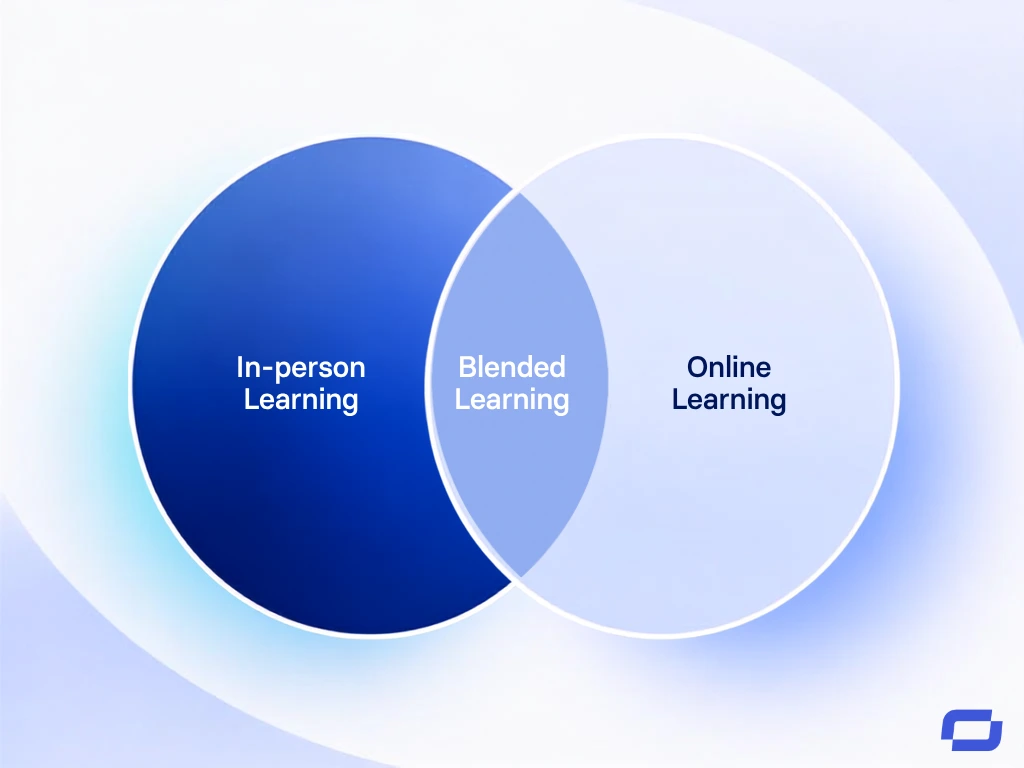
Blended learning means the same thing across educational settings. What changes is how the instruction is delivered in-person and online.
How to design a blended learning program
A lot of advice about designing blended learning programs starts with picking the right instructional format for in-person and online learning. What I recommend, instead, is starting by identifying the behavior you want to change.
The future of L&D is focused on building skills organizations need to remain competitive. A skill is the ability to perform the right behavior consistently. To change behavior, you need to describe the behavior, show someone doing the behavior, provide opportunities to practice the behavior with structured feedback, and support the behavior in the flow of work.
Researchers call this approach Behavior Modeling Training. This is how I recommend you design your blended learning programs, by identifying what you need to do at each stage and then aligning it to an instructional method and delivery format.
Direct instruction: having a facilitator or subject-matter expert explain or demonstrate something.
Explainers: using storytelling, analogy, or simplified visuals to build conceptual understanding.
Experiential, scenario-based, and simulation training: placing employees in realistic situations to make decisions and see the consequences.
Social, peer, and cohort-based learning: using discussion, peer feedback, communities of practice (e.g., cohorts), or shared reflection to build shared understanding.
Reinforcement: using job aids, spaced repetition, shadowing, or manager check-ins to help a behavior stick after initial training.
In-person: instructor-led training (ILT), lectures or briefings, workshops, roleplay or practice sessions, on-the-job training (OJT) such as shadowing or job rotation, and coaching or mentoring.
Online (synchronous): virtual instructor-led training (VILT), webinars, and live virtual coaching.
Online (asynchronous): eLearnings (e.g., courses or videos), gamified experiences, job aids, one-pagers, or discussion forums.
Note: These lists aren't comprehensive, but illustrative of the range of methods and formats available to instructional designers and facilitators.
Here's an example of how I might design a learning program for managers who need to be able to give constructive feedback using the SBI framework during annual performance reviews.
| Stage | Design Principle | Blended Design |
|---|---|---|
| Inform (describe the behavior) | The first step in driving behavior change is ensuring that everyone has the right information. | A microlearning introduces the feedback framework managers are expected to use (e.g., situation, behavior, impact). |
| Demonstrate (show the behavior) | Demonstrations only work when they're paired with clear explanations of why a behavior is good or bad, focused on transferable principles, not scripts. | A training video shows a manager delivering feedback well and poorly, back to back, with a breakdown of why each version works or doesn't. |
| Practice (try it, get feedback) | Good practice needs structure: a realistic scenario and targeted feedback. | A workshop gives managers the opportunity to practice delivering feedback to each other in person. They're also given the option to practice first using an AI roleplay tool. |
| Support (reinforce in the flow of work) | For true behavioral change to happen, it needs to be reinforced in the flow of work. | An automated message, sent before performance reviews, points managers back to the SBI microlearning takeaways. |
How Synthesia supports blended learning
L&D teams are often required to stitch together the online components of their blended learning programs. (I've done enough stitching to have an L&D quilt throughout my career.) At Synthesia, our mission is to help teams work better.
For the past five years, that's meant helping teams create better training videos. But we know that's not enough to drive the behavioral change I described above. That's why we've launched Roleplay Sessions, to give employees the opportunity to practice what they're learning, on the same platform.
Here's how we've built a platform to support the online components of your blended programs.
Inform
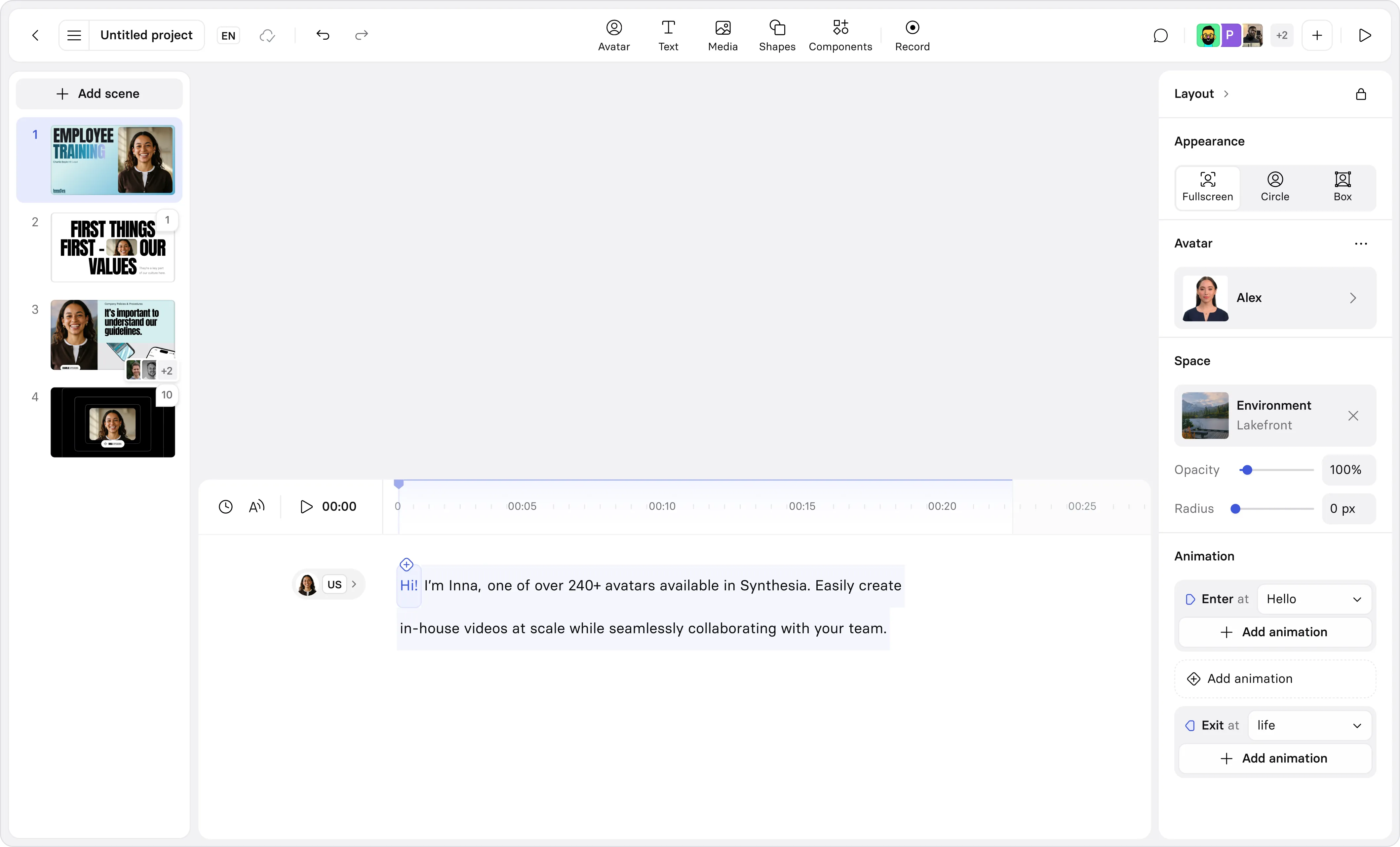
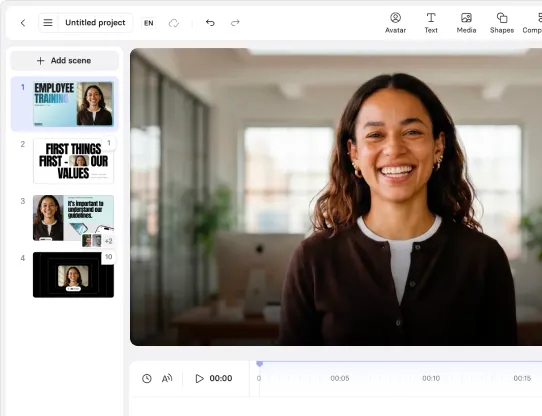
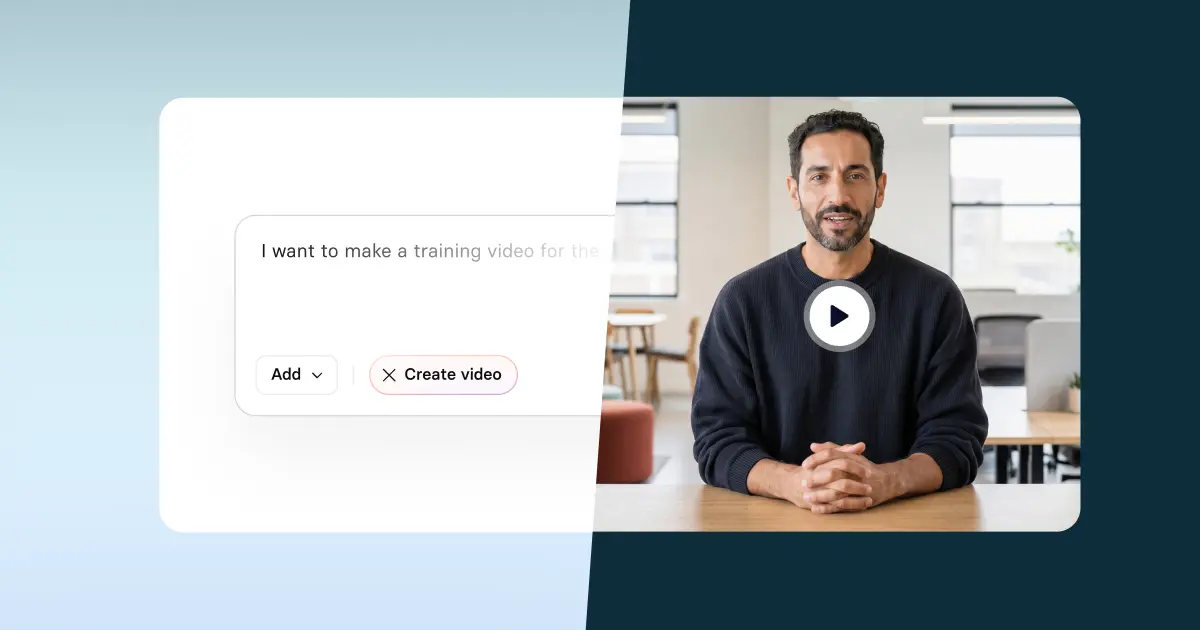
Creating informational training is simple with Synthesia. Convert existing materials that need regular updates into a video with our free video generator, or follow this step-by-step guide.
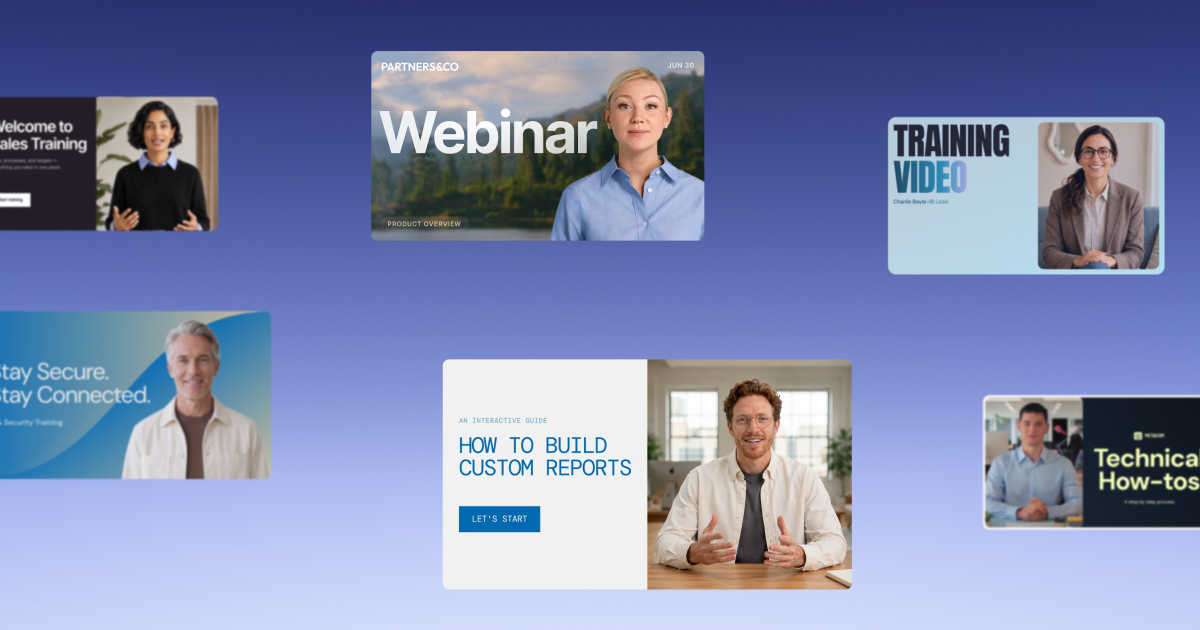
Video is an especially effective medium for informational training. With AI, videos can be quickly produced and updated, reducing the time between a change happening and employees knowing about it. Plus, they can be localized in 140+ languages, reaching employees in every region without delay. You no longer have to sacrifice quality for responsiveness.
Before publishing anything, decide where it lives and how people find it, who has access and what happens when it's shared, and how you'll update it without leaving an outdated version circulating. New managers aren't searching an LMS for last-minute tips before a difficult conversation.
Make it as easy to surface informational videos as possible. Give it real metadata, titles, keywords, descriptions, so if a manager asks your internal LLM "how do I give effective feedback?" it recommends your video titled "Giving Effective Feedback," not a stale one-pager nobody's touched in a year.
Demonstrate
If informational training is what allows us to learn the facts, demonstration is what allows us to start building skill. It's the same reason you've likely had new hires shadowing top performers. You want them to create a mental model of what to do, so that when it's their turn, they have something to build from.
Consider asking an experienced manager to demo both versions, or if that's not available to you, design a scenario with our Interactive Avatars. (And yes, you can inform and demonstrate in the same video with Synthesia.)
Read how Ryanair uses Synthesia to create training that demonstrates best practices for 1,300 engineers across 13 European bases, 15,000 cabin crew, and 22,000 ground agents in 20 languages.
Practice
Practice hasn't scaled well in sales organizations, or in most organizations, period. Good practice needs structure: a realistic scenario and targeted feedback. That's traditionally fallen to managers, but managers are swamped, and often haven't been trained to coach skill-building themselves.
Hear more from our CEO, Victor Riparbelli, on why we’re investing in Roleplay Sessions to help you close the loop between knowing and doing.
{lite-youtube videoid="DogutmNTyGw" style="background-image: url('https://img.youtube.com/vi/DogutmNTyGw/maxresdefault.jpg');" }
Here's how it works.
- L&D partners with our experts to design scenarios tailored to your organizational needs.
- An employee joins a session with one of our Interactive Avatars to practice the specific skill.
- A coach (also an Interactive Avatar) asks the employee to assess how it went before delivering an overall score, plus a breakdown of how they performed across the skills being practiced.
- The employee tries again, immediately, or whenever they want to. Practice is on-demand.
Try it out for yourself.
Support
Data from every Session is aggregated into dashboards tracking progress and performance outcomes, filterable by manager, department, or any HRIS property you've configured.
Managers can review call transcripts and coaching feedback for their direct reports, along with metrics like skill uplift (the change from a learner's first completed attempt to their best). This means managers can use their 1:1s to provide additional support based on data-driven observations, and you have actionable insights to evaluate the success of the program.
You can also leverage this data to determine how to reinforce learning in the flow of work and modify in-person sessions to maximize your available resources.
If you want to learn more about how Synthesia can support your blended learning strategy, book some time with our team.
Amy Vidor, PhD, is the Learning and Development Evangelist at Synthesia, where she researches learning trends and helps organizations apply AI at scale. With 15 years of experience, she has advised companies, governments, and universities on skills.
Frequently asked questions
What are the benefits of blended learning?
Blended learning has three main benefits. First, it allows you to better allocate resources, making training programs more sustainable and scalable. You may be able to reduce travel time, participation time, and in-person facilitation costs.
Second, blended learning improves consistency of delivery. The more components you can standardize, the better, since this ensures employees receive equitable training. (Let's face it, even seasoned facilitators have their off days — I know I have.)
Third, blended learning is more inclusive. It empowers employees to fit training into their own schedules, reducing the barriers to access. AI tools also make it easier to localize blended programs, extending that same access to a global workforce.
What are the challenges of blended learning?
Most L&D teams run into four challenges with blended learning programs:
- Determining the appropriate balance of in-person and online content based on the desired behavioral change
- Keeping online content up-to-date
- Delivering (and tracking delivery of) blended programs
- Evaluating the effectiveness of training programs
Each of these challenges can be addressed through intentional design (a framework like ADDIE is a good starting point).
How do you deliver and track blended learning in an LMS (SCORM/xAPI)?
Most LMSs use SCORM or xAPI packages to track participation and, to some extent, assessment within the online components of a program. That tracking starts with how the content itself is built: eLearning content authoring tools, including Synthesia, let you export your training in one of these formats, ready to upload to almost any LMS.
Where it gets more challenging is tracking the in-person components of your blended learning. Some LMSs allow you to build programs where you can track in-person and online components in one place. This might look like setting up a registration link or QR code for in-person sessions, or something more akin to "taking attendance" in a classroom setting.
How do you measure the ROI of a blended learning program?
With blended learning, you have a lot of moving components. You might have multiple cohorts taking an eLearning across a quarter, followed by different in-person workshops. You might even have different versions of the same eLearning tailored to the cohorts by role (e.g., ICs vs. managers).
That's why I recommend measuring the ROI of a blended program using what I call good enough measurement: bringing together snapshot data (completion and participation rates, assessment scores) and impact data (performance metrics). Your goal is to show that behavior is changing, as intended, and that it's impacting the business in terms they care about (an OKR, a KPI).
What are examples of blended learning?
A blended learning program combines at least one in-person and one online component, but often more. A manager training program might pair a short video on the SBI feedback framework with an in-person workshop where managers practice giving feedback to each other. A technical training program might combine online coursework with hands-on shadowing on the job.
A good rule of thumb is to reserve in-person sessions for practice and feedback, discussion, and problem-solving. Anything informational can likely be moved online.

.png)