



Customer Education Training: How to Build a Program That Scales


Create engaging training videos in 140+ languages.
Most guides to customer education start by selling you a product. They cover the mechanics of how to host and distribute content, but skip over the most important question: why do you need to train your customers?
That might seem obvious to you. But I'm not looking for an answer like, "so they can use our product (or service)." What I want to know is what business problem you're solving, like churn among first-year subscribers has climbed 20% year over year or customer success managers are spending QBRs helping stakeholders troubleshoot why something won't work.
This problem should be quantifiable. If you can't measure it now, you'll struggle to demonstrate whether the customer education you design has any impact on it.
Customer education is a structured, intentionally designed learning experience for your customers. It gives them the knowledge and skills they need to effectively use your product or service and get real value from it.
How to build a customer education program
Once you’ve identified why you need to educate your customers, you’re ready to begin building the training program.
Step 1: Diagnose the gap
The first step is diagnosing the true need behind your why. You're conducting a needs assessment.
Let's say that you're building a customer education program because the volume of customer support tickets has quadrupled in the past quarter. The first thing you need to do is understand why.
This means looking at the tickets to surface common themes (I'd recommend having an LLM help here), and then determining what you can control. If most support tickets are about people forgetting their passwords, there's nothing customer education can do to resolve that. If, however, the tickets surface an issue with the same workflow, that's behavior you can address through training.
Step 2: Scope the program
Once you've validated that a gap exists and can be addressed through training, you need to scope the program to identify what you can realistically accomplish based on your current roadmap and team's bandwidth.
Mature enablement teams typically combine several types of customer education. But I can guarantee you that they don't create them all at once.
| Type | What it is | When to use it |
|---|---|---|
| Guided onboarding | Support during the first phase of an engagement, ranging from fully tailored 1:1 sessions to a standardized program delivered to a cohort or on-demand support | When a new account needs dedicated help reaching first value |
| Self-serve academy | On-demand courses and a knowledge base customers work through at their own pace | When questions are common enough to answer once, at scale |
| Certifications | Formal recognition of proficiency | When proficiency credentials turn customers or partners into advocates for your product |
| In-product guidance | Contextual help embedded directly in the product | When contextual help built into the product keeps customers from having to search elsewhere |
| Live sessions | Real-time instruction open to any customer, with live Q&A | When a topic is new, complex, or needs real-time back-and-forth |
At Synthesia, our Knowledge and Enablement teams run an Academy that serves thousands of monthly users. In addition to self-paced content, Synthesia users can attend live webinars, called Feature Fridays, each week to deep-dive into a specific topic. They can also join our Community, where they can post questions or get crowdsourced feedback.
Step 3: Design the program
There are so many ways to build a training program, depending on your approach to instructional design and internal ways of working. I detail one approach in this guide to creating training programs that stick.
The learning experience design should take into consideration factors such as your audience (how are they working with your product or service), their knowledge and background (more technical, less technical), and their working preferences (self-paced or live, one language or many).
At Synthesia, our customers include skilled instructional designers who are experienced with creating training videos, but also people who have never designed training before, let alone with video. Our Academy Team crafts customer education programs with this in mind (as well as the type of plan they're on).
No matter how you design the learning experience, don't forget to consider what our team calls the publishing triangle, three questions that shape every program regardless of approach:
- Where should training live, and how will customers find it?
- Who should have access to the training, and what happens when it's shared?
- How will you update content without creating confusion or outdated versions?
If you're hosting training in an LMS, whether a separate instance of your internal platform or an entirely different one, you'll likely need to author it with an eLearning tool compatible with SCORM. If you're instead embedding the education directly into your own platform, that will shape the program's design just as significantly.
Step 4: Measure the program
When your program is ready to publish, go back to your why: this is your baseline for measuring the effectiveness of the program.
Unlike other training programs, most customer education programs don't have the luxury of running pilots, especially if your product or service regularly changes. You need to get updated guidance out, and quickly, which means being more agile when building even an onboarding program.
Your measurement approach should reflect this. You need to figure out what's good enough measurement for your working environment. Going back to our example of customer support tickets quadrupling, perhaps the goal is to reduce that number by 20% within a month for tickets tied to the workflow you identified in Step 1.
- Adoption rate
- Completion rate
- Customer satisfaction (CSAT)
- Support ticket deflection
- Retention or renewal rate
- Upsell or expansion revenue
If something isn't landing, whether it's a resource no one is clicking on, or a course people are dropping off halfway through, consider the form and length. Is the training engaging and serving the audience's purpose? Could it be delivered more effectively or efficiently?
And most importantly, remember that the goal of customer education is to keep the customer by enabling them to use your product or service and get real value from it.
Why customer education matters
Some orgs think of customer education as a "nice-to-have," a support function. In my experience, customer education is critical to the success of the business. Customers may churn because there's a steep learning curve to your product or a frustrating UI. They'll stay if they have robust support that helps them see a return on their investment.
- Customer education programs are more effective when treated as a cross-functional effort spanning the full customer journey, from awareness to renewal. (Florea et al., 2025)
- Customer education improves customers' ability to evaluate whether a product is working for them, which directly strengthens the value they perceive from it. (Bonfanti & Brunetti, 2015)
A successful customer education program blends expertise from customer service, customer success, product, and learning and development to transform the customer's experience. It can change what they believe your product is worth, not just how they use it.
How Synthesia supports customer education programs
Delivering a transformative customer education program means removing friction for customers getting the support they need, and that starts with making sure your content stays current.
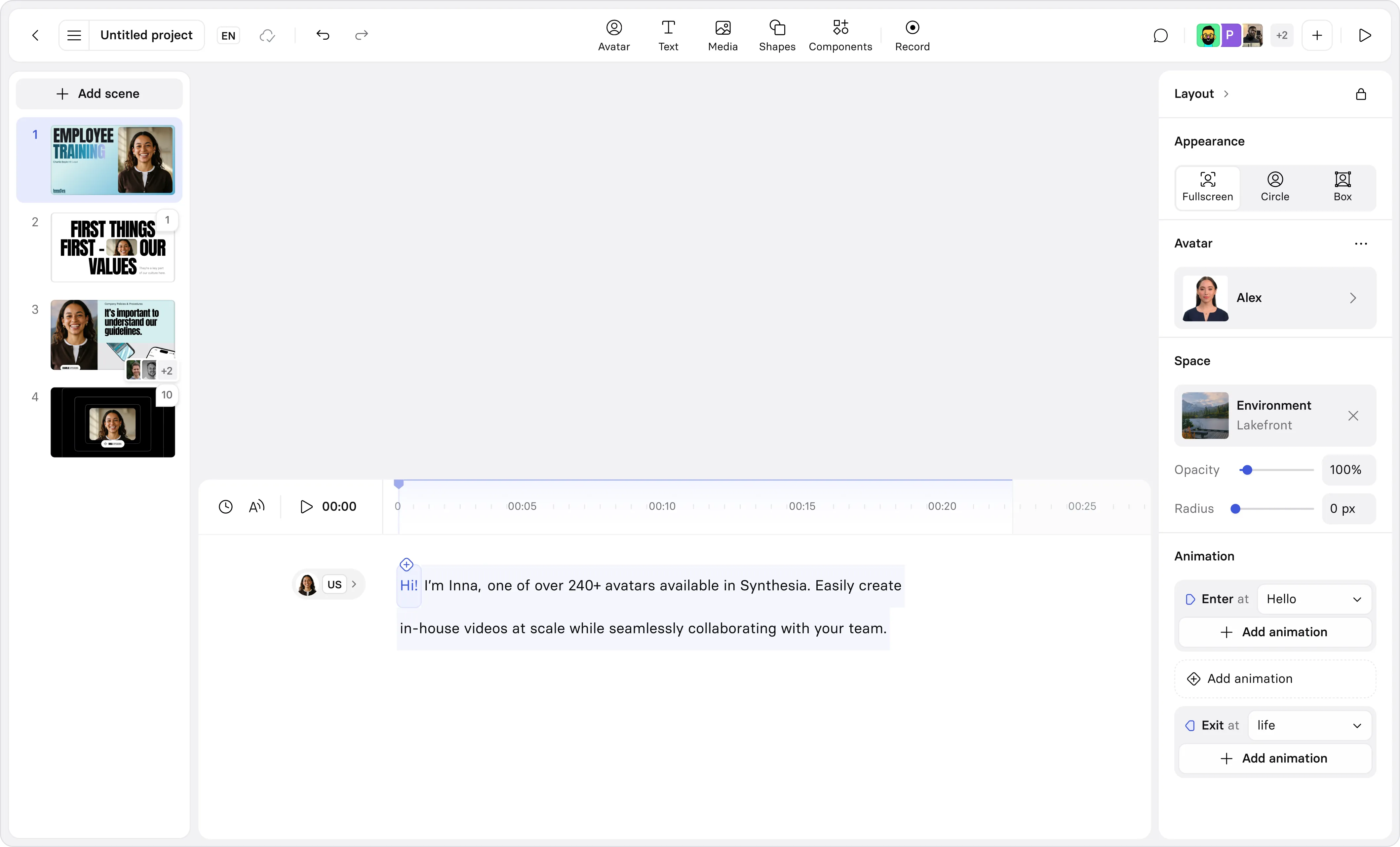
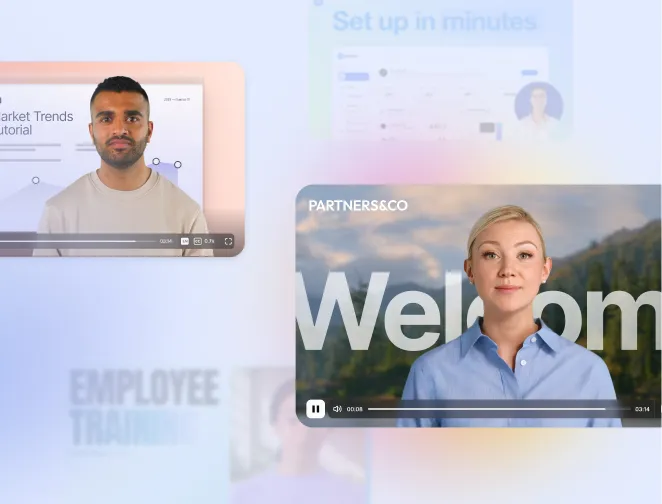
The reality for many of us, Synthesia included, is that our products and services are quickly evolving. Customer education needs to keep up, especially at scale. That's why at Synthesia, we've designed a video training platform that moves as quickly as you do, without sacrificing quality. And you're not limited in how you use our videos. Share a direct link from our platform, embed it in your intranet, or export a SCORM package if you need to host it in your LMS.
One of our customers, Ryanair, knows firsthand how urgent customer education can be, in this case, educating its own passengers. When a flight is delayed, the team scripts, generates, and pushes a video update from Synthesia to their app in minutes, explaining what's happening and what to do next. Read more below.
At Synthesia, our mission is to help people work better (in over 140 languages, and counting). That’s true for our customers, but also our customers’ customers.
If you’re interested in learning more about how Synthesia can support your customer education programs, schedule some time with the team.
Amy Vidor, PhD, is the Learning and Development Evangelist at Synthesia, where she researches learning trends and helps organizations apply AI at scale. With 15 years of experience, she has advised companies, governments, and universities on skills.
Frequently asked questions
What's the difference between customer education and customer service training?
The difference between customer education and customer service training is the audience. Whereas customer education supports customers, customer service training supports your internal staff in serving customers. The goal with the former is to help customers learn how to use your product or service, while the latter is to help build your team's skills.
While customer education is technically about training customers, it should be accompanied by a strategy for training customer service representatives and other account staff. The two should complement each other.
Why is customer education important?
Customer education helps customers use your product or service to its full potential. It can reduce time-to-value for customers as well as the volume of support tickets. This, in turn, can lead to greater customer satisfaction and higher renewal rates.
What are the types of customer education?
Types of customer education include guided onboarding (ranging from 1:1 sessions to structured cohort programs), a self-serve academy for ongoing reference, certifications for power users or partners, in-product guidance at the point of need, and live sessions for real-time Q&A.
Most mature customer education programs blend together different types of support based on their clientele's needs.
How do you measure the ROI or KPIs of a customer education program?
To measure the effectiveness of your customer education program, you need to start by identifying your "why": what behavior are you trying to change, and what is the impact on the business.
For instance, if your customer service team is inundated with a high volume of support tickets that could be remedied by better guidance on new product features, then you should consider making the volume of related support tickets a key measurement indicator. You can couple this impact signal with snapshot data: how many customers went through a specific training in a period of time.
Ultimately, the goal of any customer education program is to make customers self-reliant: able to solve problems and pick up new capabilities on their own, rather than waiting on a support ticket to get answered.
How do you scale customer education content across languages?
The most efficient and cost-effective way to localize customer education at scale is to use a well-vetted AI solution (the quality of translations really ranges). This could be an AI platform, like Synthesia, that allows you to dub or caption training videos with one click.
A human should always QA training content before it is published, and this is especially true for anything customer-facing. Even if someone on your training team doesn't speak the language, reach out to a colleague in the region or ask for a volunteer on an internal Slack channel. You'll be glad you had someone check for any awkward translations that AI can miss.

.webp)
.png)